Our Practice
You must have the bird in your heart before you can find it in the bush.
― John Burroughs [18], American Naturalist
Australia is still a birdwatcher’s paradise. Any photographer, armed with a camera or even a mobile phone, can capture impressive photos of birds, as many species are accustomed to living in towns and cities.
‘Avian homes’ are found in parks, gardens, sporting ovals, nature reserves and along coasts and rivers; other avian homes are in buildings, under eaves, on electricity pylons and wherever nests can be built in our built environment.
Who are the participants in the Green’s Photo Ahimsa practice? Jim is the main photographer; Dedrie is a ‘field’ person, and Hilda is an editor and standby photographer. Other willing participants are often Green family members, and the other participants are our avian dwellers in backyards, gardens, parks, national parks, and sporting ovals.
One can practice Photo Ahimsa anywhere where there are birds!
To illustrate. Recently, from our apartment window, looking out at the very large heritage-listed River Red Gum in our neighbour’s garden, Jim and Dedrie were transfixed by the antics of a Sulphur-crested Cockatoo entering her nest—a huge hole on the other side of the branch.
Jim describes their experience:
It was a captivating moment as the bird shuffled along, doing circus tricks as she went, finally disappearing into the large hole.
We had to use AI (Google Nano Banana) to enhance the photo of the cockatoo, while the image of the tree itself turned out to be quite satisfactory. However, getting closer to get a better picture of the bird would have required entering our neighbour’s property and climbing the large tree.
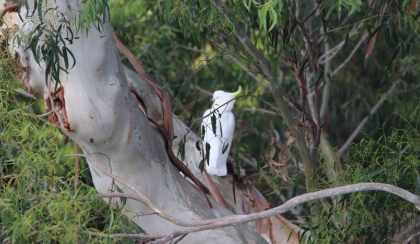 Figure 15: Sulphur Crested Cockatoo—Nesting |
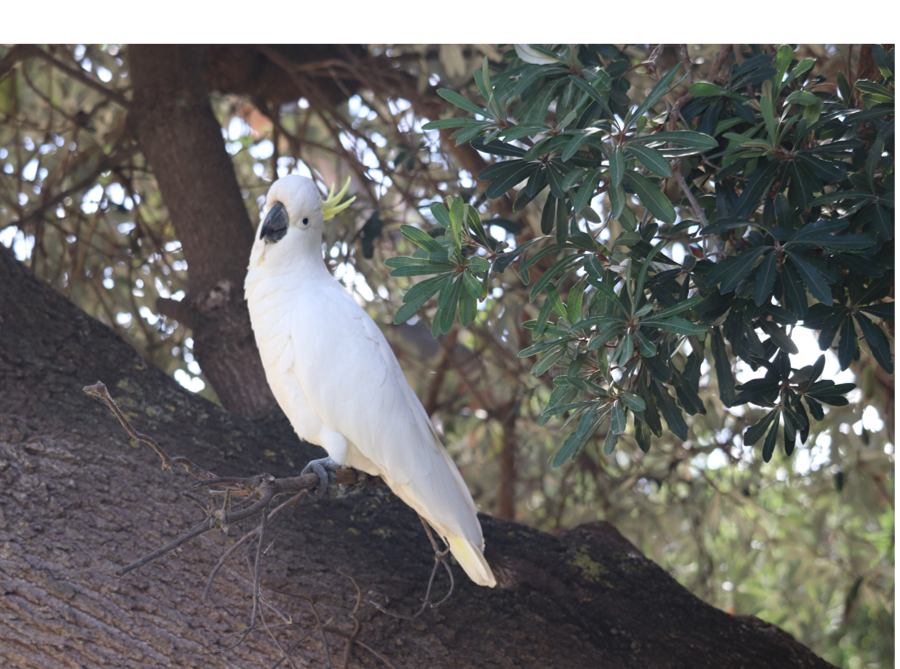 Figure 16: Sulphur Crested Cockatoo—Lorne, Victoria. Figure 16: Sulphur Crested Cockatoo—Lorne, Victoria. |
Our neighbour is a kindly man with few enemies, we believe, except the family of cockatoos that come and go endlessly out of their nests in the tree. He has threatened to have the tree cut down—if only the council will let him remove it.
The cockatoos are very early risers, and they announce their intention to fly out and around the nearby church steeple before sunrise, with ear-piercing screeches. Their screeches are deafening. ‘You ever hear cockatoos screech?’ Our neighbour lies awake at night, counting sheep, waiting for the ‘damn cockys’ to herald in the new day!
You don’t need to follow ‘best practice’ methods to succeed in ‘mindful birdwatching’; however, there are some basic steps needed for success. Communicating effectively with potential avian friends, who often fly away immediately, requires a lot of patience and time. Good vision and hearing are a must, and slow, quiet movements are highly recommended.
What puts people off the stereotypical birdwatching activity is having to locate a spot frequented by scarce or unusual birds; then remain motionless for hours on end with a heavy camera and telescopic lens poised to capture the moment. To top it off, you need to breathe silently while refraining from the slightest movement.
This is not the Green family practice. They just walk quietly through the bush, along the river or coast or along a forest trail and hope for the best.
They are never disappointed.
Photo ‘Ahimsa’ moments may arise anywhere or anytime when out and about with a camera, such as when this wattlebird jumped onto Jim’s table at a coffee shop in Warrnambool to gobble up some crumbs. All Jim had to do was ‘shoot’ when he had finished sharing his muffin. His tolerance for a bird settling on your outdoor table is highly frowned upon, but the bird never gave up.
A twitcher would have told us what it was, a ‘red’ or a ‘little’; a ‘him’ or ‘her’. Jim just liked having the Red Wattlebird there, hypocritically voicing his indignation about ‘these little scavengers’, when the coffee shop owner charged out to shoo the bird away.
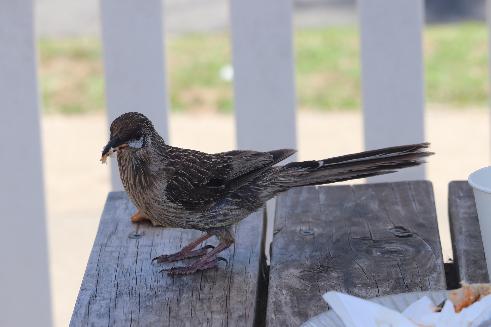 Figure 17: Red Wattlebird [Juvenile]—Warrnambool, Victoria. |
The Greens use low-cost equipment, such as a Canon EOS 200D DSLR. They use a Tamron SP 150-600mm F/5–6.3 telephoto lens to capture the tiny, elusive subjects or those at a distance. The downside of using a telephoto lens is its weight, which can lead to the affliction called ‘heavy camera tremble’. To counter this, photographers often look for a stable surface to rest the camera on or revert to a tripod.
Jim provides some practical steps to follow during Photo Ahimsa:
We follow Google’s advice to use a high shutter speed while photographing with the heavy lens to help achieve sharp, blur-free images. We also use our Samsung Android phone cameras when we can get close enough—a practice that most professional birders advise us to avoid.
Some good fieldcraft will help. Often, just as we are about to take a photo, the bird decides to fly. We have found that the bird is usually the first to notice our presence, as we are usually the intruders.
The bird may give an alarm call or start telling us to ‘get lost’ in loud calls and chatter. They usually stop singing or chirping and hesitantly continue again when we move away. If we use binoculars, we often notice that the bird’s eyes observe our every step.
We try to avoid bird-centric images. Habitat is equally important, as are the other bird species, animals, and plants featured in the photograph.
Sometimes, a photo may not turn out as desired, but it is too valuable to delete. We then use elementary photo-shopping skills. As an example, we used the PC Windows 11 [] image editor to rescue the image of the Yellow-tailed Black Cockatoo in Figure 18 below.
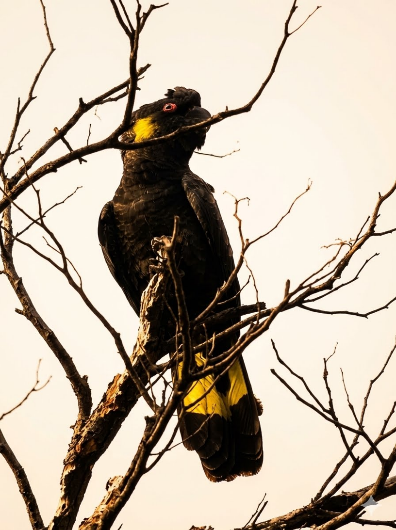 |
| Figure 18: Yellow-tailed Cockatoo—Tasmania, West Coast. |
Sometimes, when we set out to embrace Photo Ahimsa, we might encounter Photo Himsa [Violence]—the opposite. We’ve had our share of Photo Himsa moments while trying to practice. For instance, we’ve faced sunburn, dealt with bug or tick bites, encountered snakes, gotten lost, and walked into thorns.
Be warned, novices—Photo Himsa and Photo Ahimsa often occur together!
You may need to become ‘besties’ with the creepy crawlies. If you’re going to snap photos of birds, it’s best to shake off those fears of spiders, bugs, and whatever else is lurking about. Some of us had to overcome an ingrained fear of spiders, such as the African Hermit Spider.
Jim tells this story about spiders:
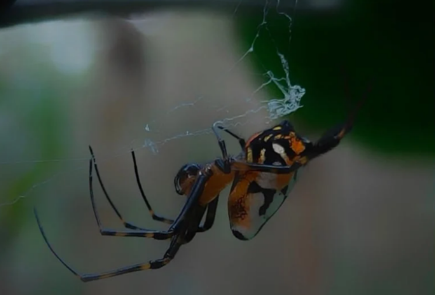 FIGURE 19: AFRICAN HERMIT SPIDER. |
On a hunt one day along the Limpopo, one of my older ‘besties’ nastily said to me that I should go off by myself, as he and another friend were hunting with the .22, and I would only be a nuisance. Sulking, I headed off with my trusty ‘Gecado’ air rifle, shooting at anything that remained still and within range.
I got lost. Every bush and tree looked the same. After a considerable amount of time, taking paths to nowhere, I found myself in a clearing surrounded by thick veld dotted with medium-sized trees on the boundary. To my horror, when I looked up, I saw giant spider webs spanning the tree branches. At the centre of each of those webs, huge spiders hung, snugly staring down at me with a few of the many eyes they were meant to have.
To this very day, I believe they were Hermit Spiders.
I panicked and walked around in circles, trying to avoid the lowest regions of the webs. My breath came in ragged gulps. The scorching afternoon sun added to my distress as sweat ran down my neck. Strangely, the spiders were nonchalant about me being there.
I searched high and low for a gap. I must have trodden the same circle for about an hour when I spotted a gap big enough to crawl through if I hugged the ground. I leopard-crawled into the gap and, at least fifty meters further, stood up and ran as fast and as far as I could. Houses appeared in the distance; I was home— ‘thank you, Jesus, ’ I said over and over again.
That experience launched me into a lifetime of panic attacks whenever I saw a spider. But I did notice the beautiful patterns on the ‘supposed’ African Hermit Spider! From then on, I fed the spiders in our backyard until they became fat and friends—at a distance!
After all, you can’t be mindful while panicking if you see a spider every time, you’re crawling through the bush to get a shot of a kookaburra. Embrace the spiders and the bugs and take photos of them too!
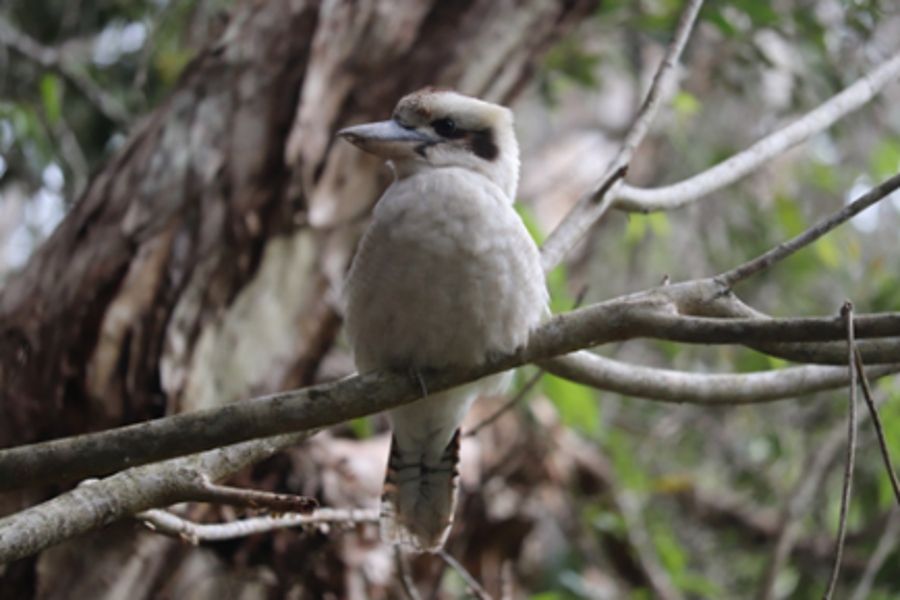 Figure 20: Kookaburra in the Bush—High Country, Victoria. Figure 20: Kookaburra in the Bush—High Country, Victoria. |
Jim says this about the difference between birding and birdwatching, a view supported by Dedrie:
We found that there’s a meaningful difference between birding and birdwatching. We tried birding initially—our first outing was highly embarrassing and rather clumsy. We thought we were well prepared with a pair of ex-army binoculars that could not focus well and a vintage Olympus Trip 35 camera.
We approached a bespectacled, greying woman, immaculately dressed in birding garb, surrounded by similarly dressed people. They were all peering through state-of-the-art binoculars into the top branches of a giant tree. She was setting up an impressive 35mm SLR, a Leica M.
I asked rather timidly while she adjusted the tripod. ‘Are you all here to birdwatch?’ ‘Quiet, man, be quiet!’ the woman hissed. She then whispered curtly, ‘No. We’re here to bird.’ We knew then that birding was more serious business than we had bargained for.
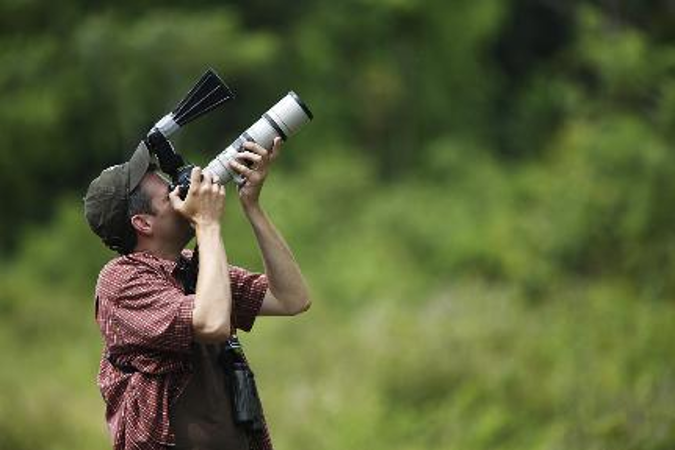 Figure 19: Birding vs. Birdwatching. Figure 19: Birding vs. Birdwatching. |
Birders, we realised, are more serious versions of birdwatchers. [] The difference is their level of activity, focus, and dedication: a birder actively seeks out and tracks birds. In contrast, a birdwatcher enjoys observing birds more casually.
Birders are a step up from birdwatchers. They unavoidably practice mindful birdwatching and are at the vanguard in the fight against ecocide. We admire and respect them!
Birders actively, sometimes even compulsively, pursue birds; they are in it for the chase. The birder will think nothing of hopping into a car and driving many hours to see an extremely rare Helmeted Honeyeater [19], for example. Julia Zarankin [20] says: ‘In a sense, birding is about the human impulse to hunt, but without the blood!’
We soon discovered that we were not the birding type; my attention to detail did not cut the mustard, and Dedrie cannot hear a bird call. So, we’ve stuck with birdwatching—the more passive, less serious pursuit.