PREFACE
We’re on a mission to help preserve biodiversity and ecosystem integrity within Australia.
A dramatic foreboding? Not if we listen to what ecologists, scientists, government agencies, and eco-tourists tell us! BirdLife Australia [1] informs us about the dire threat to the avian habitats within Australia:
For 125 years, we have been at the forefront of bird conservation in Australia. With the help of environmentalists and scientific researchers, we have made substantial progress in protecting threatened bird species. However, we now confront a major challenge: Australia’s extinction crisis.
Our mission is to save birds. Over 200 bird species in Australia face extinction, with many others in decline.
We’re afraid that with the impact of the Avian Influenza epidemic that has reached our shores again, we may be headed for a world without birds, an unthinkable dystopia! There are signs all over that the profound connection we humans have with birds and with wildlife may soon be broken!
The loss of habitat drives this potential ecocide; the impact of invasive species; the extensive use of chemicals, pesticides, and herbicides; climate and environmental changes; fires; hunting; and now Avian Influenza.
In addition to the bird species facing extinction, several duck species in Victoria are threatened or endangered under the state’s Flora and Fauna Guarantee Act 1988 due to hunting, long-term environmental pressures, climate change and habitat loss. These are the Freckled Duck, the Blue-winged Shoveler, and the Hardhead.
We believe that we are losing the battle due to inadequate environmental laws.
We love birds! We ‘mindfully’ observe them in gardens, in our green spaces, along rivers and seashores, in the city, and wherever and whenever we travel. Where we’ve been and where we go, birds have always been an integral part of our enjoyment of nature—and the enjoyment of millions of people around the globe.
How many birdwatchers and birders are there in the world?
In the USA, about 96 million adults (37%) are birdwatchers, with millions more in Europe and 10,000 to 17,000 in Australia participating in citizen science initiatives such as the Aussie Bird Count. Additionally, over 500,000 Australians incorporate birdwatching and birding into their vacations, creating lasting memories.
We hope to share this book with other birdwatchers and nature lovers in Australia to inspire them to make their voices known. We need to remind ourselves to be highly proactive in protecting the habitats of our fellow avian friends—because we share a habitat that may be lost forever!
Protecting birds and habitats could help stave off a dystopian future:
Without birds controlling insect and rodent populations, pests would thrive, harming crops and forests. Birds also play a crucial role in pollination and seed dispersal, and their absence would disrupt plant networks and alter landscapes. [3]
Advocates who focus on making environmental harm a criminal offence argue that significant ecological deterioration signals that “the dystopian future has arrived.” This requires urgent international legal measures. [4]
Jim and Dedrie Green have long supported wildlife conservation through their work as risk management consultants:
They were made aware of the global threat to avian habitats while working with operators of oil refineries, gas plants, and chemical facilities from 1992 to 2020—within Australia and internationally.
They evaluated the risks and wrote reports on how accidental chemical and oil spills could harm bird habitats, especially in vulnerable areas such as Ramsar [5] sites in Victoria, New South Wales, and Queensland.
Many recommendations in their reports focused on measures to mitigate the impact of fuel and chemical releases into the environment. They were aware that EPA regulations were not stringent enough.
Jim has added his name to a BirdLife Australia petition to invest $200 million in a desperately required critical Wildlife Resilience Package that would strengthen protection for Australia’s birds and wildlife before the impact of the Avian influenza (H5N1 strain) pandemic becomes even greater.
In addition to the bird species facing extinction, several duck species in Victoria are threatened or endangered under the state’s Flora and Fauna Guarantee Act 1988 due to hunting, long-term environmental pressures, climate change and habitat loss. These are the Freckled Duck, the Blue-winged Shoveler, and the Hardhead.
Avian influenza is a viral disease of birds that is found globally:
Virus strains are either low pathogenicity (LPAI) or high pathogenicity (HPAI). High-pathogenicity H5N1 avian influenza (H5 bird flu) is currently affecting all parts of the world and has recently been confirmed for the first time in Australia. [6]
An article in ‘The Sydney Morning Herald’ says:
Approximately one in five Australian bird and mammal species is at high, very high or extreme risk from the bird flu virus now spreading in Australia, according to data published on the federal environment department’s website on Tuesday evening.
Five bird species are assessed as being at extreme risk, meaning that they will not survive where the virus occurs. They include the Christmas Island frigatebird, the Herald petrel, the Houtman albatross, the imperial shag on Heard Island, and the imperial shag on Macquarie Island.
This book is a collaborative effort. Jim provides the text and photographs, while other members of the Green family have contributed as birdwatchers, photographers and reviewers.
‘Green Images’ is our pseudonym for a fictitious non-violent entity that narrates the stories connected to the Green family photos—stories that revolve around images of birds in their natural habitats. Some tales not only feature the birds but also individual members of the Green family.
As you flip through the pages, get ready to laugh, reflect, cry, maybe and experience your own ‘connection’.
We say, ‘Let’s reflect on the words of Pope Francis’:
Each year sees the disappearance of thousands of plant and animal species which we will never know, which our children will never see, because they have been lost forever. The great majority become extinct for reasons related to human activity. Because of us, thousands of species will no longer give glory to God by their very existence, nor convey their message to us.
We have no such right!
If we, as a society, take the necessary steps to address the risk of ecocide, we may again see the cormorants that Jim and Dedrie saw at Lakes Entrance, Victoria, in 2025.
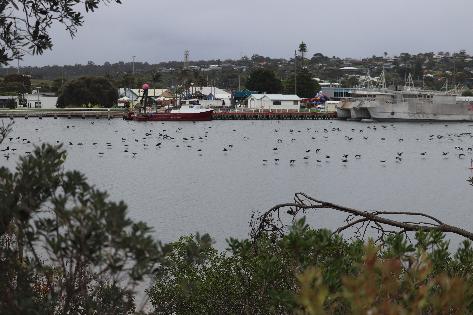 Figure 2: Cormorants—Lakes Entrance, Victoria. |
The first edition of this book has been incorporated and advertised in ‘The Mindful Birding Network’ [7] blog.
Foreign words, such as Ahimsa, are italicised.
Jim acknowledges using Grammarly [8] to edit and correct some of the text and Google AI for research.