Photo Ahimsa
We can make the most of the Earth and benefit from its beauty, but in such a way that we respect the Earth, just as a bee respects the flower.
—Thich Nhat Hanh[2], Engaged Buddhist
This book is dedicated to all nature lovers who seek to be loved in turn by nature.
Most boys growing up in Africa in the 1950s and 1960s, like Jim, avidly read wildlife and hunting stories, and most hunted and fished with abandon! Fortunately, like St. Paul on the Damascus Road, many had an epiphany along the way and vowed not to hunt but instead collect trophies by camera.
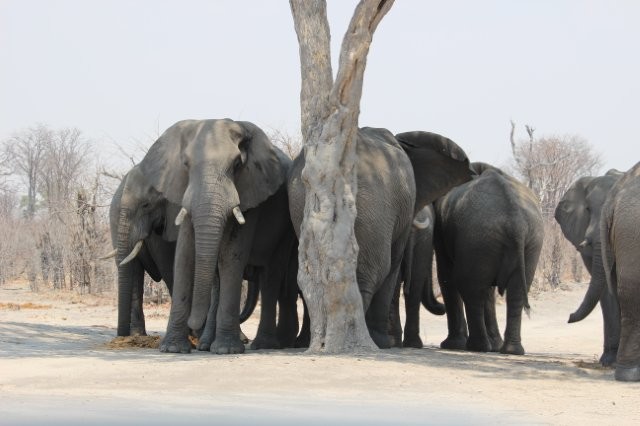
The Greens recently attended a wedding in South Africa. After the wedding, they spent time walking a rock art trail in the Cederberg and visiting the Kruger National Park, the Hoedspruit Wildlife Estate and Reserve, the Kapama Nature Reserves, and the Blyde River Canyon. They were fortunate to have excellent tour guides, Dylan and Linda Thorne in Hoedspruit, who identified animals, birds and plants in the most extraordinary places.
They now have a digital album full of photos that tell stories of their recent encounters in the veld. During their walks and game drives, they knowingly and unknowingly practised a form of ‘mindful’ photography, called Photo Ahimsa. The only ‘projectiles’ they used were the photons that mark the ‘viscera’ of their cameras!
Jim coined the word Photo Ahimsa (rather fancifully) to describe their (the Greens’) ‘mindful’ photographic practice. The popular practice of ‘mindfulness’ means different things to different people. Kabat-Zinn [3], a professor of psychology, describes the ‘mindfulness’ experience as a ‘richness of present-moment experience…the richness of life itself.’ Photo Ahimsa has proved to be such an experience for them—‘a richness of present-moment experience’ among the animals (birds are also animals) in the veld.
The word Ahimsa [4] in Photo Ahimsa means ‘non-violence’. Ram Ponnu [5], a Hindu teacher, explains the meaning of the word:
The form ‘hims’ means “desirous to kill”; the prefix a– is a negation. So, a-himsa means literally “lacking any desire to kill”.
Ram Ponnu tells us that Ahimsa is the practice of non-violence towards all living beings, inanimate things, and the environment. Yet it does not imply the absence of killing. Nature follows a complex cycle in which predator and prey coexist, and predators kill to survive. Butcherbirds, for example, eat lizards; lizards eat insects; and insects feed on plants that draw nutrients from the earth. Predators kill to live, not for the sake of killing!
It’s nearly impossible to avoid stepping on ants or flailing at mosquitoes while out in nature. But let’s get this straight: if you’re watching a bird or animal to shoot it for pleasure, you’re committing a violent act—practising Himsa. Jim Green still suffers from a mild form of PTSD when he remembers his hunting days.
Taking a photograph in nature is Photo Ahimsa—a mindful practice that requires your full attention and your best stalking skills if you want to photograph birds or animals successfully, because one false move and the subject is gone!
The Greens photographed a leopard walking in a light beam, the spectacular Blyde River canyon and a rising moon over the Cederberg; most photographers will forget about the unanswered email at the office or the miserable things that come up on Facebook when taking such photographs! That’s the reason Jim calls this practice Photo Ahimsa.
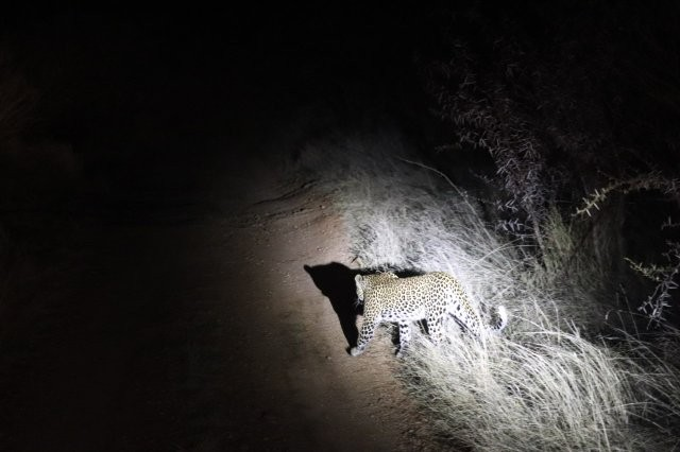 Figure 1: Gracious Beautiful cat |
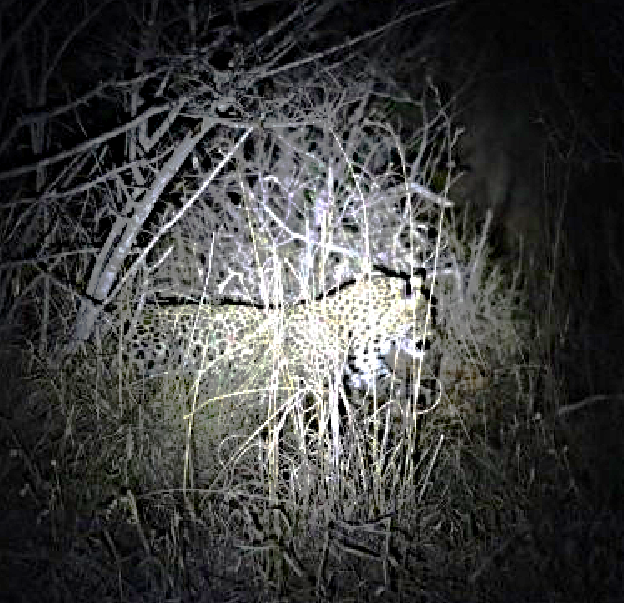 Figure 2: Leopard in Headlights—Hoedspruit Wildlife Estate and Reserve |
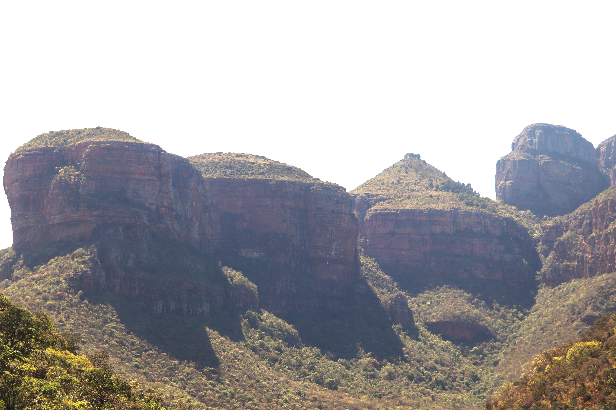 Figure 3: Blyde River Canyon |
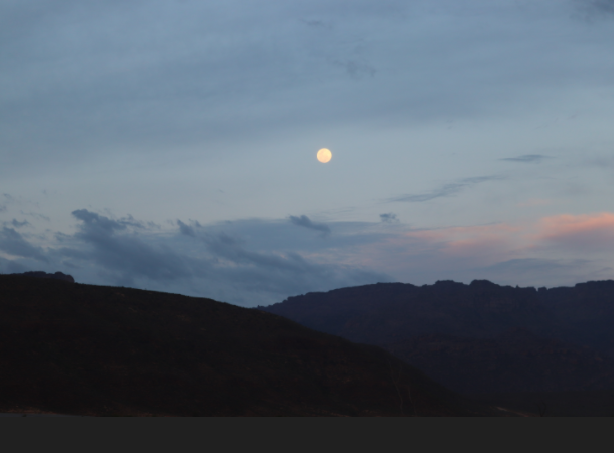 Figure 4: Rising Moon—Cedarberg |
Imagine wandering through botanical gardens or exploring serene nature reserves and national parks, where you can find extraordinary, rare flora and fauna and beautiful landscapes waiting to be captured. All you need is a camera—whether it’s a top-of-the-range ‘Canon’ or a trusty smartphone—plus patience and ‘mindfulness’; you can snap stunning shots in a mindful state!
But Photo Ahimsa has a very sad side to it—it forces us to confront the reality of rampant environmental destruction.
Humans are committing Himsa on a grand scale. Our impact on the earth’s ecosystems is so great that we risk committing wholesale species extinctions. Climate change, deforestation worldwide to make way for agriculture, draining wetlands, paving over grasslands as cities and towns expand, and damming and damaging rivers and coastlines all accelerate habitat loss.
Plastic pollution is spreading globally, while massive oil and chemical spills and mining operations devastate habitats on land and sea. As a result, we are now confronting an ecological crisis.
What does this mean for us?
The crisis is impacting us directly and profoundly! Statistics show we have good reason to be frightened and alarmed. Kudrat Nanar at the University of Denver Sturm College of Law [6] points to this unfolding ecocide:
The devastation of the natural world is no longer a distant concern. A 2022 report from the United Nations Environment Programme (UNEP) revealed that human activity is responsible for seventy-five per cent of global biodiversity loss, with the Amazon rainforest, the Great Barrier Reef and the degradation [7] of native grasslands caused by commercial and invasive tree plantations in South Africa as stark examples of the planet’s deteriorating ecosystems. These are just three examples, signalling a global environmental crisis that not only endangers biodiversity but also threatens humanity’s health and safety…The destruction of ecosystems threatens the health and survival of humanity itself.
Is there hope? Are we doing enough? Pope Francis did not think so. His ‘Laudato Si’ (Praise Be to You) [8] was an appeal to the world:
Each year sees the disappearance of thousands of plant and animal species which we will never know, which our children will never see, because they have been lost forever. The great majority become extinct for reasons related to human activity. Because of us, thousands of species will no longer give glory to God by their very existence, nor convey their message to us.
We have no such right…
In his ‘Laudato Si’, he strongly criticises ‘consumerism and irresponsible economic development, laments environmental degradation and global warming, and calls all people of the world to take swift and unified global action.’
Nature’s photographed subjects were also totems in the cultures of many Indigenous peoples, such as the Aboriginal People in Australia, the San People in South Africa, and the North American Potawatomi People. An ecocide will finally erase these living icons from the cultures of Indigenous Peoples.
Concerted action is needed to prevent a sterile dystopia[9] or, indeed, our own extinction. We believe there are some glimmers of hope—enormous momentum is driving change within the climate change movement. We hope that this momentum will give impetus to the fight against a possible ecocide.
In her sad poem, The Lyrebird, Judith Wright 10], an Australian poet, asks the ‘Dying Poet’ to tell us its story:
Over the west side of the mountain,
that’s lyrebird country.
I could go down there, they say, in the early morning,
and I’d see them, I’d hear them.