Narration by: ‘Green Images’
 |  |
Copyright © 2024 by James Green
All rights reserved.
No part of this publication may be reproduced, stored in a retrieval system, or transmitted, in any form or by any means, electronic, photocopying, recording, or otherwise, without the prior written permission of the publisher or author, except as permitted by Australian copyright law.
This publication is designed to provide accurate and authoritative information regarding the subject matter covered. It is sold with the understanding that neither the authors nor the publisher is engaged in rendering legal, investment, accounting or other professional services.
While the publisher and author have used their best efforts in preparing this book, they make no representations or warranties concerning the accuracy or completeness of the contents of this book and expressly disclaim any implied warranties of merchantability or fitness for a particular purpose. No warranty may be created or extended by sales representatives or written sales materials. The advice and approaches contained herein may not be suitable for your situation. You should consult with a professional when appropriate.
Neither the publisher nor the author shall be liable for any loss of profit or any other commercial damages, including but not limited to special, incidental, consequential, personal, or other damages.
2nd Edition 2026.
DEDICATION
This book is dedicated to the bird-loving Green family, Dedrie, Peter, Hilda, Emily, Eleanor, James and Hugo and all other bird lovers who seek to be loved and helped in turn by birds.
We hope that our photographic encounters and mindful connections with birds will further inspire those fighting to prevent an avian ecocide and those coming to the aid of the avian world during the avian influenza pandemic.
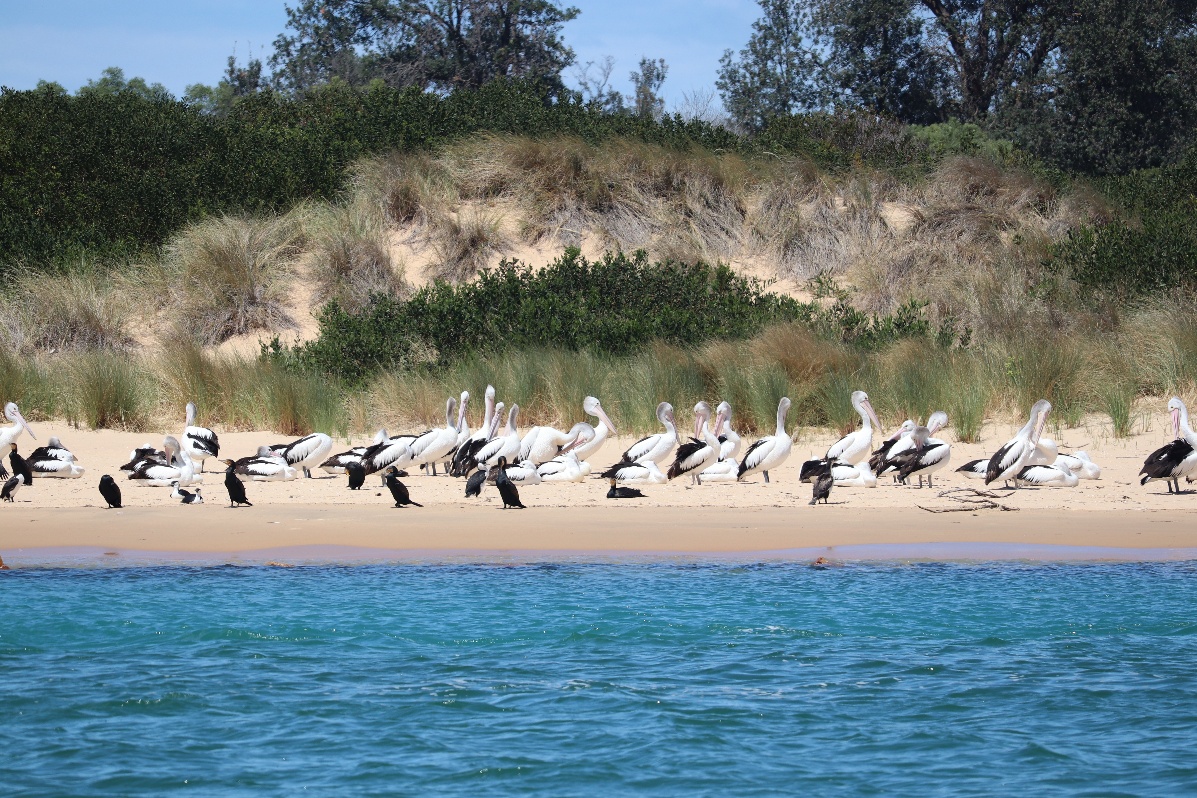 Vulnerable Birds at Lakes Entrance. Vulnerable Birds at Lakes Entrance. |
PREFACE
We’re on a mission to help preserve biodiversity and ecosystem integrity within Australia.
A dramatic foreboding? Not if we listen to what ecologists, scientists, government agencies, and eco-tourists tell us! Birdlife Australia informs us about the dire threat to the avian habitats within Australia:
For 125 years, we have been at the forefront of bird conservation in Australia. With the help of environmentalists and scientific researchers, we have made substantial progress in protecting threatened bird species. However, we now confront a major challenge: Australia’s extinction crisis.
Our mission is to save birds. Over 200 bird species in Australia face extinction, with many others in decline.
We’re afraid that with the impact of the Avian Influenza epidemic that has reached our shores again, we may be headed for a world without birds, an unthinkable dystopia! There are signs all over that the profound connection we humans have with birds and with wildlife may soon be broken!
The loss of habitat drives this potential ecocide; the impact of invasive species; the extensive use of chemicals, pesticides, and herbicides; climate and environmental changes; fires; hunting; and now Avian Influenza.
In addition to the bird species facing extinction, several duck species in Victoria are threatened or endangered under the state’s Flora and Fauna Guarantee Act 1988 due to hunting, long-term environmental pressures, climate change and habitat loss. These are the Freckled Duck, the Blue-winged Shoveler, and the Hardhead.
We believe that we are losing the battle due to inadequate environmental laws.
We love birds! We ‘mindfully’ observe them in gardens, in our green spaces, along rivers and seashores, in the city, and wherever and whenever we travel. Where we’ve been and where we go, birds have always been an integral part of our enjoyment of nature—and the enjoyment of millions of people around the globe.
How many birdwatchers and birders are there in the world?
In the USA, about 96 million adults (37%) are birdwatchers, with millions more in Europe and 10,000 to 17,000 in Australia participating in citizen science initiatives such as the Aussie Bird Count. Additionally, over 500,000 Australians incorporate birdwatching and birding into their vacations, creating lasting memories.
We hope to share this book with other birdwatchers and nature lovers in Australia to inspire them to make their voices known. We need to remind ourselves to be highly proactive in protecting the habitats of our fellow avian friends—because we share a habitat that may be lost forever!
Protecting birds and habitats could help stave off a dystopian future:
Without birds controlling insect and rodent populations, pests would thrive, harming crops and forests. Birds also play a crucial role in pollination and seed dispersal, and their absence would disrupt plant networks and alter landscapes.
Advocates who focus on making environmental harm a criminal offence argue that significant ecological deterioration signals that “the dystopian future has arrived.” This requires urgent international legal measures.
Jim and Dedrie Green have long supported wildlife conservation through their work as risk management consultants:
They were made aware of the global threat to avian habitats while working with operators of oil refineries, gas plants, and chemical facilities from 1992 to 2020—within Australia and internationally.
They evaluated the risks and wrote reports on how accidental chemical and oil spills could harm bird habitats, especially in vulnerable areas such as Ramsar sites in Victoria, New South Wales, and Queensland.
Many recommendations in their reports focused on measures to mitigate the impact of fuel and chemical releases into the environment. They were aware that EPA regulations were not stringent enough.
Jim has added his name to a BirdLife Australia petition to invest $200 million in a desperately required critical Wildlife Resilience Package that would strengthen protection for Australia’s birds and wildlife before the impact of the Avian influenza (H5N1 strain) pandemic becomes even greater.
In addition to the bird species facing extinction, several duck species in Victoria are threatened or endangered under the state’s Flora and Fauna Guarantee Act 1988 due to hunting, long-term environmental pressures, climate change and habitat loss. These are the Freckled Duck, the Blue-winged Shoveler, and the Hardhead.
Avian influenza is a viral disease of birds that is found globally:
Virus strains are either low pathogenicity (LPAI) or high pathogenicity (HPAI). High-pathogenicity H5N1 avian influenza (H5 bird flu) is currently affecting all parts of the world and has recently been confirmed for the first time in Australia.
An article in ‘The Sydney Morning Herald’ says:
Approximately one in five Australian bird and mammal species is at high, very high or extreme risk from the bird flu virus now spreading in Australia, according to data published on the federal environment department’s website on Tuesday evening.
Five bird species are assessed as being at extreme risk, meaning that they will not survive where the virus occurs. They include the Christmas Island frigatebird, the Herald petrel, the Houtman albatross, the imperial shag on Heard Island, and the imperial shag on Macquarie Island.
This book is a collaborative effort. Jim provides the text and photographs, while other members of the Green family have contributed as birdwatchers, photographers and reviewers.
‘Green Images’ is our pseudonym for a fictitious non-violent entity that narrates the stories connected to the Green family photos—stories that revolve around images of birds in their natural habitats. Some tales not only feature the birds but also individual members of the Green family.
As you flip through the pages, get ready to laugh, reflect, cry, maybe and experience your own ‘connection’.
We say, ‘Let’s reflect on the words of Pope Francis’:
Each year sees the disappearance of thousands of plant and animal species which we will never know, which our children will never see, because they have been lost forever. The great majority become extinct for reasons related to human activity. Because of us, thousands of species will no longer give glory to God by their very existence, nor convey their message to us.
We have no such right!
If we, as a society, take the necessary steps to address the risk of ecocide, we may still see the cormorants that Jim and Dedrie saw again at Lakes Entrance, Victoria, in 2025.
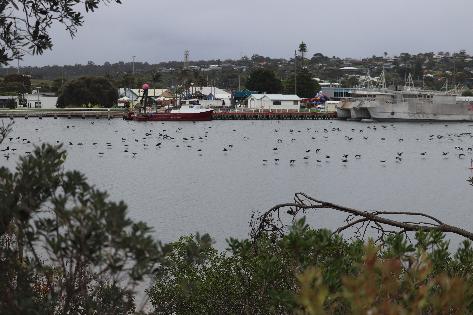 Figure 1: Cormorants—Lakes Entrance, Victoria. Figure 1: Cormorants—Lakes Entrance, Victoria. |
The list of photographs is given on page 9. A first edition of this book has been incorporated and advertised in ‘The Mindful Birding Network’ blog.
Foreign words, such as Ahimsa, are italicised.
Jim acknowledges using Grammarly to edit and correct some of the text and Google AI for research.
Shooting with ‘Photons’
All beings tremble before violence. All fear death, all love life. See yourself in others. Then whom can you hurt? What harm can you do?
—Siddhartha Gautama, The Buddha
Jim hunted birds in his childhood and teenage years, shooting them and collecting their wings as trophies. His bedroom wall was festooned with colourful, patterned wings of many birds that met their premature end from a lead air rifle pellet.
But he had a change of heart one day. What was behind Jim’s epiphany?
Jim occasionally hunted African Guinea Fowl when he was a young dad, dragging his two children (Hilda and Peter) along with him. The birds were wary, smart and inquisitive, thereby avoiding the 0.22 rifle bullets most of the time. One day he had a rare ‘success’ and shot one of them.
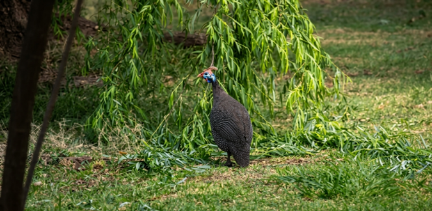 |
| Figure 2: Wary Guinea Fowl—South Africa. |
His ‘success’ soon turned to bitter regret when Hilda asked him tearfully, seeing the lifeless, bloodied bird in his hand, ‘How could we eat such a lovely bird, so inquisitive and smart?’
The bird was turned into spiced venison, which neither Jim, Peter nor Hilda could eat, after that remonstrance. Jim vowed never to hunt with a rifle again— ‘It would only be with a camera from now on,’ he said.
But the seeds of non–violence were sown long before. Jim tells this bird-hunting story with much regret:
During my childhood and teenage years, I was a hunter, shooting birds and collecting their wings to hang as trophies on my bedroom wall. It was a hobby that many boys my age indulged in. I remember the shouts of triumph when the thud of the pellet from my air rifle signalled a hit. The doomed bird would either fall like a stone or flutter its way to the ground. If injured, they were quickly dispatched by having their necks wrung.
Each experience was deeply unsettling for me. Every time I encountered what the world deemed a ‘success,’ I couldn’t shake the feeling of self-loathing that crept in. A sadness then engulfed me, bringing tears to my eyes, especially when I picked up an injured or lifeless little body.
One day, when I was about ten years old and living in a town on the banks of the Limpopo River, I had an incident that would change me forever. A beautiful sugarbird flitted around the flowers in our front garden, sucking nectar from an aloe in the flower bed. I dashed inside to grab my air rifle, intent on securing that bird’s wing.
As the sugarbird fluttered about, visiting flower after flower, I drew a bead on its colourful body. When the pellet found its mark, the sugarbird dropped to the ground, stone dead. I rushed back into the house, holding my prize high. However, I did not anticipate my sister Joan’s reaction. She took one look at the tiny, feathered figure in my bloodied hand and let out a piercing scream, “Dad, come quick; Jimmy has killed our little sugarbird!”
My father, a firm believer in “spare the rod and spoil the child,” did not hold back. I felt every blow of the belt, but that night, I spent hours crying over what I had done. Little did I realise at the time that the sugarbird would haunt me forever.
Now, whenever I see one of those little Blue Wrens, or a Willie Wagtail, their magic makes me wonder why the exquisite beauty and delightful antics of the sugarbird hadn’t restrained me from taking its life.
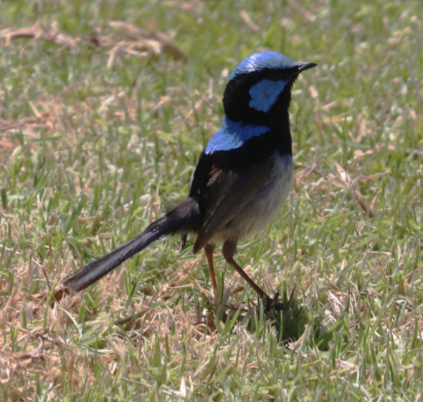 |
| Figure 3: Blue Wren—Magic! |
0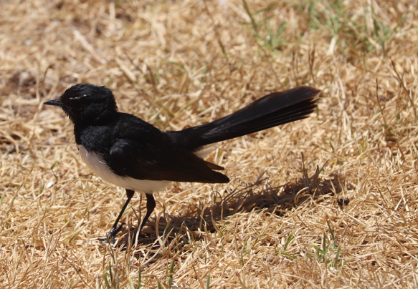 |
| Figure 4: Willie Wagtail—Magic! |
Jim is now happy to be ‘shooting’ with ‘photons’, because ‘photons’ are bullet–like, except they do no damage to birds and ensure that he is a non-violent birdwatcher: Photons are tiny packets of light that bounce off objects, travel through a camera lens, and hit a recording surface. They create photos by transferring their energy to trigger physical or chemical changes, turning light patterns into a permanent image.He calls the hobby—the practice—Photo Ahimsa.
Photo Ahimsa
Do not say that I’ll depart tomorrow
because even today I still arrive.
Look at me: I arrive in every second
to be a bud on a spring branch,
to be a tiny bird whose wings are still fragile,
learning to sing in my new nest,
to be a caterpillar in the heart of a flower,
to be a jewel hiding itself in a stone.
—Thich Nhat Hanh, Engaged Buddhist
Most members of the Green family are biophiles—they love living things. They have always loved dogs, cats, and other pets, as well as wildlife and birds. Most family members were never serious birdwatchers but always tagged along for a walk in the bush, spotting birds and helping to get good photographs.
The Greens can be classed as ‘mindful birdwatchers’—explained by Claire Thompson, author of ‘The Art of Mindful Birdwatching’:
Mindful birdwatching involves setting aside knowledge, labels, and expectations while fully attending to our direct experience with birds in a moment-by-moment, non-judgmental manner.
Professor Kabat-Zinn, a psychologist, says: ‘Mindfulness is a ‘richness of present-moment experience…the richness of life itself’. Luke Smith, a psychologist, says that this is easy to do:
Most people think of mindfulness practice as meditating on a chair or cushion, which is an important aspect, but we can also be mindful in our day-to-day lives, such as when birdwatching.
He explains that by paying full attention to our senses whilst birdwatching (such as a bird’s song and appearance) and bringing our attention back to these anchors when our minds wander, we practise what is termed “informal mindfulness.”
Jim has called this easy-to-do, enriching birdwatching practice ‘Photo Ahimsa’—to stress its non-violent nature. ‘Ahimsa’ is Sanskrit for ‘non-violence,’ and ‘Photo’, short for ‘photon’, implies ‘shooting’—harmlessly, by taking a photo.
The following incident illustrates the Green family’s practice of Photo Ahimsa. Jim explains:
We were showing visitors the lovely gardens at the Abbotsford Convent in Victoria. Armed with my camera to photograph native plants and flowers, we came across a stunning Red Rumped Parrot, to the delight of our visitors.
Just as I was about to take a photograph, someone’s mobile phone rang, causing the parrot to prepare for a hasty retreat.
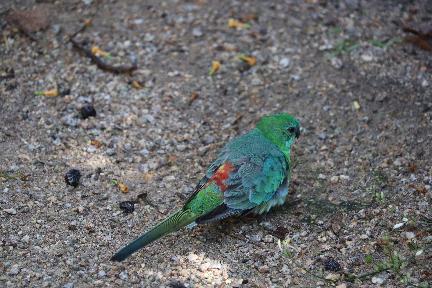 Figure 5: Red Rumped Parrot—Abbotsford, Victoria. Figure 5: Red Rumped Parrot—Abbotsford, Victoria. |
But the parrot remained there, staring us straight in the eye, regardless of the intrusive ring of the phone. We stood motionless, and I quickly took a photo.
So, an enriching Photo Ahimsa moment can occur any time or place—and you don’t need elaborate preparations for this to occur.
Jim adds a warning:
It’s almost impossible to avoid stepping on ants or having to dispose of flies that crawl into the corner of your eye while birdwatching. That’s still Photo Ahimsa, because it’s unintentional and unavoidable—an act of self-defence? But let’s get this straight: if you shoot a bird, you’re practising Himsa—violence. It could haunt you for the rest of your life. I still suffer from a mild form of PTSD when I recall my bird-hunting days.
‘Mindfulness’ has become a credo for many people in modern society and is recommended by psychologists for treating mental health issues such as anxiety and depression.
So, how can birds help to improve our mental health? We agree with eBird Caribbean that ‘birds can be our very best therapists, if we give them the chance. They can help us through the tough times.’
Anxiety or feeling ‘down’ will lift; depressing thoughts will flee when you come across a kookaburra sitting still, who welcomes you with a call—a loud, rolling sound that starts as a low, staccato chuckle, rising into a wild, echoing cackle that sounds just like a human laughing madly in the bush.
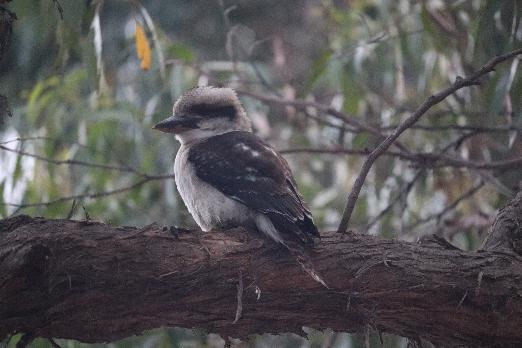 |
| Figure 6: Kookaburra—Noosa, Queensland |
How can you be depressed when standing below this Rainbow Lorikeet? You can’t help but say ‘Hello!’
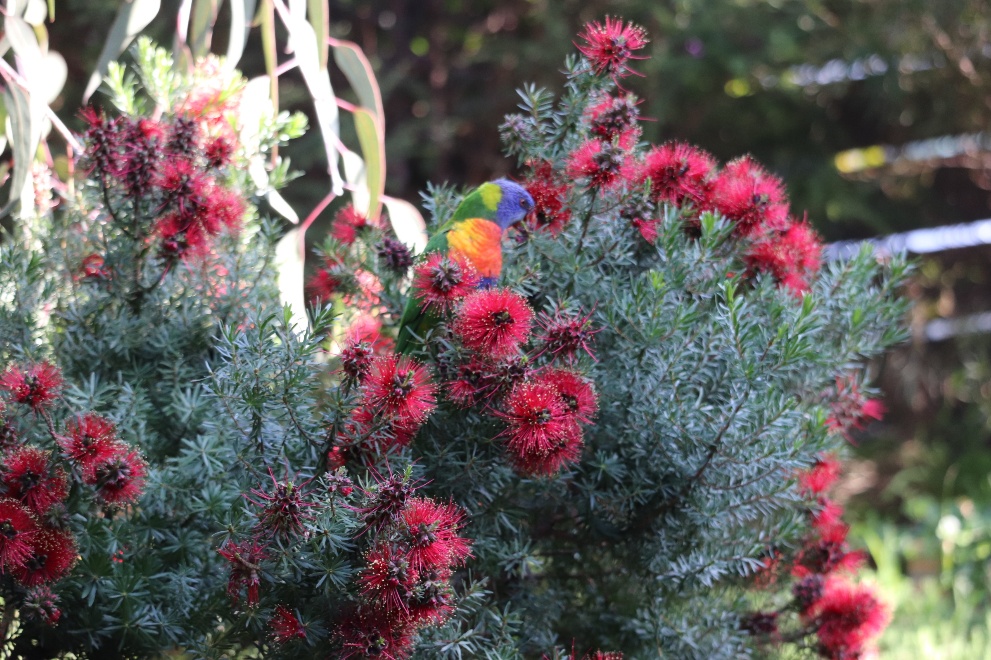 |
| Figure 7: Rainbow Lorikeet—Kew, Victoria. |
Jim describes his visit with Dedrie to the Blue Lotus Water Garden in the Yarra Valley in autumn. He was aware of Lizabeth Roemer’s words that interesting, pleasant, and calming environments can help to reduce our physiological arousal and enhance positive emotions.
The experience was just that.
‘Feel-good’ hormones kicked in as they walked through the plants and lotus flowers, surrounded by huge River Red Gums, with birds darting in and out of the flower beds.
Jim’s photograph tells the story:
The Pacific black duck in the lotus pond caught everyone by surprise as it glided out gracefully from the overhanging lotus plants and flowers. An artist sitting close by also captured this exquisite Monet-esque scene.
There were smiles all around. People took photographs, quietly talking to each other. As far as everyone was concerned, there was ‘nothing else to do, nowhere else to go!’
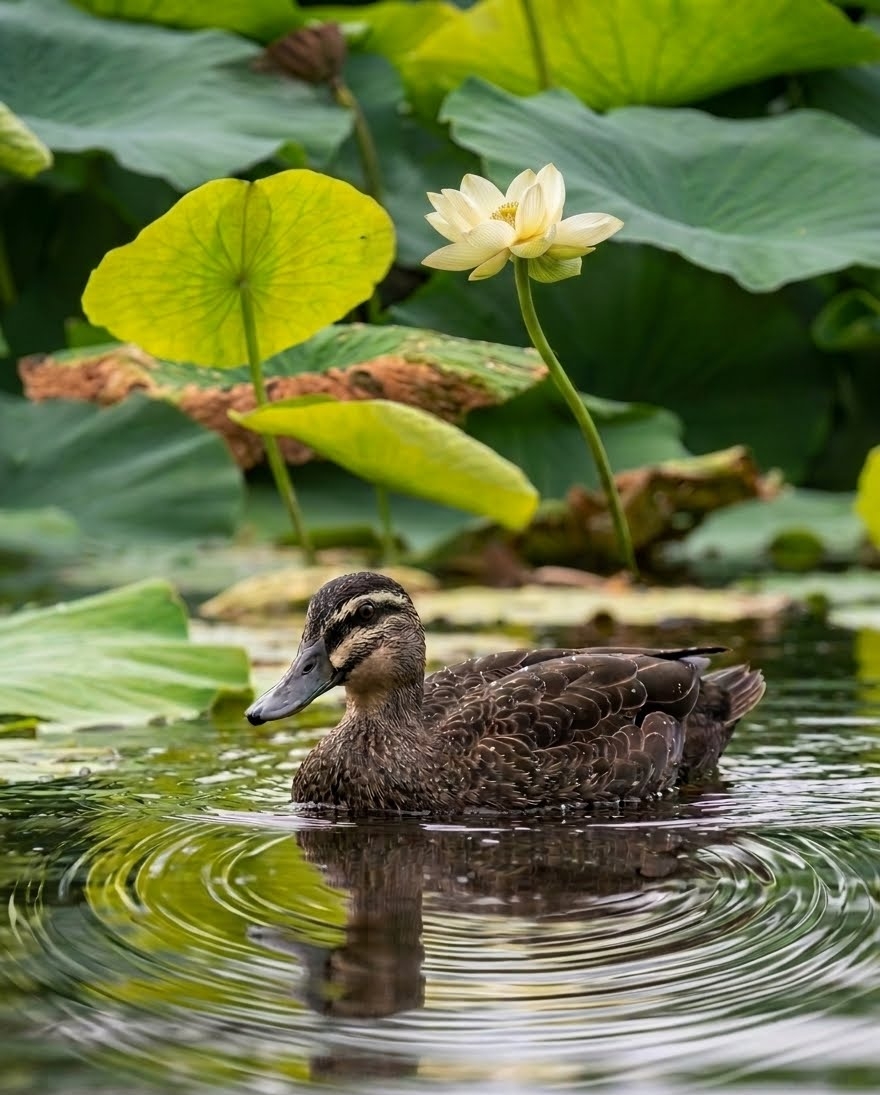 |
| Figure 8: Pacific black duck— Blue Lotus Water Garden. |
There are many ‘healers’ in local parks, gardens, and sporting ovals. They can appear suddenly on a walk, can feel comfortable in the mindful birdwatcher’s company, and connect easily with one.
A ‘mental health measuring meter’ could show an improvement in mental health immediately whenever such a ‘healer’ appears. We de-stress. We begin to feel welcome; we belong—only for a short while sometimes, but we are not allowed to get too close. Our cortisol levels drop; ‘feel-good’ neurotransmitters, such as oxytocin and dopamine, rise. Everyone feels safe, and the ‘healer’ carries on unhindered.
These are some of Jim and Dedrie’s healing Photo Ahimsa experiences, told by Jim:
Crested Pigeons accost us on our city oval near Burnley Gardens, Victoria, with their tessellated wing patterns blurred as they diligently go about their business. Stocky ‘no-sillies’ birds that allow us within striking distance but end the visit swiftly, with their wings making a high-pitched whistling alarm sound when they fly off.
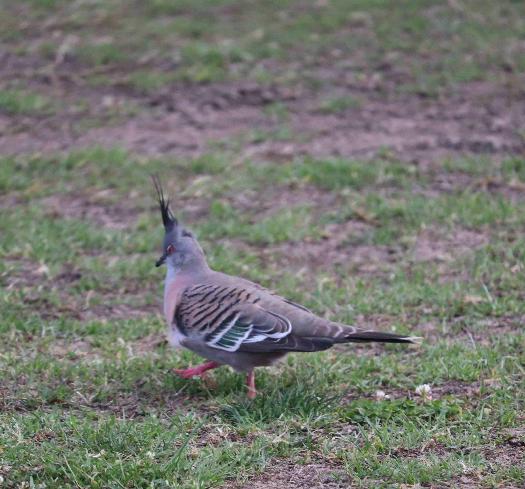 |
| Figure 9: Crested Pigeon—Australia-wide. |
On the same oval, the Red-rumped Parrots move around almost undetected through the grass. We cannot help but smile, ‘cluck–cluck’ to the birds, and gingerly walk through the little groups feeding in the grass. Since we know each other, we get on well.
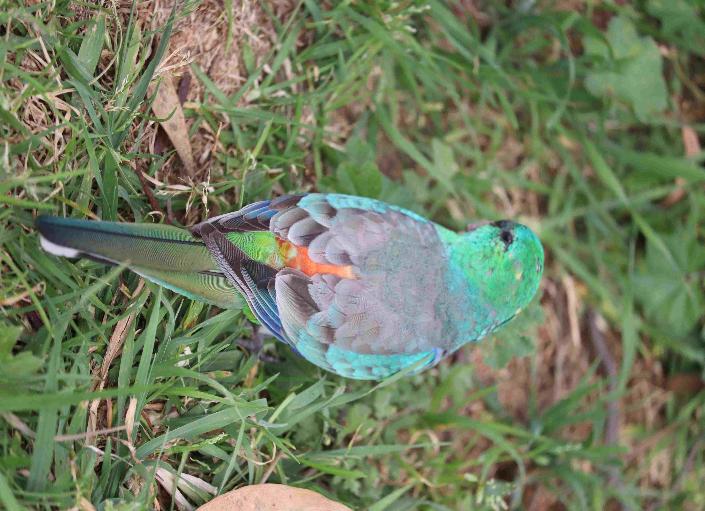 |
| Figure 10: Red-rumped Parrot—Hawthorn, Victoria. |
We were climbing out of our car in a carpark on a visit to the Bay of Fire in Tasmania when this tiny Superb Fairy–Wren jumped into our walking space at lightning speed. We were overjoyed to catch one of these frenetic little wrens sitting still for a moment.
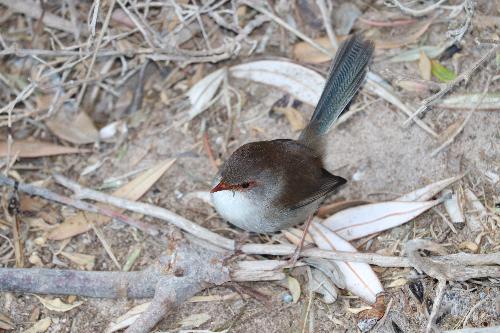 |
| Figure 11: Superb Fairy–Wren (Female)—Bay of Fire, Tasmania. |
There was an immediate rush of Dopamine, Serotonin, endorphins, and Oxytocin—the ‘feel-good’ hormones. She sat still for a second so that we could enjoy Photo Ahimsa with her.
While visiting a hobby farm near Monbulk, this Crimson Rosella jumped out of the garden bed with a seed in his beak. We watched and waited to see what he intended to do with it.
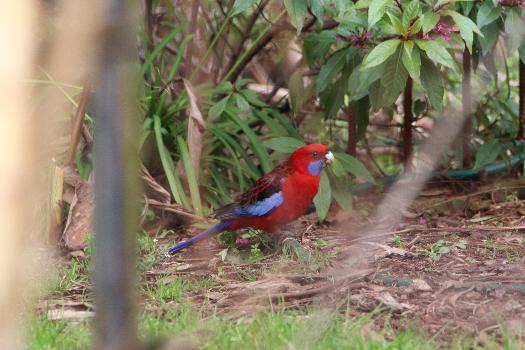 |
| Figure 12: Crimson Rosella—Monbulk, Victoria. |
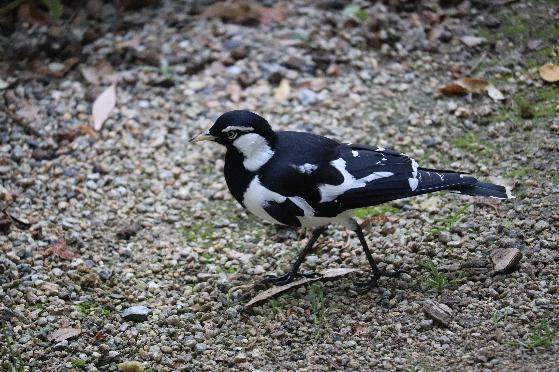
Recently, Jim took his camera to the Abbotsford Convent in Victoria to photograph the local birds. A few surprises awaited him as he walked through this delightful garden, home to many local birds.
A Magpie Lark boldly walked up to him, looked him in the eye, and posed for a photograph. Then, he noticed a Red Rumped Parrot nearby. Jim was worried that he might accidentally step on him, but the parrot simply sidestepped him and joined several others along the pathway.
It was a wonderful start to his day. He said, ‘I felt good, joyful—welcomed into their world—their homes.
 |
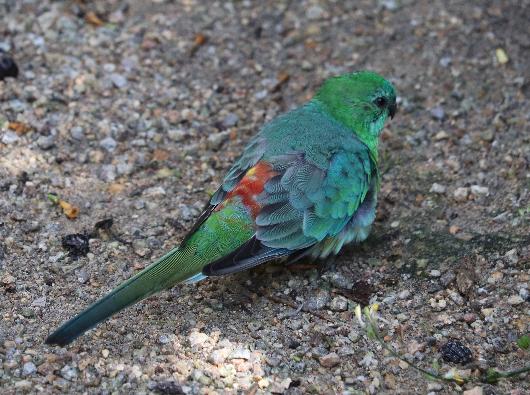 |
| Figure 13: Magpie Lark and Red–rumped Parrot—At Home, Abbotsford. |
Jim and Dedrie had a good dose of the ‘love hormone’, oxytocin, when they came across this poignant scene while walking on Ohope Beach in New Zealand. The oystercatcher parents tried to shoo them away and guided the little oystercatcher away from them. They walked away from them until they settled down, and then they quickly took these photographs.
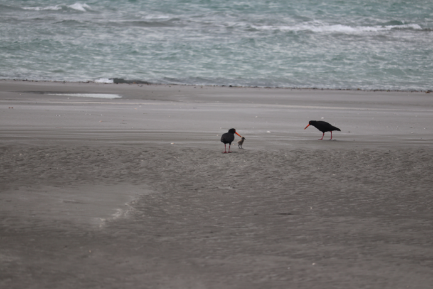 |
| Figure 14: Oystercatcher Parents—Ohope, New Zealand. |
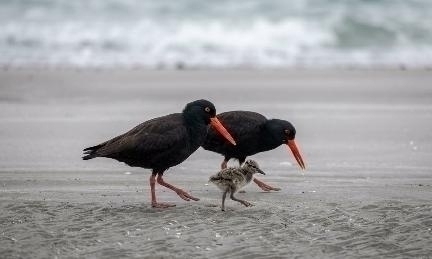 |
| Figure 15: Oystercatcher Parents—Ohope, New Zealand. |
We highly recommend mindful birdwatching so that you too can experience the ‘feel-good’ hormones that can benefit you. The birds are excellent therapists—give them the chance.
Our Practice
You must have the bird in your heart before you can find it in the bush.
― John Burroughs, American Naturalist
Australia is still a birdwatcher’s paradise. Any photographer, armed with a camera or even a mobile phone, can capture impressive photos of birds, as many species are accustomed to living in towns and cities.
‘Avian homes’ are found in parks, gardens, sporting ovals, nature reserves and along coasts and rivers; other avian homes are in buildings, under eaves, on electricity pylons and wherever nests can be built in our built environment.
Who are the participants in the Green’s Photo Ahimsa practice? Jim is the main photographer; Dedrie is a ‘field’ person, and Hilda is an editor and standby photographer. Other willing participants are often Green family members, and the other participants are our avian dwellers in backyards, gardens, parks, national parks, and sporting ovals.
One can practice Photo Ahimsa anywhere where there are birds!
To illustrate. Recently, from our apartment window, looking out at the very large heritage-listed River Red Gum in our neighbour’s garden, Jim and Dedrie were transfixed by the antics of a Sulphur-crested Cockatoo entering her.41 nest—a huge hole on the other side of the branch.
Jim describes their experience:
It was a captivating moment as the bird shuffled along, doing circus tricks as she went, finally disappearing into the large hole.
We had to use AI (Google Nano Banana) to enhance the photo of the cockatoo, while the image of the tree itself turned out to be quite satisfactory. However, getting closer to get a better picture of the bird would have required entering our neighbour’s property and climbing the large tree.
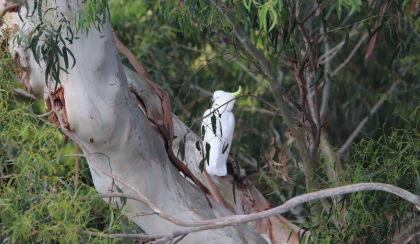 | 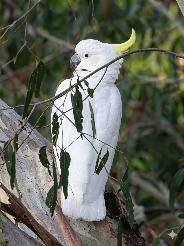 |
| Figure 6: Sulphur-crested Cockatoo—Toorak, Victoria |
Our neighbour is a kindly man with few enemies, we believe, except the family of cockatoos that come and go endlessly out of their nests in the tree. He has threatened to have the tree cut down—if only the council will let him remove it.
The cockatoos are very early risers, and they announce their intention to fly out and around the nearby church steeple before sunrise, with ear-piercing screeches. Their screeches are deafening. ‘You ever hear cockatoos screech?’ Our neighbour lies awake at night, counting sheep, waiting for the ‘damn cockys’ to herald in the new day!
You don’t need to follow ‘best practice’ methods to succeed in ‘mindful birdwatching’; however, there are some basic steps needed for success. Communicating effectively with potential avian friends, who often fly away immediately, requires a lot of patience and time. Good vision and hearing are a must, and slow, quiet movements are highly recommended.
What puts people off the stereotypical birdwatching activity is having to locate a spot frequented by scarce or unusual birds; then remain motionless for hours on end with a heavy camera and telescopic lens poised to capture the moment. To top it off, you need to breathe silently while refraining from the slightest movement.
This is not the Green family practice. They just walk quietly through the bush, along the river or coast or along a forest trail and hope for the best.
They are never disappointed.
Photo ‘Ahimsa’ moments may arise anywhere or anytime when out and about with a camera, such as when this wattlebird jumped onto Jim’s table at a coffee shop in Warrnambool to gobble up some crumbs. All Jim had to do was ‘shoot’ when he had finished sharing his muffin. His tolerance for a bird settling on your outdoor table is highly frowned upon, but the bird never gave up.
A twitcher would have told us what it was, a ‘red’ or a ‘little’; a ‘him’ or ‘her’. Jim just liked having the Red Wattlebird there, hypocritically voicing his indignation about ‘these little scavengers’, when the coffee shop owner charged out to shoo the bird away.
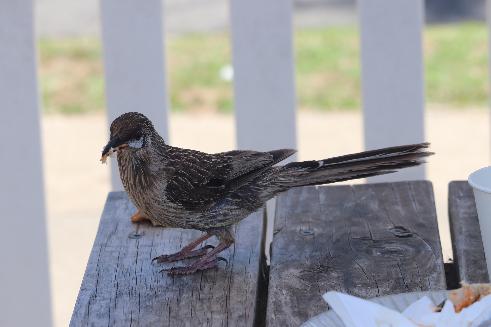 Figure 16: Red Wattlebird [Juvenile]—Warrnambool, Victoria. Figure 16: Red Wattlebird [Juvenile]—Warrnambool, Victoria. |
The Greens use low-cost equipment, such as a Canon EOS 200D DSLR. They use a Tamron SP 150-600mm F/5–6.3 telephoto lens to capture the tiny, elusive subjects or those at a distance. The downside of using a telephoto lens is its weight, which can lead to the affliction called ‘heavy camera tremble’. To counter this, photographers often look for a stable surface to rest the camera on or revert to a tripod.
Jim provides some practical steps to follow during Photo Ahimsa:
We follow Google’s advice to use a high shutter speed while photographing with the heavy lens to help achieve sharp, blur-free images. We also use our Samsung Android phone cameras when we can get close enough—a practice that most professional birders advise us to avoid.
Some good fieldcraft will help. Often, just as we are about to take a photo, the bird decides to fly. We have found that the bird is usually the first to notice our presence, as we are usually the intruders.
The bird may give an alarm call or start telling us to ‘get lost’ in loud calls and chatter. They usually stop singing or chirping and hesitantly continue again when we move away. If we use binoculars, we often notice that the bird’s eyes observe our every step.
We try to avoid bird-centric images. Habitat is equally important, as are the other bird species, animals, and plants featured in the photograph.
Sometimes, a photo may not turn out as desired, but it is too valuable to delete. We then use elementary photo-shopping skills. As an example, we used the PC Windows 11 image editor to rescue the image of the Yellow-tailed Black Cockatoo in Figure 17 below.
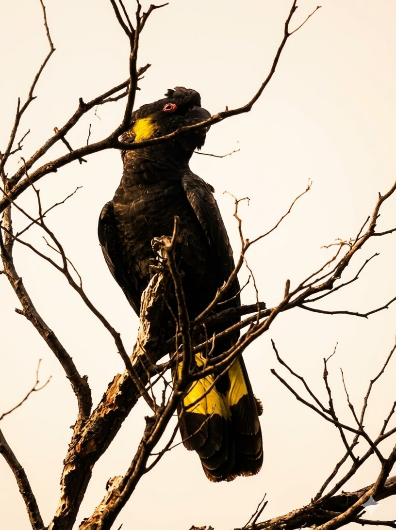 |
| Figure 17: Yellow-tailed Cockatoo—Tasmania, West Coast. |
Sometimes, when we set out to embrace Photo Ahimsa, we might encounter Photo Himsa—the opposite. We’ve had our share of Photo Himsa moments while trying to practice. For instance, we’ve faced sunburn, dealt with bug or tick bites, encountered snakes, gotten lost, and walked into thorns.
Be warned, novices—Photo Himsa and Photo Ahimsa often occur together!
You may need to become ‘besties’ with the creepy crawlies. If you’re going to snap photos of birds, it’s best to shake off those fears of spiders, bugs, and whatever else is lurking about. Some of us had to overcome an ingrained fear of spiders, such as the African Hermit Spider.
Jim tells this story about spiders:
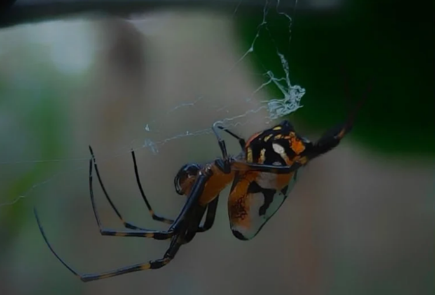 |
| Figure 18: African Hermit Spider. |
On a hunt one day along the Limpopo, one of my older ‘besties’ nastily said to me that I should go off by myself, as he and another friend were hunting with the .22, and I would only be a nuisance. Sulking, I headed off with my trusty ‘Gecado’ air rifle, shooting at anything that remained still and within range.
I got lost. Every bush and tree looked the same. After a considerable amount of time, taking paths to nowhere, I found myself in a clearing surrounded by thick veld dotted with medium-sized trees on the boundary. To my horror, when I looked up, I saw giant spider webs spanning the tree branches. At the centre of each of those webs, huge spiders hung, snugly staring down at me with a few of the many eyes they were meant to have.
To this very day, I believe they were Hermit Spiders.
I panicked and walked around in circles, trying to avoid the lowest regions of the webs. My breath came in ragged gulps. The scorching afternoon sun added to my distress as sweat ran down my neck. Strangely, the spiders were nonchalant about me being there.
I searched high and low for a gap. I must have trodden the same circle for about an hour when I spotted a gap big enough to crawl through if I hugged the ground. I leopard-crawled into the gap and, at least fifty meters further, stood up and ran as fast and as far as I could. Houses appeared in the distance; I was home— ‘thank you, Jesus, ’ I said over and over again.
That experience launched me into a lifetime of panic attacks whenever I saw a spider. But I did notice the beautiful patterns on the ‘supposed’ African Hermit Spider! From then on, I fed the spiders in our backyard until they became fat and friends—at a distance!
After all, you can’t be mindful while panicking if you see a spider every time, you’re crawling through the bush to get a shot of a kookaburra. Embrace the spiders and the bugs and take photos of them too!
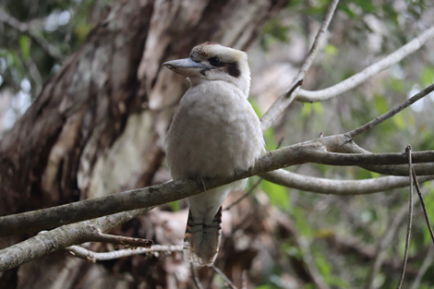
Figure 19: Kookaburra in the Bush—High Country, Victoria.
Jim says this about the difference between birding and birdwatching, a view supported by Dedrie:
We found that there’s a meaningful difference between birding and birdwatching. We tried birding initially—our first outing was highly embarrassing and rather clumsy. We thought we were well prepared with a pair of ex-army binoculars that could not focus well and a vintage Olympus Trip 35 camera.
We approached a bespectacled, greying woman, immaculately dressed in birding garb, surrounded by similarly dressed people. They were all peering through state-of-the-art binoculars into the top branches of a giant tree. She was setting up an impressive 35mm SLR, a Leica M.
I asked rather timidly while she adjusted the tripod. ‘Are you all here to birdwatch?’ ‘Quiet, man, be quiet!’ the woman hissed. She then whispered curtly, ‘No. We’re here to bird.’ We knew then that birding was more serious business than we had bargained for.
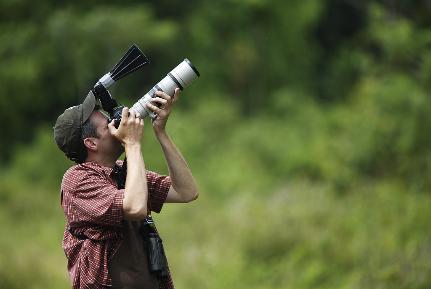
Figure 20: Birding vs. Birdwatching
Birders, we realised, are more serious versions of birdwatchers. The difference is their level of activity, focus, and dedication: a birder actively seeks out and tracks birds. In contrast, a birdwatcher enjoys observing birds more casually.
Birders are a step up from birdwatchers. They unavoidably practice mindful birdwatching and are at the vanguard in the fight against ecocide. We admire and respect them!
Birders actively, sometimes even compulsively, pursue birds; they are in it for the chase. The birder will think nothing of hopping into a car and driving many hours to see an extremely rare Helmeted Honeyeater, for example. Julia Zarankin says: ‘In a sense, birding is about the human impulse to hunt, but without the blood!’
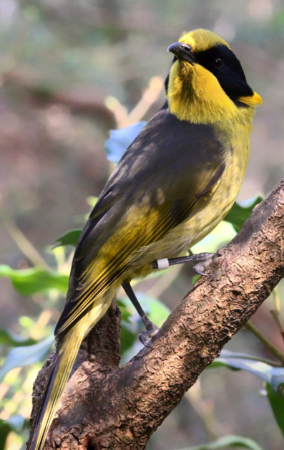 |
| Figure 21: Helmeted honey-eater. |
We soon discovered that we were not the birding type; my attention to detail did not cut the mustard, and Dedrie cannot hear a bird call. So, we’ve stuck with birdwatching—the more passive, less serious pursuit.