Ōhiwa Harbour and Ōhope Beach are separated by a giant sandspit that supports the beach town of Ōhope. While this area has immediate appeal for anybody who loves beaches, it’s also a popular destination for those who are into ‘birding’, or practitioners of Photo Ahimsa; ‘Mindful Birdwatching’, nature photographers or those who like sharing good photos
Our primary reason for visiting Ohope was to catch up with a friend who had recently lost his wife. The visit turned out to be halcyonic—days of glorious temperate summer, with lots of sunshine and the ‘long white clouds’ the country is known for.
In spring, migrations bring large numbers of wading birds to New Zealand from their arctic breeding grounds. Others migrate between the North and South Islands. So Ōhiwa Harbour and the beaches turned out to be a birdwatching feast for us.
Depending on the time of year, you can hope to see bar-tailed godwits, bitterns, banded rails, spotless crakes, pied stilts, oystercatchers, curlews, plovers, herons, terns, shags and gulls. There’s also a chance you might spot a spoonbill or two. One inspired way to explore the harbour and watch the birds is by hiring a kayak or joining a guided trip.
Ōhope Beach is an 11 kilometre stretch of white sand that’s often blessed with great surf. The beach looks out to Whale Island, White Island and the sweeping coast of East Cape. In late December, Ōhope is a place to see pohutukawa trees blooming in all their crimson glory. From a comfortable towel on the sand, you can watch the ocean for seabird activity. Gannets perform spectacular diving feats and groups of petrels, terns and gulls can often be seen working the fish.
West End, a long favourite with surfers, is also one of the access points to Otarawairere Beach, one of the most picturesque beaches in the Bay of Plenty. It’s only accessible by walkway from Whakatāne or Ōhope using the cliff-top coastal walkway Nga Tapuwae o Toi.
Ohope Lagoon
The lagoon-like area is Ōhiwa Harbour, which borders Ōhope Beach in the Bay of Plenty region of New Zealand. It’s a stunning tidal estuary known for its calm waters, rich birdlife, and scenic beauty.
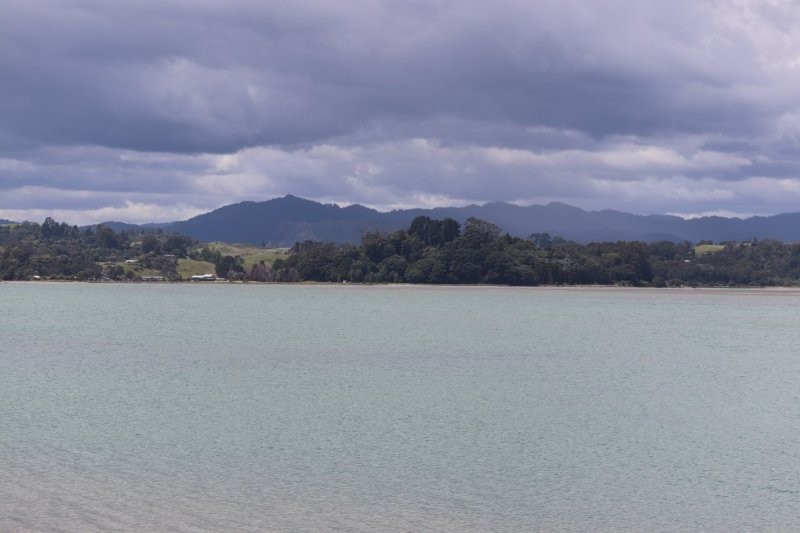
Though technically a harbour, its sheltered waters and surrounding sandspit give it a lagoon-like appearance. It is a birdwatching paradise: Home to migratory and native birds like cormorants, godwits, herons, and spoonbills.
Water Activities on the lagoon are ideal for kayaking, paddleboarding, and fishing. The area includes Māori-owned ventures like Tio Ōhiwa, an oyster farm offering eco-tours.
The lagoon is an outstanding place—pristine and a walker’s paradise. Walking along the shore raises questions. ‘How did this all come about; what sort of creatures live in the multitude of holes interspersed among shells, rocks, plants and seeds?’ Had to resort to Google for this one!
Ohiwa Harbour is a 24 km2 estuarine lagoon impounded by the 6 km long Ohope spit in the west and the 0.7 km long Ohiwa spit in the east. These barrier sand spits are presently separated by a 340 m‐wide inlet channel where the maximum harbour depth of 14 m occurs. Seventy percent of the harbour consists of tidal flats supporting a rich shelly benthos and diversified by stands of mangrove and backed locally by salt marsh. Lower harbour sediments in barrier beach, dune, and entrance shoal and channel environments are well sorted, negatively‐skewed, medium to fine sands. In contrast, upper harbour sediments are poorly to very poorly sorted, positively‐skewed, medium to very fine (silty) sands, the coarser of these deposits occurring in channel and restricted harbour beach environments, and the finer in inter‐tidal flat, creek, and channel bank areas. The terrigenous mineralogy is consistent with a dominantly acid volcanic provenance, directly from the tephra mantle of the catchment and, most importantly, indirectly from the oceanic littoral zone. Sediment dispersal is dominated by tidal currents. Speeds decrease systematically up‐harbour from maximum values of 100–150 cm s‐1 at the inlet channel to 5–10 cms‐1 in upper‐harbour reaches. Current ripples, megaripples, and sand waves characterise the higher energy, current‐dominated lower harbour deposits, hereas small‐scale current and wave ripples, together with biogenic markings and burrows, characterise the lower energy, inner harbour deposits. Small amplitude, wind‐forced waves are important for resuspending and moving sediment in intertidal areas, particularly on the upper tidal flats. Most areas of the harbour are affected by biological processes. Rapid growth of Ohope barrier spit resulted from increased eastwards transport of littoral sands around Whakatane Heads, west of Ohiwa Harbour. The probable cause of this was the infilling of the up‐drift Rangitaiki Plains embayment which was essentially completed soon after the time of the Taupo Pumice eruption (AD 131). Over the last 2000 years Ohope spit has accreted laterally eastwards at an average rate of about 3 m y ‘, Ohiwa spit has concomitantly eroded, and there has been accelerated infilling of Ohiwa Harbour.
Richmond, B. M., Nelson, C. S., & Healy, T. R. (1984). Sedimentology and evolution of Ohiwa Harbour, a barrier‐impounded estuarine lagoon in Bay of Plenty. New Zealand Journal of Marine and Freshwater Research, 18(4), 461–478. https://doi.org/10.1080/00288330.1984.9516068
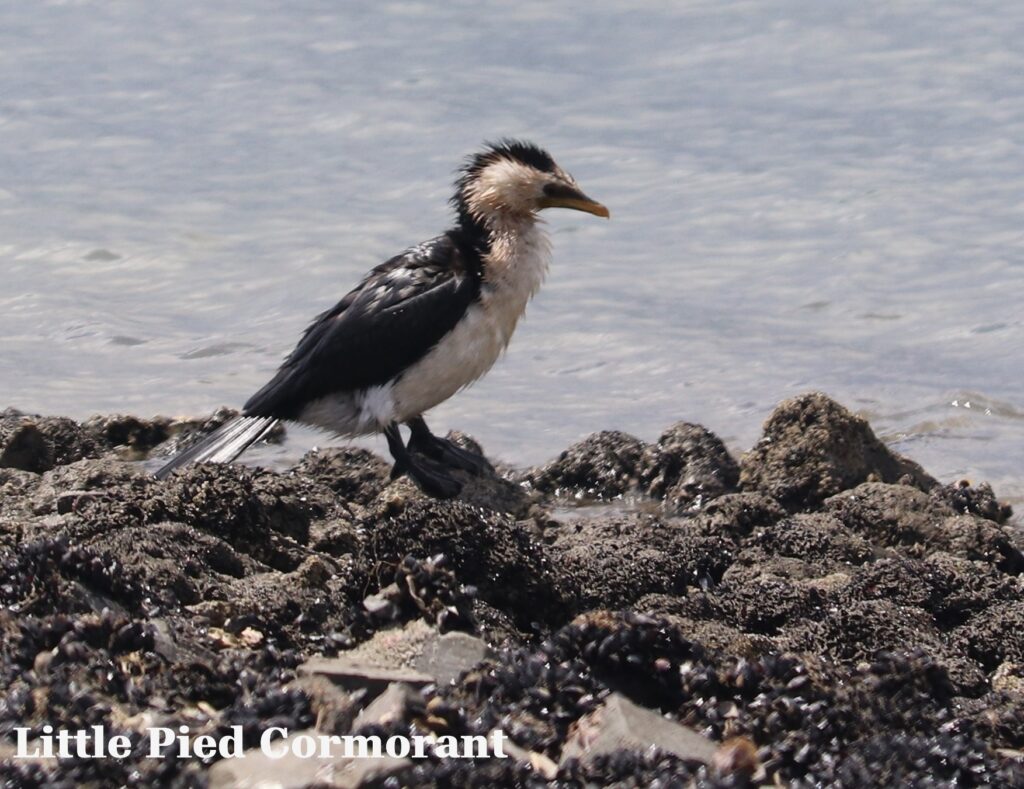
Cormorants
Plants
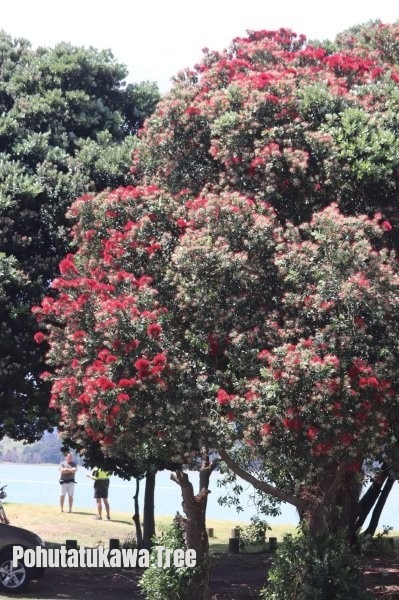
The Pōhutukawa tree is everywhere. It holds a prominent place in Māori mythology. Legends tell of the young Maori warrior, Tawhaki and his attempt to find help in heaven to avenge his father’s death. He subsequently fell to earth, and the crimson flowers are said to represent his blood.
Possibly the most famous pōhutukawa in Māori legend is a small, wind-beaten tree clinging to the cliff face near Cape Reinga. The 800-year-old tree is reputed to guard the entrance to a sacred cave through which disembodied spirits pass on their way to the next world.
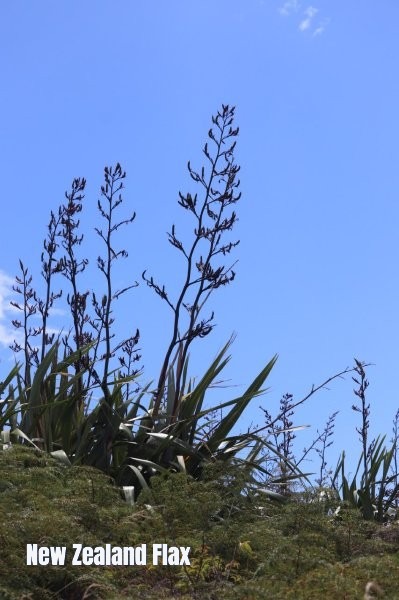
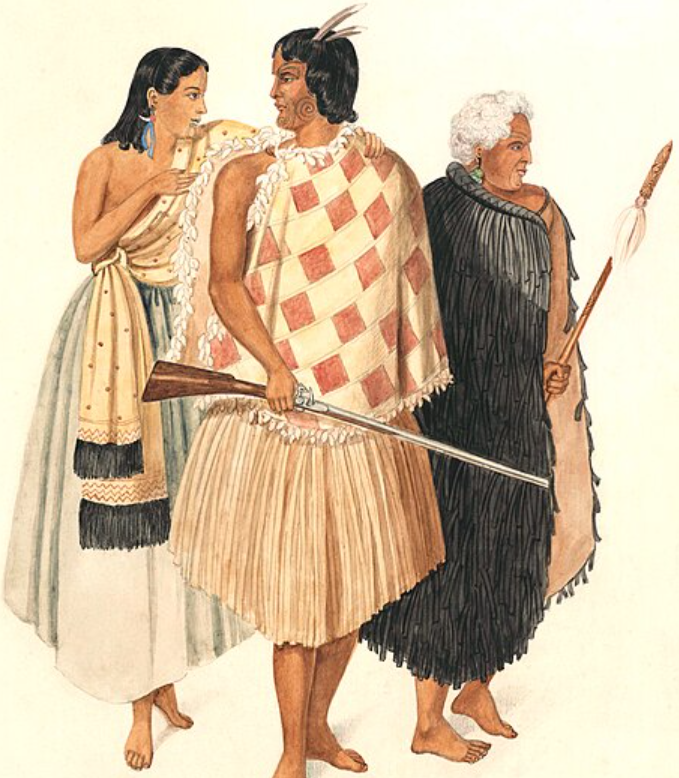
We enjoyed many walks along the edge of the lagoon where we saw strange looking plants that turned out to be New Zealand Flax.
The Māori made textiles from several plants, such as the NZ Flax. Captain Cook wrote: ‘Of the leaves of these plants, with very little preparation, they (the Māori) make all their common apparel; and of these they make also their strings, lines and cordage …’. They also made baskets, mats and fishing nets from undressed flax. Māori practised advanced weft twining in phormium fibre cloaks.
Beach Spinifex
Beach Spinifex, or ‘Spring Rolling Grass’ covered much of the sandy beach area we walked along. It has a spiky flower or head that rolls along in the wind—used as a sand-binder in fixing the drifting beach sands. It is a plant of comparatively rapid growth, and it checks the inroads of wind-driven sand.
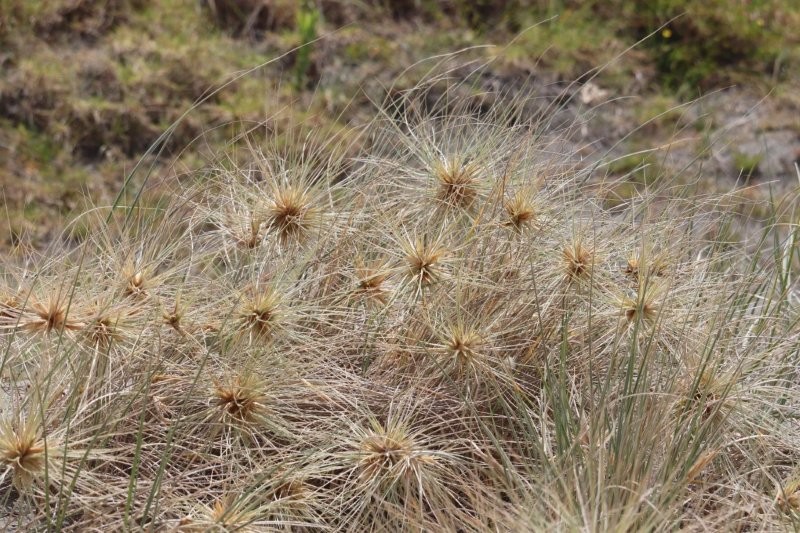
To our great surprise and pleasure, we saw these very same plants at the beach at Port Phillip Bay.
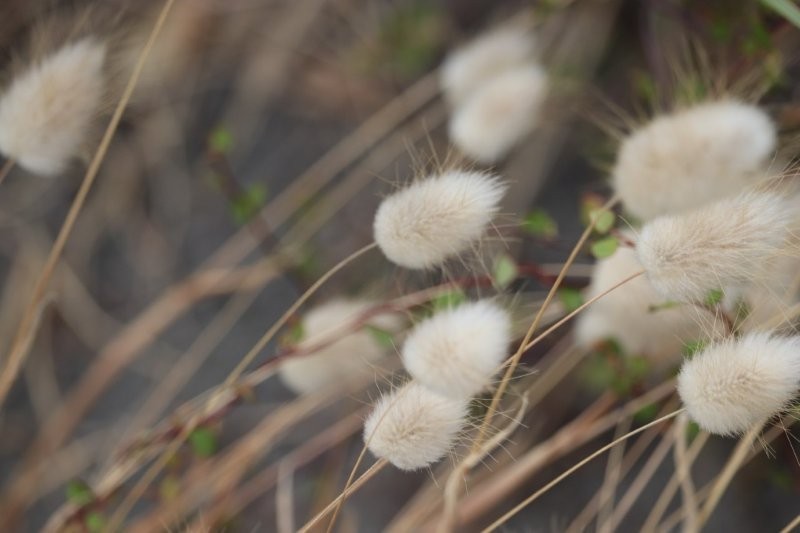
Hare’s-tail Grass.
We saw the most beautiful naturalised grasses—occurring in New Zealand and Australia, such as the Hare’s-tail Grass. They are native to the Mediterranean Basin and nearby regions, the Azores and the Canary Islands, Crimea and Saudi Arabia. They occur in Ireland, Great Britain, and scattered locations in the Americas.
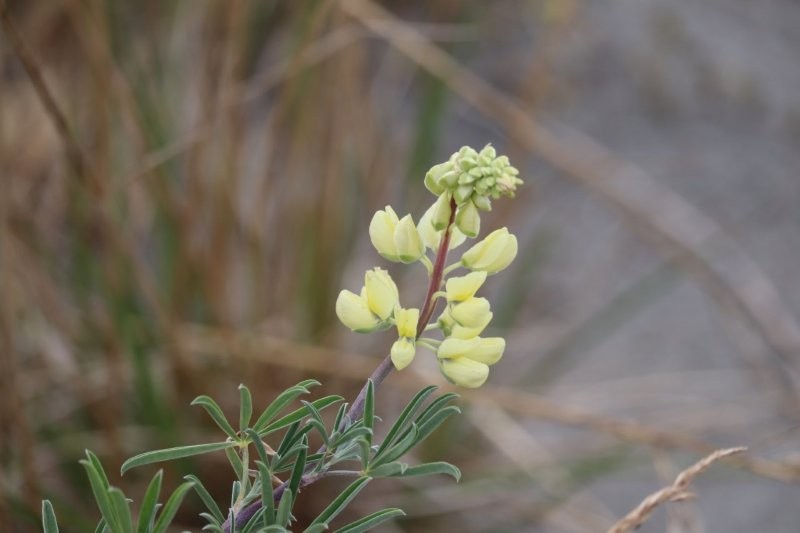
Tree Lupin—Lovely Predator
In Australia, tree lupin (Lupinus arboreus), a beautiful predator, is a threat to coastal dune vegetation, heathlands, heathy woodlands, as well as alpine and sub-alpine vegetation in the north-east of the state.
With my camera poised, I had no thoughts about predation! Who would imagine that such a species would be an unwelcome invader, originally as far away as New Zealand?
Scrambling Lily
I thought that the popular and hardy ornamental plant in cultivation, the Scrambling Lily, was a native Kōwhai (Sophora spp.).
Mud Flat Birds
These Masked Lapwings were feeding and kept us at a distance. We are familiar with There was obviously an abundance of food. We were familiar with their behaviour. They are the most anxious parents. A pair we observed in Melbourne would herd their little chick. As we ventured closer to the water, they became warier and warier. Masked Lapwings and the myriads of birds we photographed at the Ohope lagoon mud flats feed on a diet of invertebrates found in the mud and shallow water, including earthworms, insects, and their larvae. They also consume small crustaceans, molluscs (snails and slugs), spiders, and occasionally small fish.
A Common Starling
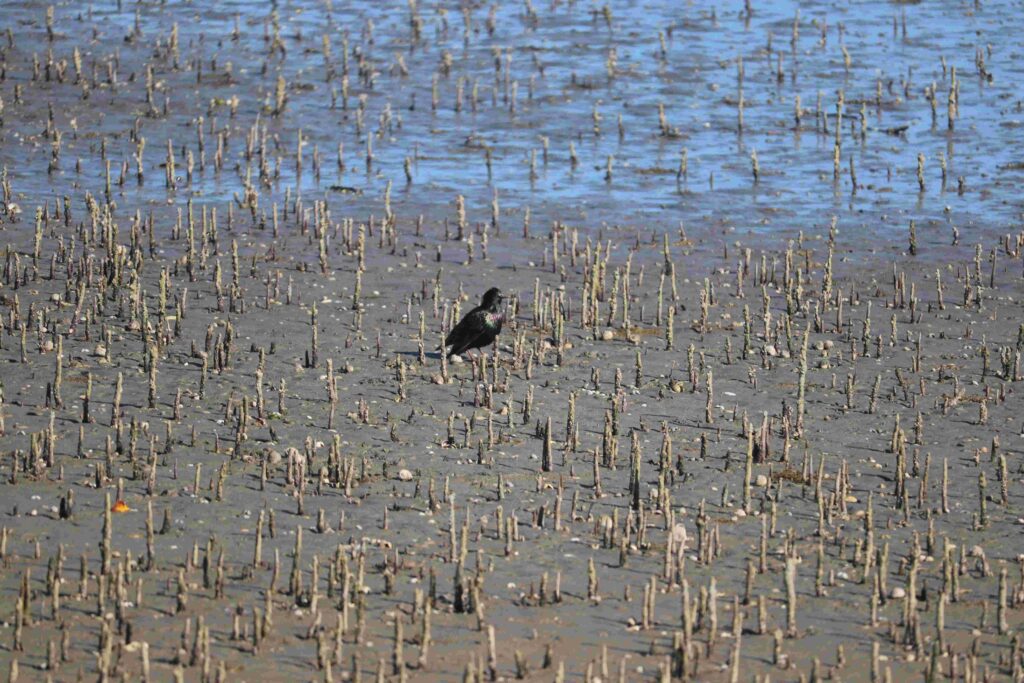
This starling was feeding on anything that the lagoon offers.
Starlings, like those all over the world, were introduced into New Zealand to control caterpillar plagues—very successfully. Their use in grass grub control has been bypassed by chemicals, but may become important in an organic future. Some farmers encourage them with nest-boxes. However, they damage farm animal feed lots, cereal crops, and fruit. Then again, they remove ticks from sheep and cattle. Like any introduced species; the starlings actions are not yin and yang. For all the good they do; they also spread the bacterial and viral diseases ticks carry. Pest control operators list about twenty four diseases carried by starlings, although ‘the evidence is largely indirect and circumstantial.’
Wikipedia contributors. (2026, January 7). Common starling. Wikipedia. https://en.wikipedia.org/wiki/Common_starling?oldformat=true