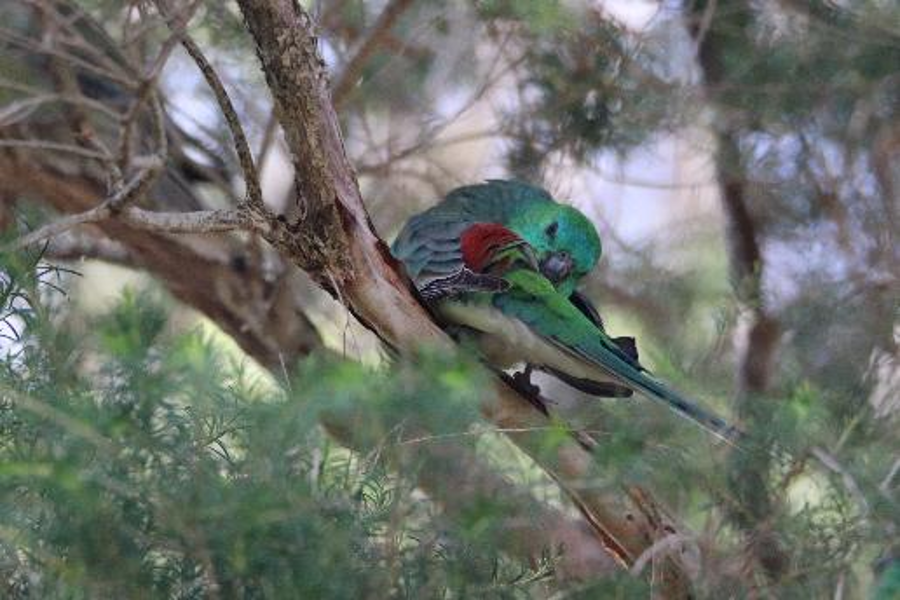
Photo Ahimsa— ‘Intelligences’
In their innocence and wisdom, in their connection to the earth and its most ancient rhythms, birds and animals show us a way back to a home they have never left.
Susan Chernak McElroy [34]*—Animist
The crows in the Aesop Fables [35]* say to a vain crow trying to put peacock feathers onto its tail: ‘It is not only fine feathers that make fine birds’.
Most birdwatchers and birders would agree with the crows in the tale that there is much more to birds than meets the eye. Many bird species are highly intelligent. Like humans, some are more intelligent than others, and birds have emotions, too!
Robin Wall Kimmerer [36]*, a Potawatomi [37]* person, speaks to our hearts about the ‘intelligences’ of birds and the natural world around us:
Imagine walking through a richly inhabited world of Birch people, Bear people, Rock people, beings we think of and therefore speak of as persons worthy of our respect, of inclusion in a peopled world.
We…are reluctant to learn a foreign language of our own species, let alone another species. But imagine the possibilities. Imagine the access we would have to different perspectives, the things we might see through other eyes, the wisdom that surrounds us. We don’t have to figure everything out by ourselves: there are ‘intelligences’ other than our own, teachers all around us.
She inspired us to change the way we address our animate friends:
In language, animacy refers to how sentient or alive the noun’s referent is. When we use the word “it,” we imply that the subject is inanimate—lacking feelings or agency. Typically, we reserve the animate pronouns “he” and “she” for humans and pets.
But Robin is learning Potawatomi—the language of her ancestors. In Potawatomi and many indigenous languages, people not only use “he” and “she” to speak of animals (including birds) and plants, but also of rocks and rivers, mountains and fire, and places.
We have been influenced by David Attenborough, Jane Goodall and the Australian poet Judith Wright [38]* to consider birds, animals, and the rest of nature as intelligent beings, worthy of our love, care and respect, and that we, as modern humans, can learn to ‘connect’ with them and learn from them in our shared habitats, in our common ‘home’—the earth.
Mindful birdwatching practices, such as Photo Ahimsa, can give us further insight into the ‘intelligences’ and emotions of our avian friends. Most birdwatchers usually come to treat birds and animals as family members who could show and teach them many things.
Let this be a warning: ‘It is hazardous to be talking to birds when others are watching; onlookers may start questioning your mental health!’
Beyond their songs, colours and plumage, birds give us lessons in how to improve and optimise our own living conditions and our lebensraum, how to adapt to change, and how to deal with threats. They are tenacious, daring, and resilient beings that generally gel with other dwellers in their shared habitats. Furthermore, birds do not damage, vandalise or pollute their habitats, as we do.
Our early human ancestors possessed such wisdom, living in harmony with their surroundings, avoiding the destruction of their own living space and the pollution of their environment.
Jennifer Ackerman, in her book. The Genius of Birds [39]* tells us about the remarkable intelligence of birds:
Birds have remarkable intelligence and cognitive abilities—they challenge us—our understanding of animal intelligence… They can solve complex problems, use tools, and demonstrate social intelligence (better than we do).
As an example of their remarkable intelligence, Jim tried to get personal with this Australian Raven in Warrnambool.
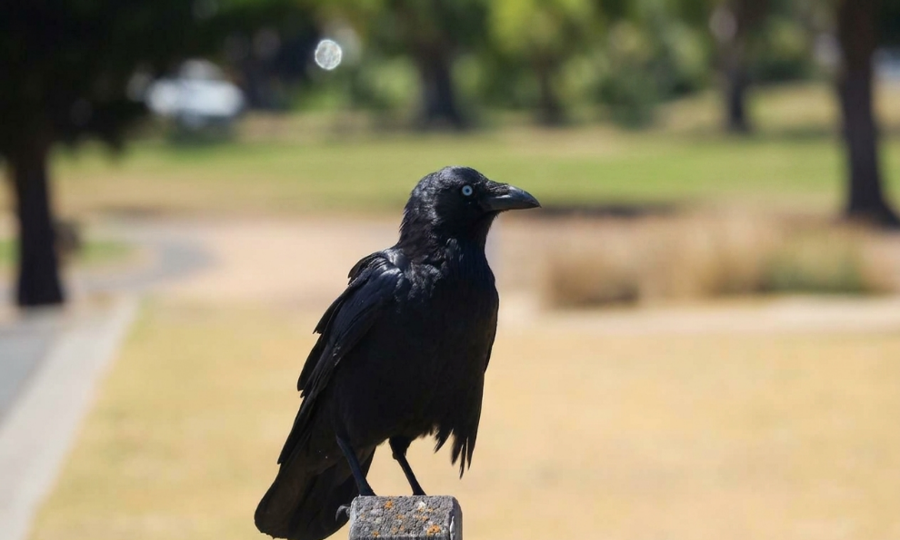
The bird had other plans. It was like trying to sneak up on a seasoned burglar. No matter how slowly Jim crept and tiptoed closer and closer, the raven maintained a ‘working’ distance, like she (he) [40]* had an invisible fence around her.
As if that wasn’t enough, the raven defined its safe boundary by jumping onto the next pole as soon as Jim took a small step toward the pole she was sitting on. The poles were a couple of meters apart. She kept a close eye on Jim and would fly just as soon as Jim was ready to take a photo—a most frustrating tactic!
Eventually, after a long period of dilly-dallying, Jim decided to wait. The raven finally hopped back onto the pole nearest to Jim, allowing him to take a photo in Photo Ahimsa mode.
Jim decided to learn more about Australian ravens’ intelligence [41]*. This is what he found:
The raven shows remarkable intelligence, demonstrating advanced problem-solving skills, complex vocal communication, sophisticated spatial memory, and foraging skills that rival those of great apes.
As examples, they solve multi-stage puzzles, crack hard-shelled food by dropping it from heights onto hard surfaces, and use fence posts as anvils. They recognise human faces and voices of specific people, remember who watched them store food, and adjust their hiding strategies accordingly. They use sticks and other objects to extract insects from bark or adjust their living and working environment. [42]*
Kunter’s Tätte [43]* tells us that Corvids, such as the Australian raven, can assess risks and have strategies to minimise the risk to themselves—the risk of injury or death:
Stationary Corvids can assess predator risk and decide when and how to escape when exposed to a ‘threat’—such as an observer approaching them. When followed by an observer, they took longer to escape, changed paths more often, and switched from running to flying more often than when not followed.
Their escape angle averaged 120° from the horizontal. This indicated that they factored the type of threat into their escape decisions. The findings show that birds adjust their escape behaviour based on perceived risk.
They are particularly smart when picking up roadkill!
Researcher Nepali Amrit [44]* has studied birds’ tolerance distances to humans. Birds can apparently calculate these distances:
As urban landscapes expand and transform, fascinating shifts occur in the behaviour of birds, revealing intriguing insights into their relationship with humans. In rapidly developing regions like Nepal—and likely beyond—researchers have discovered that these feathered residents are adapting in remarkable ways.
A recent study examined the ‘Flight Initiation Distance’ (FID), a measure of how close humans can approach different bird species before they take flight—across 33 species in both urban and rural settings.
The findings are striking: urban birds are generally more tolerant of human presence than their rural counterparts. This adaptability varies with factors such as diet and season, highlighting how resource availability influences behaviour.
Interestingly, FID isn’t static; it evolves throughout the day. Larger birds typically require more personal space and exhibit greater FID. However, this distance shrinks in the presence of larger flocks or when humans are nearby, revealing an interplay between social dynamics and environmental context.
These findings prompt us to reflect on the broader implications of urbanisation on wildlife. As birds become increasingly habituated to human activity, we must consider the potential long-term effects on their populations and behavioural ecology. The adaptability of urban birds serves as both a testament to their resilience and a reminder of the delicate balance we share with nature in our rapidly changing world.
What Nepali is saying is that birds need their space; however, they can be accommodating when their habitats are constrained! Within their own comfort zone, they are often cooperative.
Jim, as a retired risk analysis consultant, claims to understand ‘bird risk’. Jim says:
Birds intelligently assess the level of risk they are exposed to. Different to humans, they are more rational and are not subject to the ‘Outrage Factor’.
So, ‘bird risk’ equals ‘bird hazard’ plus ‘bird outrage’, where ‘bird hazard’ is anything that can cause harm or injury to the bird or its habitat. ‘Bird outrage’ is an emotional factor that can amplify or diminish the apparent seriousness of a ‘bird hazard’.
Birds do not experience ‘outrage’. Yes, they will go into panic mode if, e.g., a snake slides into their nest, someone tries to get at the eggs, or someone enters their territory during nesting season. They have a measured response to risk—they don’t exaggerate the risk as humans do. They do not perceive unfairness, involuntary exposure, or a lack of control when confronted with a hazard. [45]*
Jim illustrates such a ‘bird risk analysis’ while out walking the dog:
Magpies often target us when we enter their nesting space while we are walking our Chihuahua, Little B—a most unpleasant experience.
They do not exhibit ‘outrage’ but have a most effective risk-reduction strategy, akin to ‘Stuka dive bombing tactics’ employed by the German Luftwaffe in WWII! But they leave us alone when we give them their space, try to stay calm, walk away slowly, and avoid sudden movements.
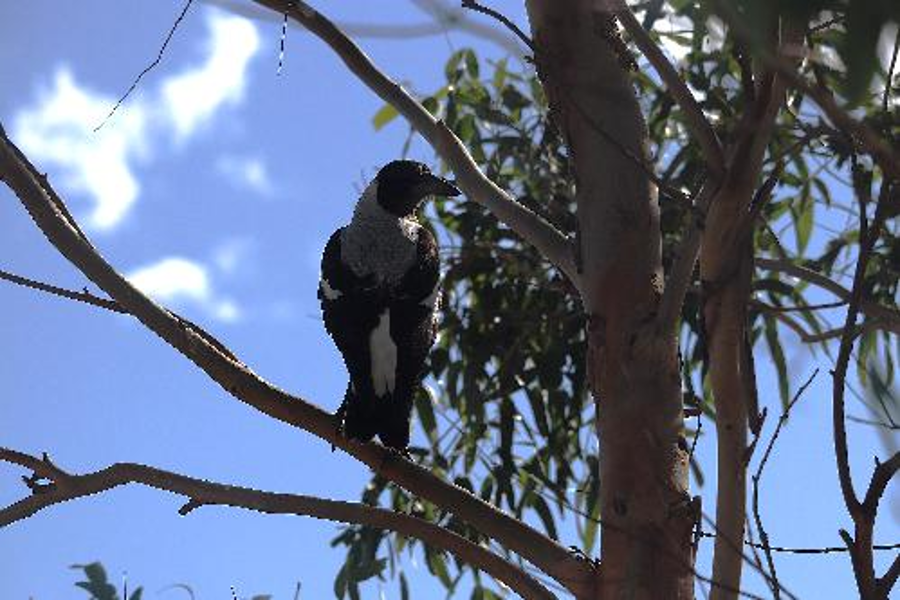
This magpie, along a walking track in Venus Bay, Victoria, gently flew up from its patch in the paddock to assess the risk of attack by an intolerant Little B, to establish safe boundaries and keep an eye on the little aggressor.
Unprovoked, Noisy Miners often attack her in the springtime. The miners (mynahs) manage their risk by staging a full-front attack on her, by a number of these very noisy, overly territorial birds.
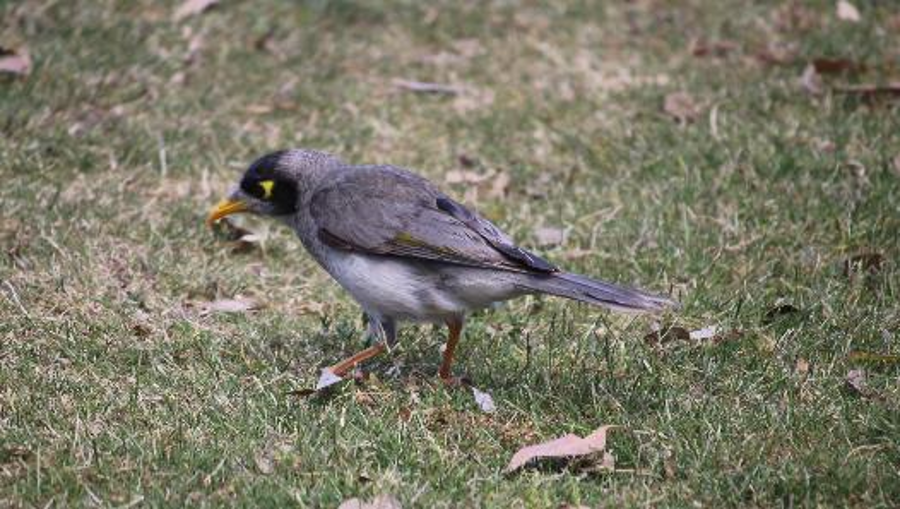
Little B also minimises her risk by putting her head down and running for cover or asking to be picked up as the birds dive-bomb her.
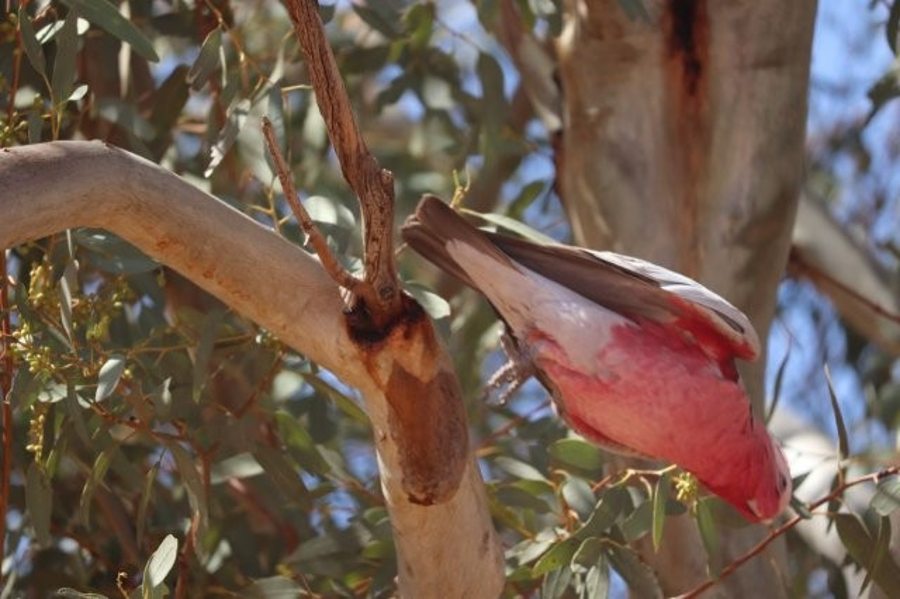
In Australian English, the term ‘galah’ can refer to a fool or an idiot. This figurative sense dates back to the 1930s and originates from the bird’s supposed stupidity.
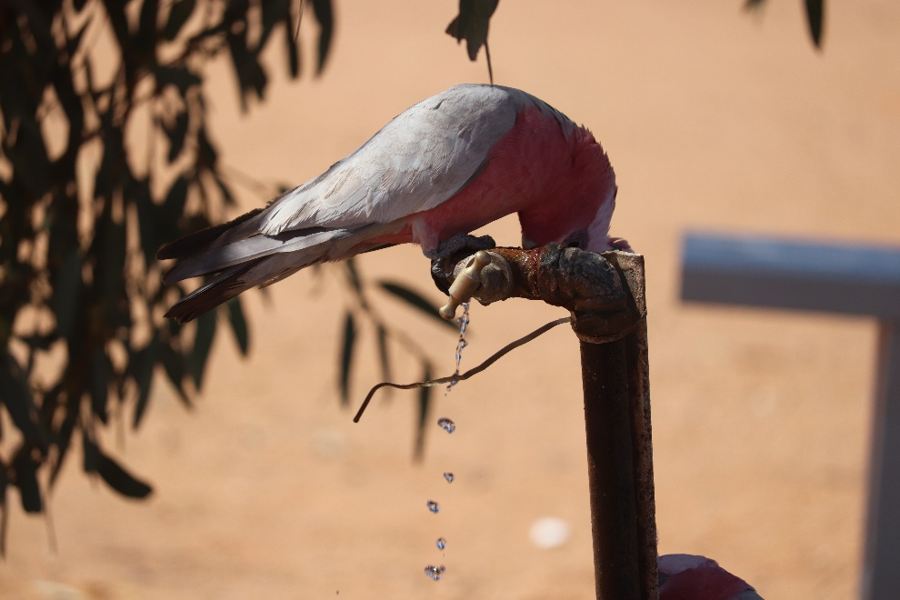
Whenever we took photographs of a Galah, we reminded ourselves that ‘although these birds may seem foolish, it’s all just an act.’ According to Wikipedia [46]*, our observations are accurate—they are highly intelligent but quirky. Galahs hang upside-down on branches, slide down wires, tumble and wrestle with each other, do somersaults, and play with toys.
Jim and Dedrie were mesmerised by these Galahs drinking from a tap in William Creek in South Australia.
Magpie Larks particularly build comfortable, well-designed, engineered homes.
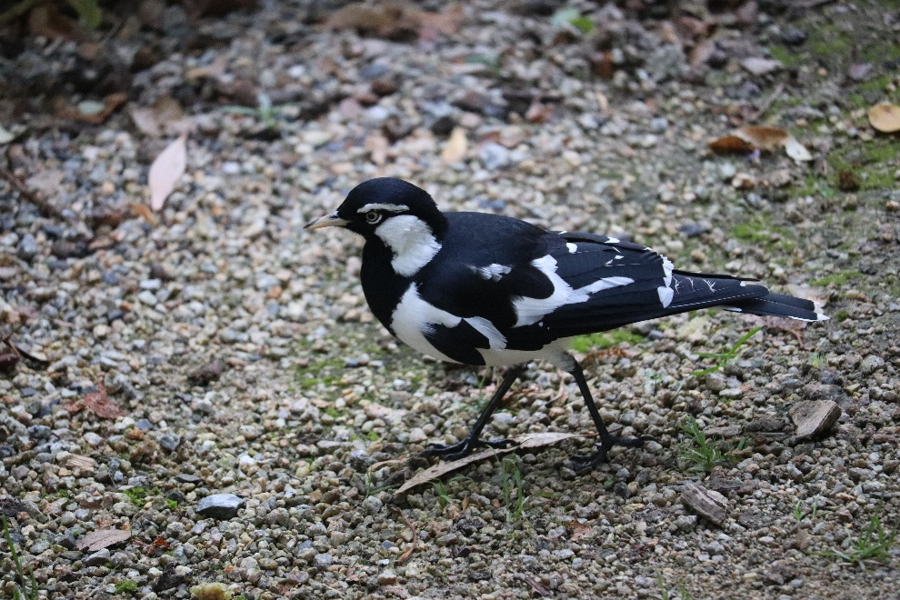
They build and rebuild their nests without degrading their habitat. The nests are distinctive, sturdy, bowl-shaped and made of mud, about 15 cm across.
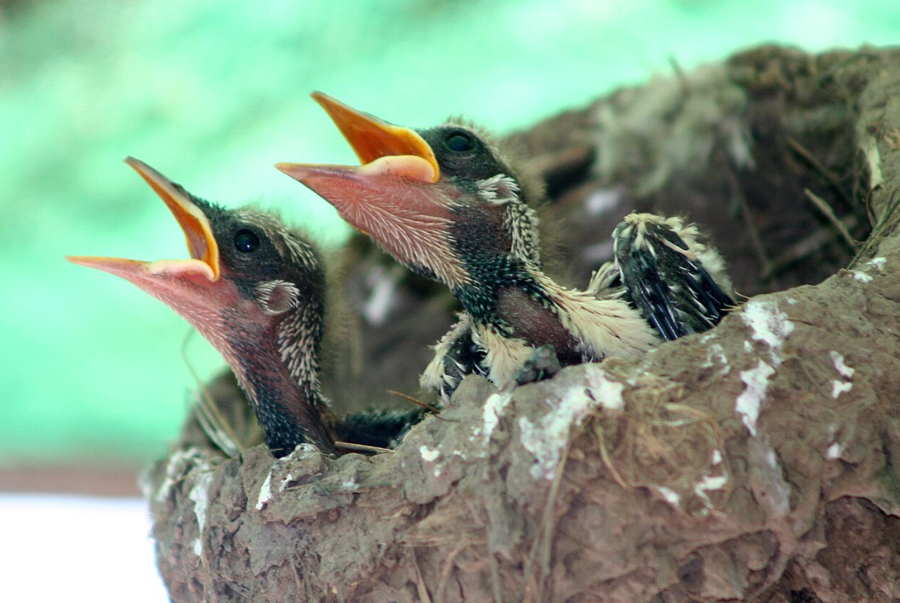
Both male and female birds gather wet mud, plant fibres, and rootlets to construct a cup-shaped nest, which they plaster onto a horizontal tree branch or a human-made structure.
According to the Field Guide to Birds in Australia and Wikipedia:[47]*
Magpie-larks are one of about 200 bird species worldwide that sing in duet. Each bird produces a note once per second, offset by half a second, making it hard for humans to tell there are two birds.
Traditionally, duet singing was thought to defend territory or maintain pair bonds. Recently, researchers have suggested it may also signal commitment to deter rivals: the male attracts a mate, while the female’s participation indicates he is already taken.
The duet singing is cooperative, as pairs sing together to defend their territory. They respond more vigorously to duet calls from strangers than to those from familiar neighbours. They also exhibit a strong reaction to neighbour calls from other locations, indicating awareness of their territory. During nesting, magpie-larks sometimes engage in pseudo-duets, where one bird mimics a missing partner to create the impression of a pair. [48]*
Jim took Little B for a walk, passing the Sulphur-crested Cockatoo scratching in the Plane Tree leaves in the drain alongside the road.
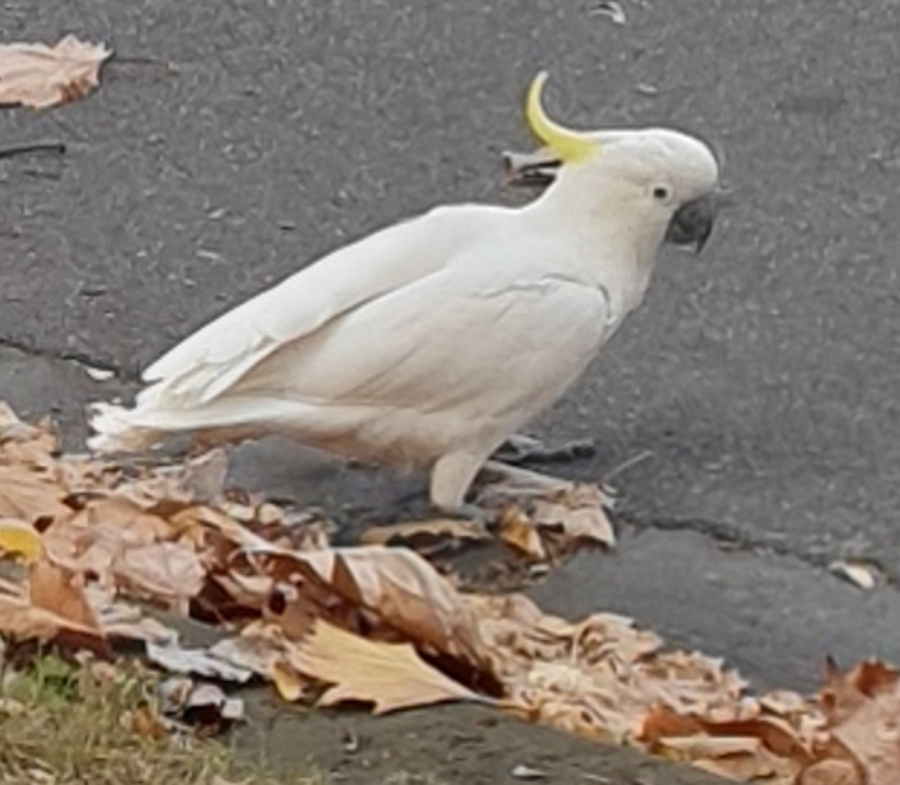
Both recognised the cockatoo as the one that lives in the River Red Gum outside their apartment. They stopped, and Jim spoke to the cockatoo, who eyed him suspiciously, but then nonchalantly pulled out an earthworm from under the Plane Tree Leaves.
The cockatoo watched their every move with curiosity and caution. Then, realising they meant him no harm, he stepped back onto the pavement. His eyes were almost black, so Jim concluded he was likely a male.
The cockatoo then took off with a magnificent glide and alighted near his nest. Jim and Little B raced back into their apartment, and Jim trained his telescopic lens on the cockatoo. It was sitting on a big branch of the River Red Gum.
The cockatoo moved ever so slowly, screeching and cackling as he went—and then he paused for a moment. Then he waddled further up the branch, screeching louder and louder. Jim thought that it was anger that made him screech so loudly. But it was a happy screech—he was comfortable in his micro-environment with his unruffled, beautiful little crest.
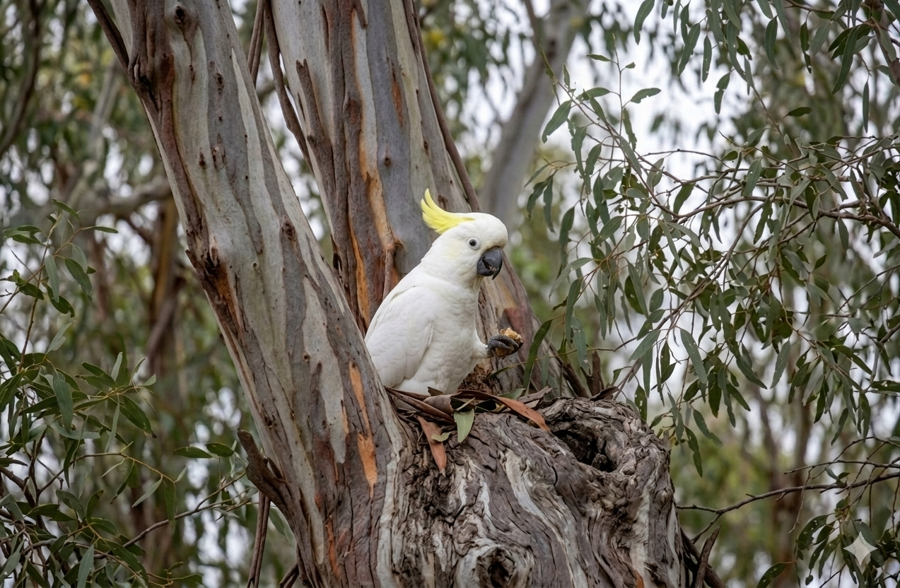
The cockatoo’s ‘unspoken’ message was that he is comfortable in his city eco–environment and has a comfortable home. He is a great source of annoyance to our neighbour, who lives in a house situated beneath the huge tree—the cockatoos’ home.
Jim is trying to convince his neighbour not to remove the centuries-old tree!
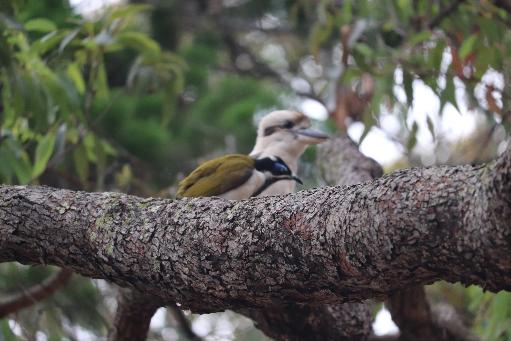
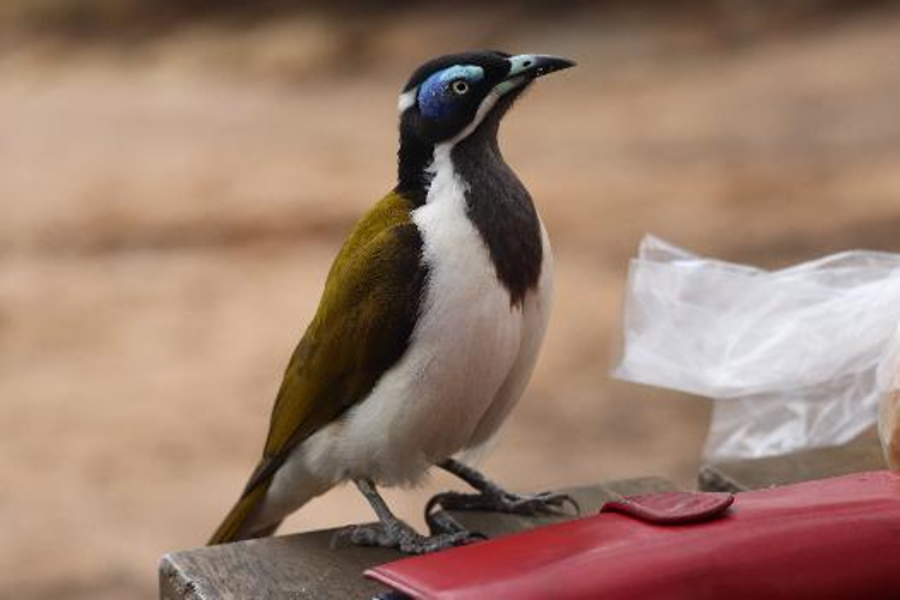
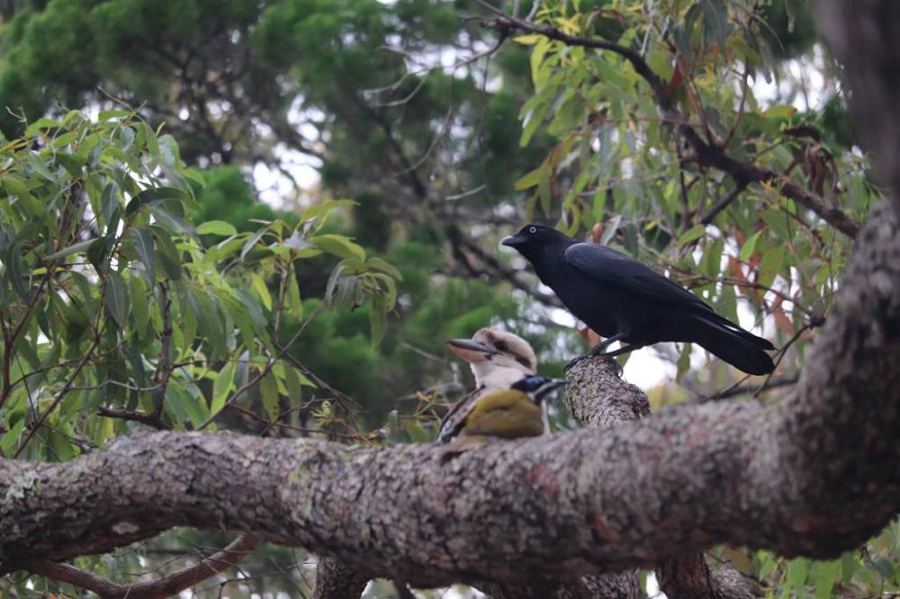
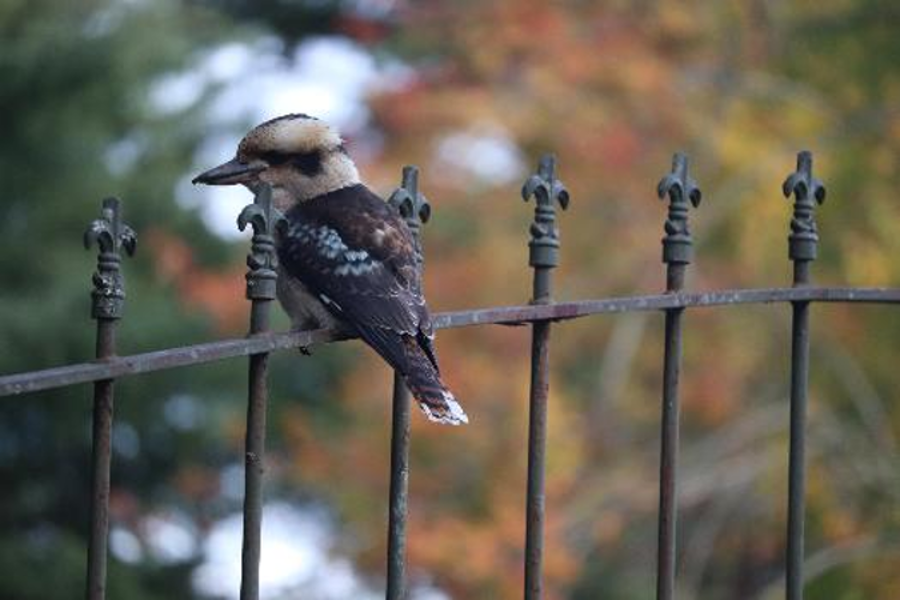
Habituated birds are more willing to share their space with us. Jim and Dedrie observed the amusing antics of a honeyeater, kookaburras and a raven—apparently all good friends—while they were having lunch at a picnic spot outside Noosa, Queensland.
Jim describes this impromptu, unexpected Photo Ahimsa moment where they saw bird ‘multiculturalism’ displayed at its finest:
It took us some time to realise there were two birds, not just a strangely coloured bird. Next thing, they were joined by a raven, who was a bit more circumspect initially. Then they decided to embark on a feeding frenzy, attacking any crumb or crust that lay on an adjacent table. They were habituated—that’s for sure! They took no notice of us, or our ‘shoo–shoo’ sounds we made.
The café owner looked at us suspiciously through the window as we made sporadic half–hearted attempts to chase the birds away.
We tried eating our sandwiches and scones with cream and jam while they looked over our shoulders. They knew how to fly in and expertly grab a crust of bread or piece of scone off the picnic table. Even bits of jam on a knife, or a bit of cream in a spoon, weren’t off limits.
They were the best of mates! We loved them. We tried to discourage them, but they just ignored us, swooping onto the ground and back onto the table, oblivious to our ‘shoo-shoo’ sounds.
Then another kookaburra approached, then others. The area suddenly erupted into frenzied, raucous laughter—mad ‘thank you’ calls coming from everywhere. It started with low, hiccupping chuckles; then heads were thrown back in maniacal laughter. Next, the area resounded with ringing laughter as other birds joined in an impromptu symphony.
Jim, Dedrie and Little B captured this image of common Australian ibises they saw along the Tarwin River in Victoria.
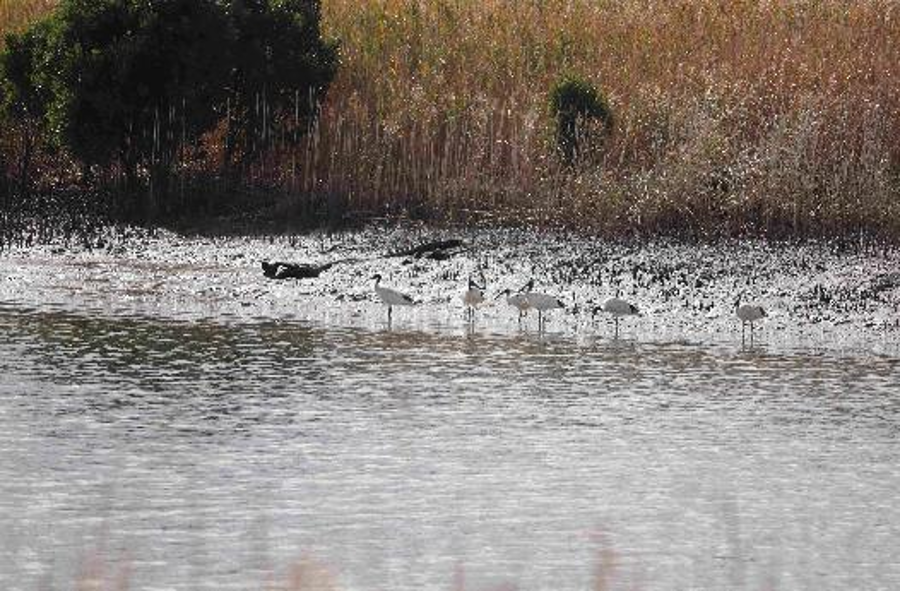
They appear silhouetted against the white sands of the riverbank above the gentle ripples of the Tarwin River. ‘Can they be the same type of birds as the scavenging “bin chickens” in the city?’ Jim and Dedrie mused. There, they are often scraggly and dirty, and will aggressively resist being chased away.
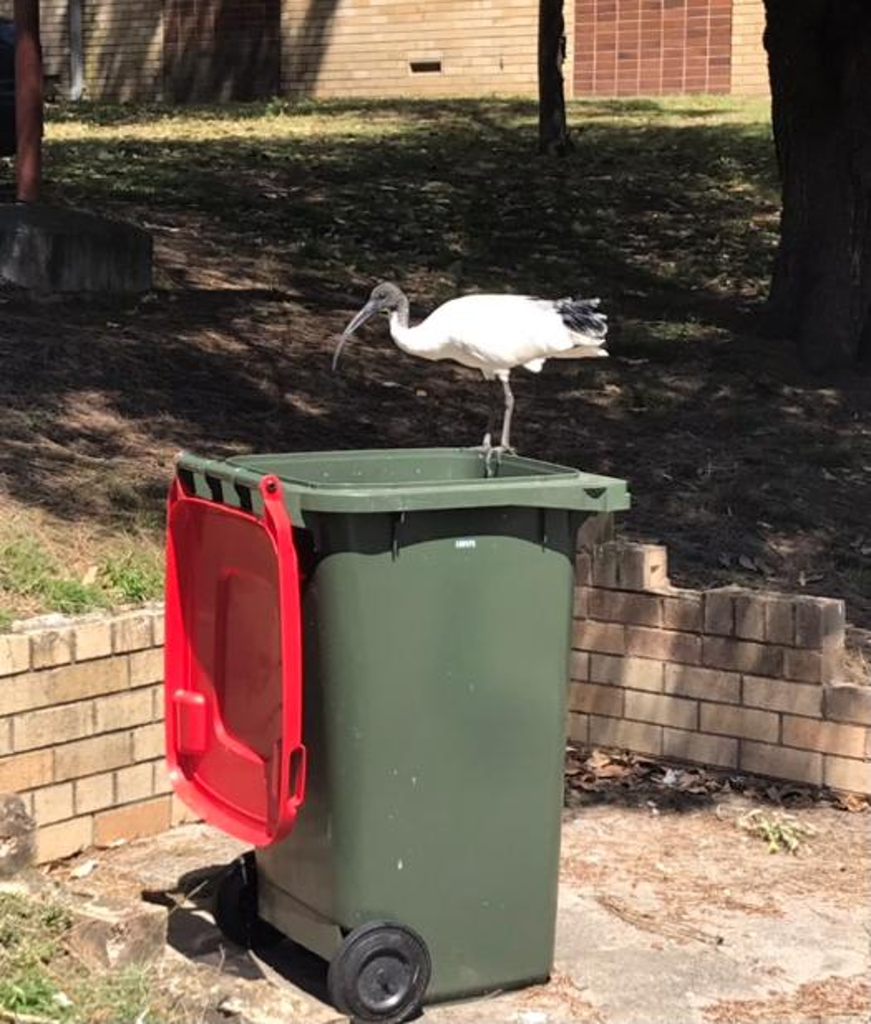
This is what Renske Jongen, an environmental scientist [49]*, says about our ‘bin chickens’—the Australian white ibis:
I get where the nickname comes from, but I find it painful to hear, and I don’t like to call it that. Something inside me feels sorry for this bird. It is a strange sight to see them sitting on top of a bin, so I decided to look into the reason behind this behaviour.
As it turns out, this bird is another victim of habitat destruction and climate-change-induced droughts. Apparently, a generation ago, these birds were a rare sight in cities, but from the 1980’s they have been breeding in Sydney. As a result of these changes to their natural habitat, these water-dependent birds moved from inland wetlands to the coast. Now there are an estimated 10,000 Australian white ibis calling Sydney their home, while the population in their natural ranges has dramatically declined.
Nevertheless, the ibises have adapted to change and dealt with adversity. We can learn about adaptation from these tenacious, daring, and resilient beings.
That birds have ‘intelligence’ and can experience ‘emotions’ may sound anthropomorphic (a tendency to assign human traits and emotions to birds and non-human creatures), but scientists tell us it is so.
As we discover more about birds, we start to see that their behaviours and emotions are unique, sometimes in ways we can’t fully understand. It’s tempting to listen to a singing bird and think it’s expressing happiness, but it might just be a mating call!
Birds, much like us, have rich inner lives and complex personalities. Given our shared anatomy and physiology, we may have a lot more in common than we think.
Green family members were intrigued by the Tawny Frogmouths that had taken residence in the fork of a tree just outside Peter’s back fence in suburban Melbourne. Peter tells the story about their beloved ‘froggies’:
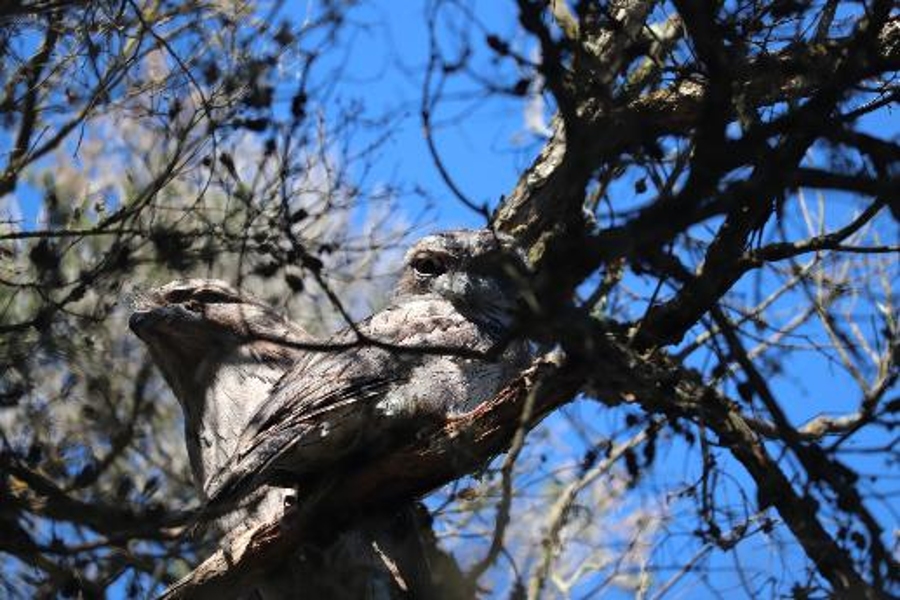
We loved watching these enigmatic characters. They were difficult to spot—perfectly camouflaged. Each winter, they returned, settling in the same tree fork, indistinguishable from one another.
We knew that the birds were always pleased to see us, as they would move slightly to get a better view of anyone looking at them. They would then snuggle up to each other and watch us intently through large ‘owlish’ eyes. Yes, everyone who sees ‘froggies’ loves them.
We were looking forward to seeing them again in the winter of 2024, but the city council removed the tree without consultation, saying it had died. Sadly, the ‘froggies’ have sought shelter elsewhere.
Gisela Kaplan [50]*, in her work ‘Laughs, Cries, and Deception,’ explains that birds experience emotional lives that are as complex as our own. She notes that ‘froggies’ and other birds can exhibit empathy, act selflessly, possess a sense of justice, and show deep affection for one another. She explains:
Birds may feel for others (have empathy) and even console them, have a sense of justice, show deep affection for their partner, and grieve for their loss. I witnessed the mate of a fatally injured Tawny Frogmouth not moving from the spot next to its dead partner for three days and then dying on the fourth.
She shares her experience of raising a male Tawny Frogmouth on her property before releasing it into the wild. “It found a female mate and raised nestlings.” Unfortunately, one day, the female was hit by a car on the highway, and Kaplan recognised its markings.
She then found the male: ‘whimpering’ on a nearby post; ‘It sounds like a baby crying. Listening to it affects you…’ The male stayed there for four days and nights without eating or drinking.’Empathy, altruism, and the ability to console injured or defeated family have all been observed in birds, demonstrating a remarkable level of consideration for another individual’s emotional state.
Australian native birds have an unusually high percentage of pair-bonding (over 90% of species) and the highest concentrations of helper species (relatives or siblings helping at the nest) anywhere in the world.
Sulphur-crested Cockatoos and Galahs can form lifelong bonds and will often develop intense, close partnerships, nurtured by lots of grooming and paying attention to each other’s needs. Sulphur-crested Cockatoos can ‘partner’ for up to 60 years!
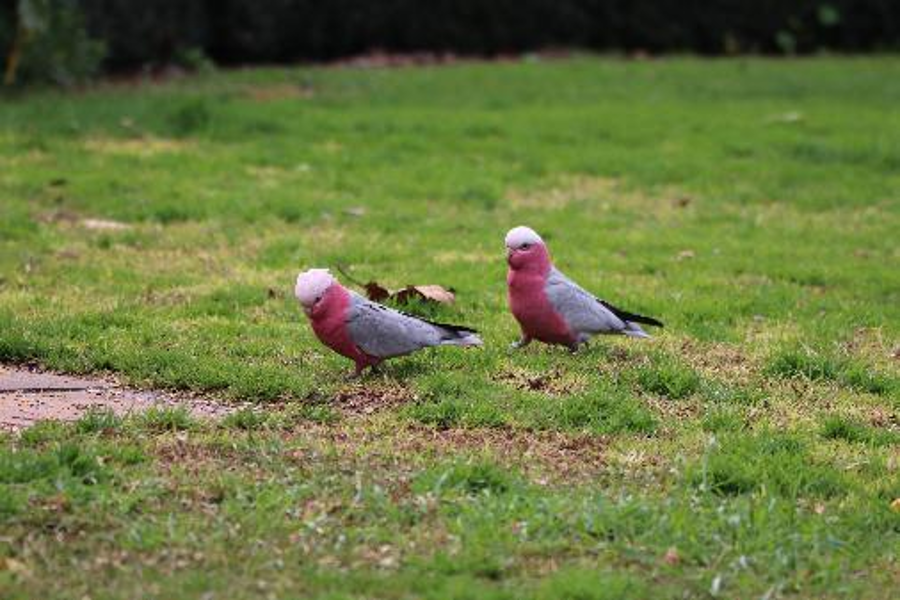
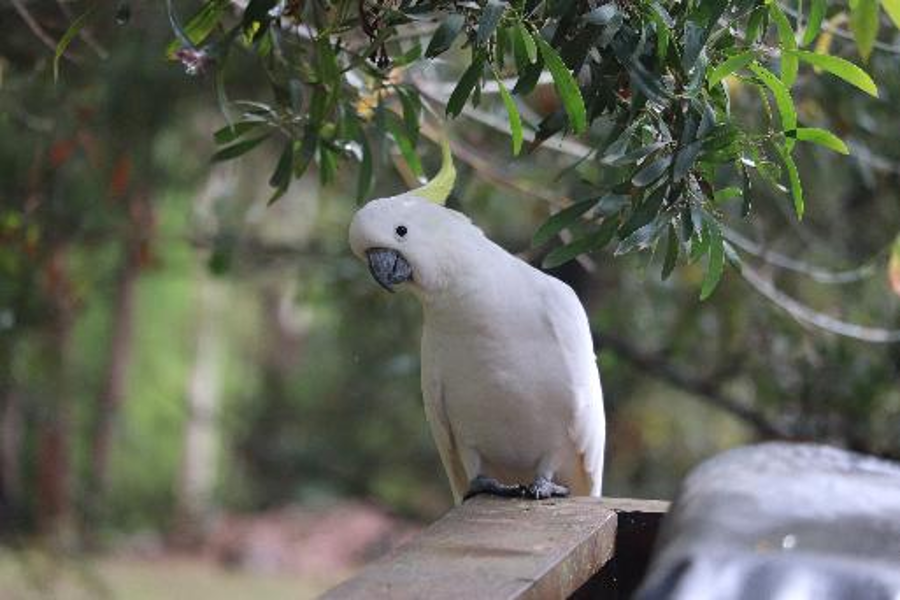
Gisela Kaplan [51]* gives us more insight into the emotions of birds:
We now know that the bird brain is lateralised (each hemisphere controls a different set of functions), as in humans and other vertebrates. The right hemisphere expresses intense emotions (such as fear and attack). The left hemisphere tends to produce routine, considered responses and may inhibit some of the right hemisphere’s strong responses.
So, birds are more similar to humans than had ever been thought before, but with an important difference. They are usually not aggressive unless provoked. Birds can get very angry—and one should not confront a Galah or Corella when the feathers are raised—but birds can be joyful and playful, can get depressed, and a neglectful or bare environment can make them pessimistic.
Jim talks about a visit to a farm in Monbulk near Melbourne, where he and Dedrie experienced bird indignation:
The feathers of this Galah became ruffled as we approached. The next thing we knew, we had come too close, and the Galah indignantly flew up with a loud “chi-chi” and took refuge in the tree just above us. We were disappointed, but we knew we had to give way. It was clear we could only stay if we kept a respectful distance.
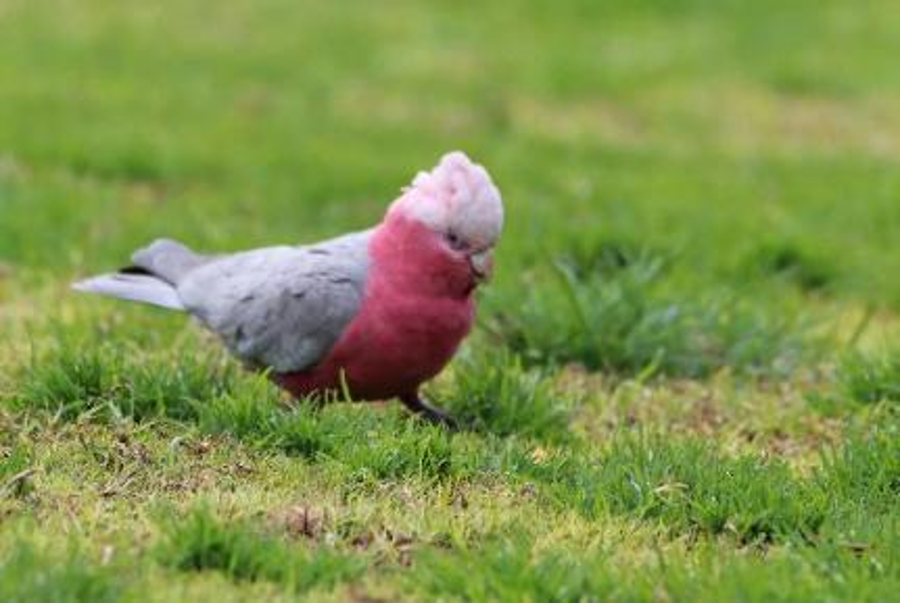
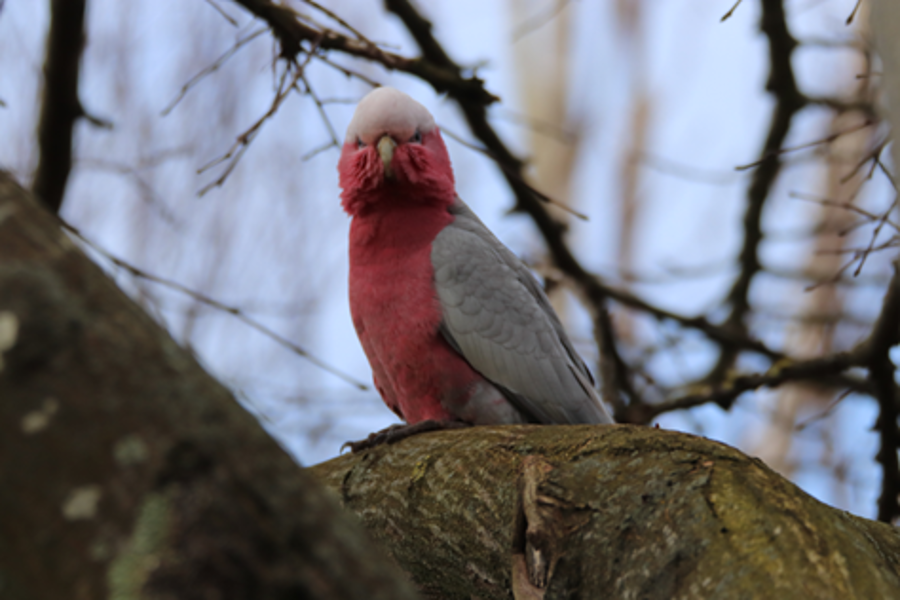
On that day, many delightful surprises were in store for both of us, but we seemed to annoy many of them—maybe they wanted to feed in peace!. After the Galahs had had enough, a Crimson Rosella settled nearby and sedately but unabashedly showed us his multicoloured wings, but waddled off in a huff as he didn’t like us to be too near his feed.
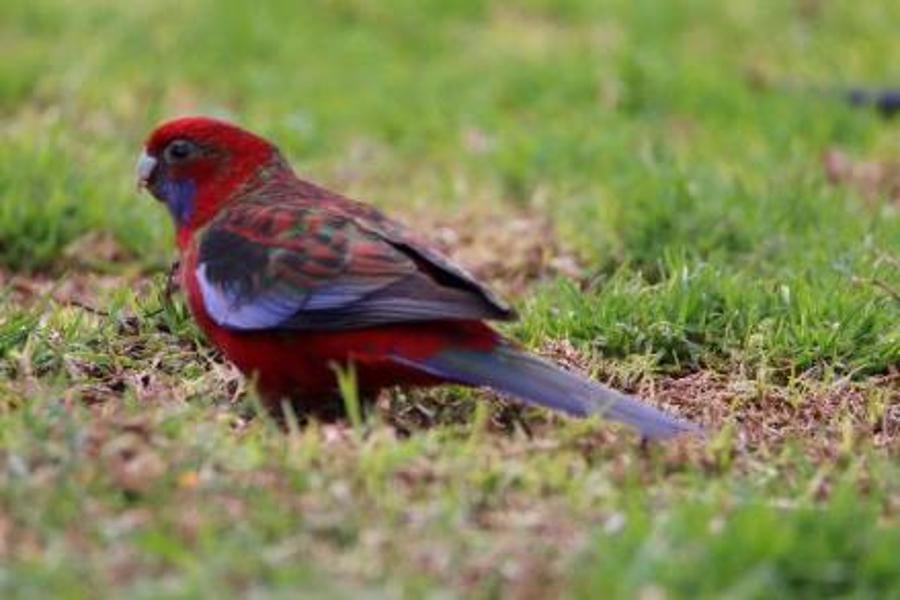
A flurry of wings then caught my attention as an alarmed bird flew up from next to the rosella and settled into a nearby tree; he was a Red-rumped Parrot. He began happily cleaning himself after the interference had passed.