Art, Beauty & Pathos
To take a photograph is to participate in another person’s (or thing’s) mortality, vulnerability, mutability.
—Susan Sontag [24]*, American Writer
Birdwatchers cannot help but love birds’ shapes, patterns, colours, and movements.[25]* Photographs are often an improvement on the real thing, as one can study a photo in more detail after it’s taken.
We are amazed by the blend of aerodynamic skill and geometric design that many birds exhibit.
This Little Pied Cormorant, flying over water at Lakes Entrance, showed off its magnificent wing design and its skill as it glided over the water looking for fish. It disappeared entirely—then surfaced after a long stint under the water. Jim’s original photograph had the bird’s wings slightly blurred. With the help of Google Nano Banana, the wing’s exquisite shape and design are accentuated.
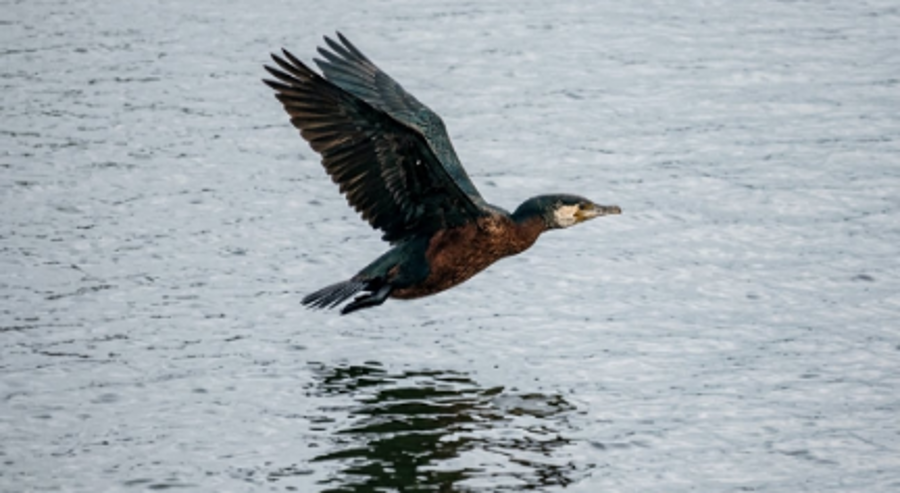
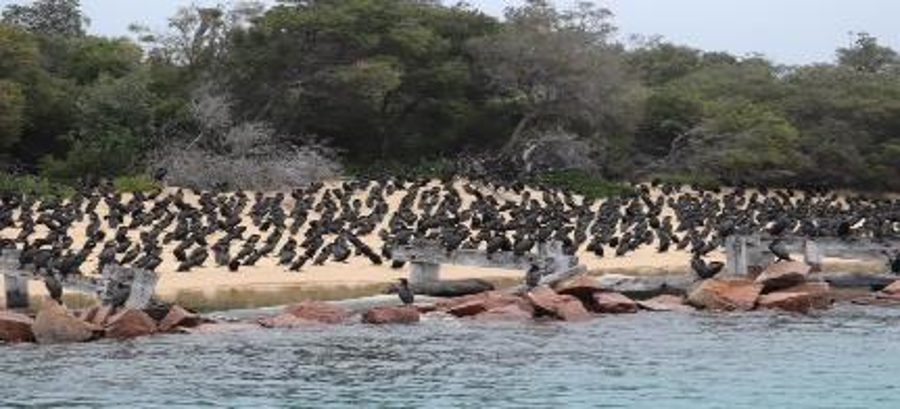
Jim found that cormorants loved the Lakes Entrance area—they were everywhere!
Jim, Dedrie, and a Probus group led by an experienced birder at Lakes Entrance were fascinated by pelicans.
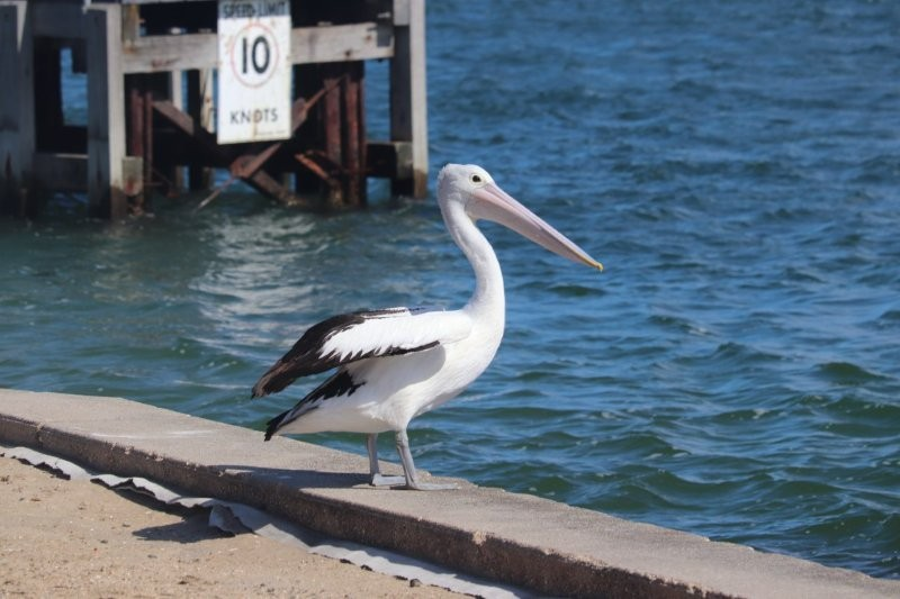
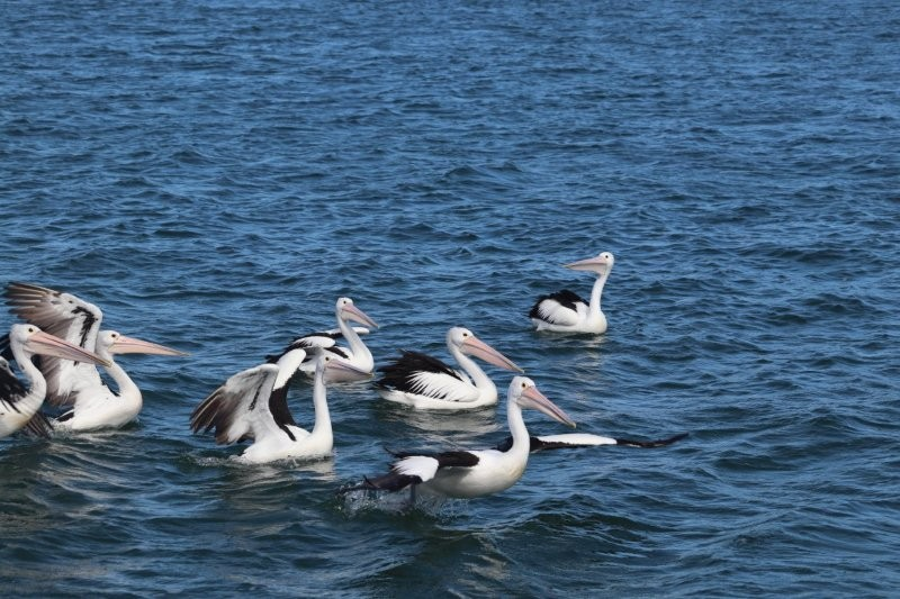
The birder had this to say, ‘A pelican’s oversized beak will let it down in any avian fashion parade! Their beaks are big enough to gulp down a large fish.’
The group was spellbound when Dedrie told them they had once seen a pelican catch a pigeon and gobble it down in a botanical garden in London. The birding guide took over after Dedrie’s story and told the group:
They are excellent fliers and swimmers, using their large wings to glide and their webbed feet to propel themselves in the water; They often fish in groups, using their bills to catch fish and other small aquatic animals; Their social behaviour and formation flights are notable characteristics that make pelicans fascinating birds to observe.
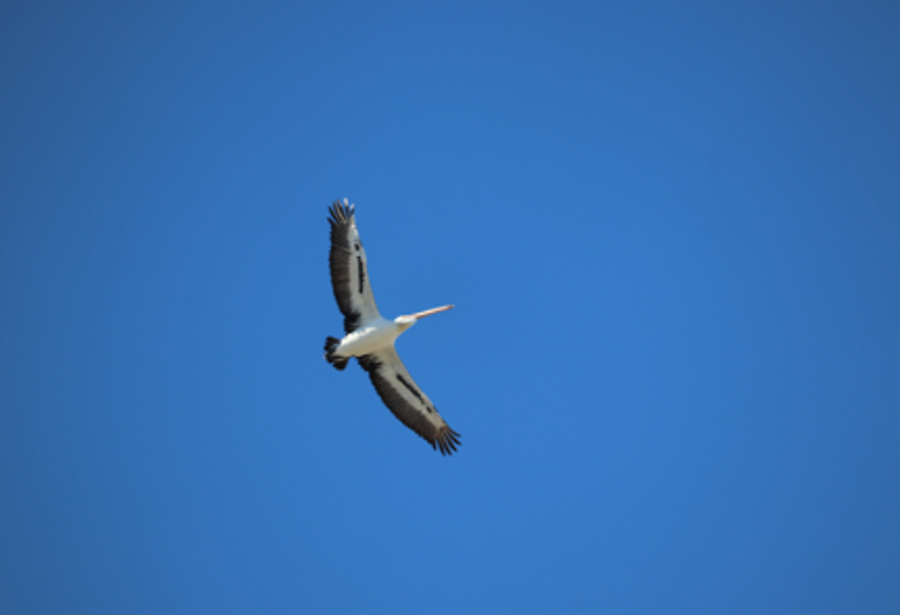
The guide went on to tell the group that the pelicans are marvels of aerodynamic functionality and stability. ‘Nature’s engineer’ optimised their body shapes; their sleek bodies minimise air resistance, with the widest point sitting roughly one-third back from the front and gently tapering to a tail.
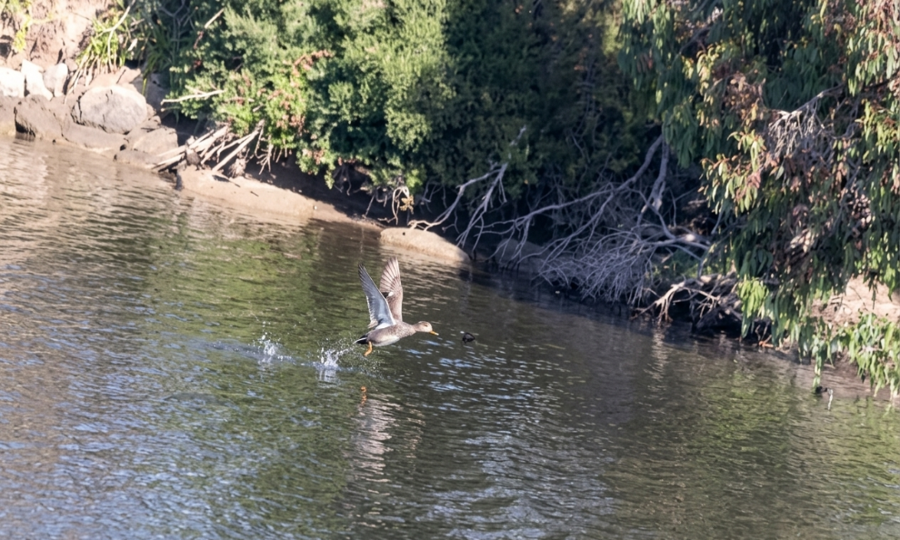
During a visit to a farm on the banks of the Hopkins River, just outside Warrnambool, Victoria, Jim captured this image of a Mallard Duck, showcasing its beautifully designed and engineered wings.
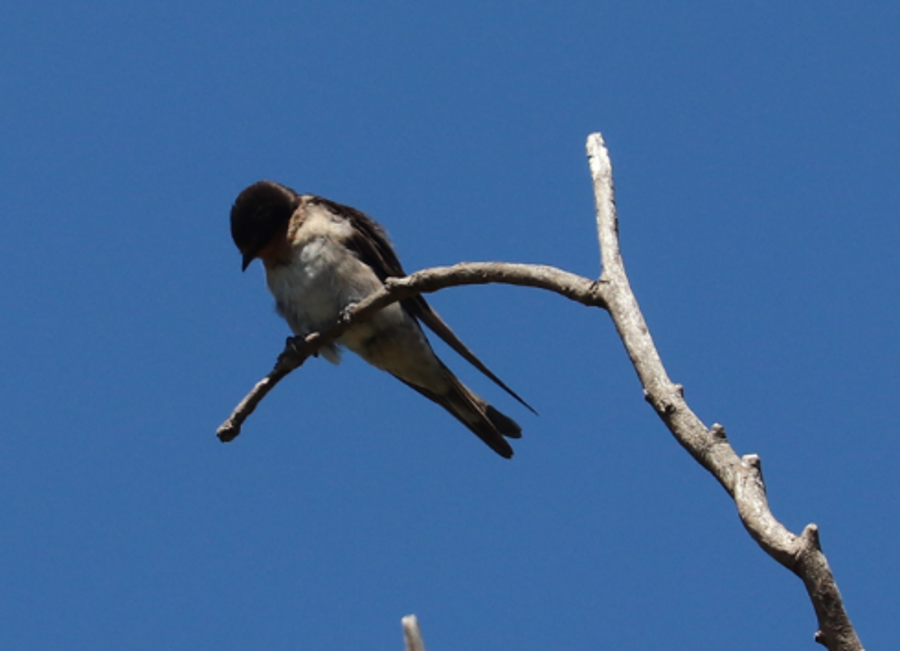
During this visit to the farm, the swallows were most welcoming, as Jim describes:
One of our favourite activities when we visit the farm near Warrnambool is watching the swallows. They swoop and dive, fly upside down and catch the bugs that our feet kick up. We have never been able to photograph them in flight.
At the farmhouse, they have nests under the eaves and also settle in one of the garden trees during the day. We were very lucky to capture this beautiful image of one peering down at us.
The swallows are exceptionally aerodynamically streamlined, and nature used ‘best practice’ design principles to allow them to conserve energy while they hunt insects on the wing. Their slender bodies and wing designs reduce air resistance and maximise lift, so they get the most out of every calorie they burn.
Jim photographed these Pied Stilts in Rotorua—the sleekest of birds.
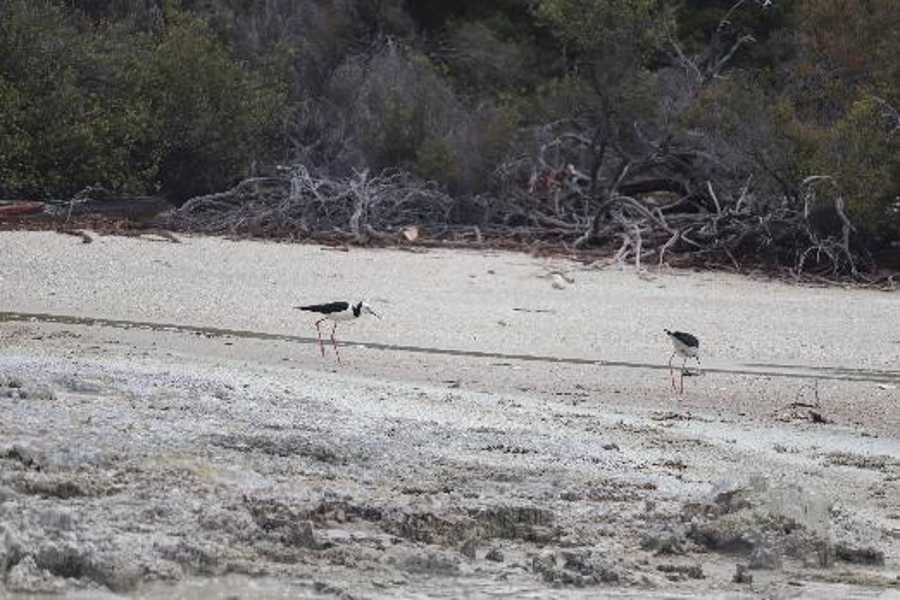
These birds leap into a breeze, pierce the airstream with their pointed beaks, and glide along at a good speed. A photo from the Broome Bird Observatory shows how superbly designed these birds are.
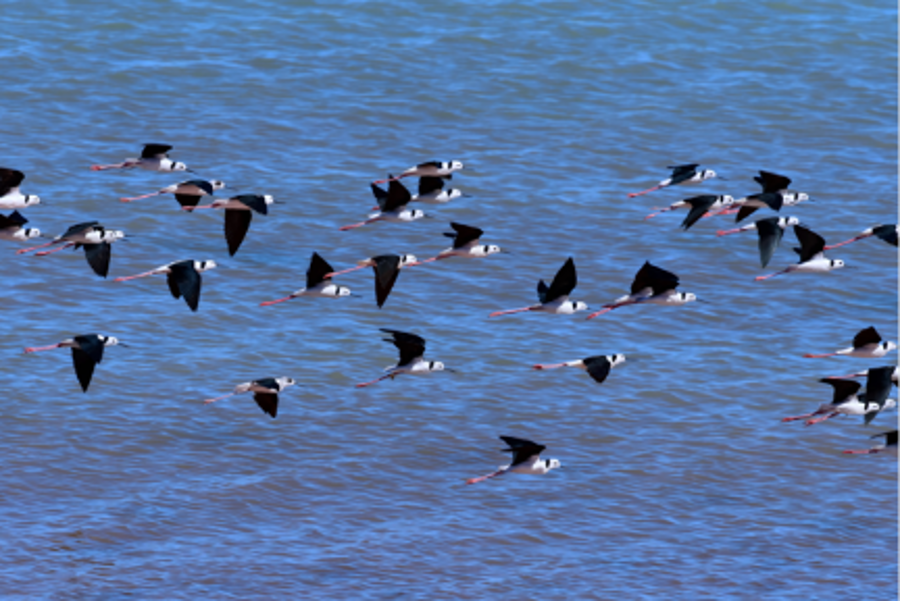
As described by the observatory, ‘Legs for days! These Pied Stilts are always stunning to see, especially in flight. I love that their long legs dangle behind them.’
Birdwatching opened a world of colour for the Green family.
The photographs of exquisitely coloured birds never fail to provide a boost of ‘feel-good’ hormones for any birdwatcher. The Greens have taken photos of birds that exhibit the rainbow colours [ROYGBIV]*—red, orange, yellow, green, blue, indigo, violet —and every other colour under the sun, including pink and even metallic shades.
But do the colours mean anything? The ornithologists tell us:
The brighter colours indicate strength, health, good genes, and sexual maturity. The neutral shades—brown, tan, beige, white, grey, and black—which are harder to see, serve as camouflage.
A Rainbow Lorikeet’s exquisite colours are there to attract mates and communicate with each other. These bright colours also help them blend into the landscape of flowers and foliage while foraging for nectar and pollen. Their suburban habitats have recently become more secure with the planting of additional native plants throughout the city.
These Rainbow Lorikeets [26]* at the Green family home in suburbia display pure artistry in the most imaginative way, with unsurpassable patterns and bilateral symmetry. They fed freely and confidently, allowing Jim to photograph them up close and from any angle.
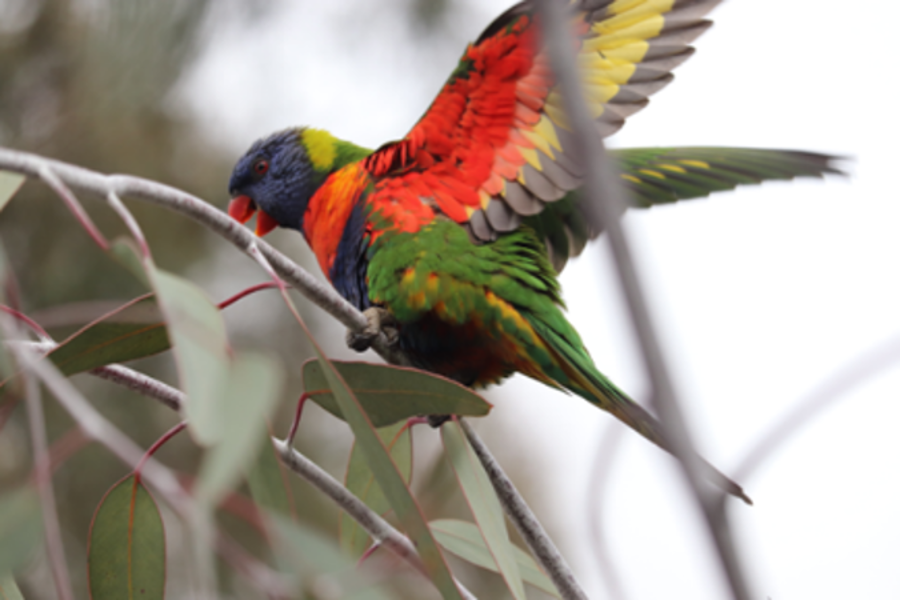
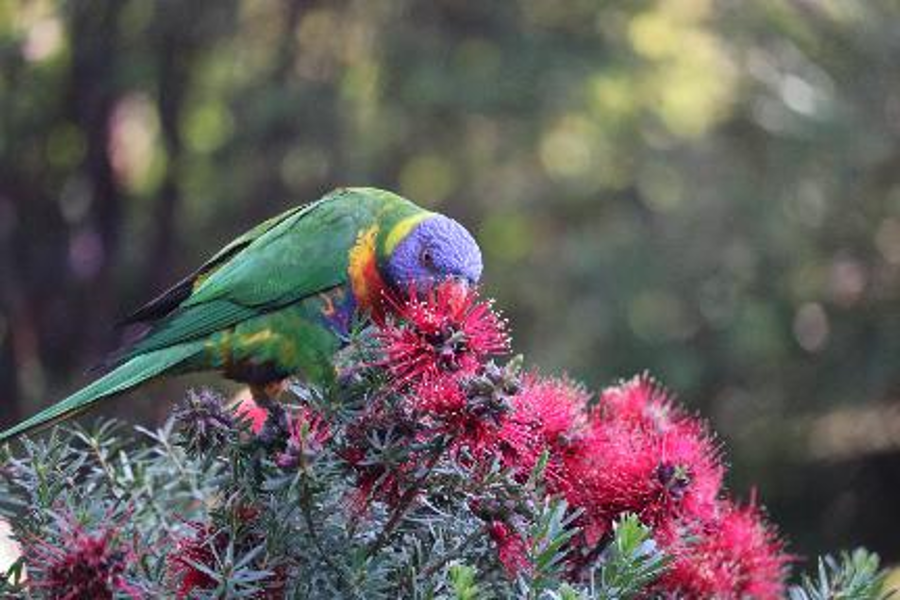
Birds show distinct and beautiful patterns in their feathers, behaviour, and flight formations. By patterns, we mean the specific arrangement of colours, marks, or shapes on their feathers.
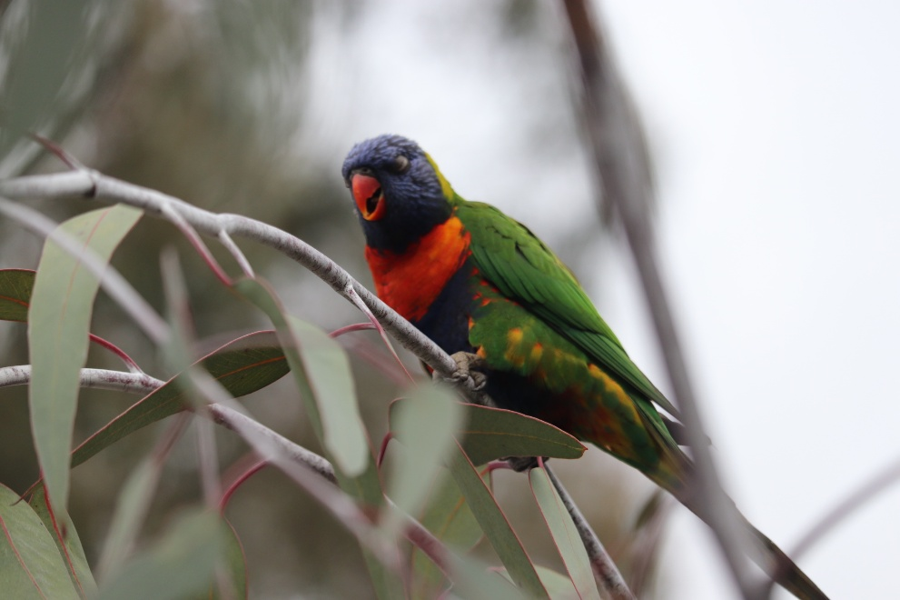
These visual designs—such as streaks, bars, or spots—help birdwatchers identify species and help birds hide from enemies or attract mates.
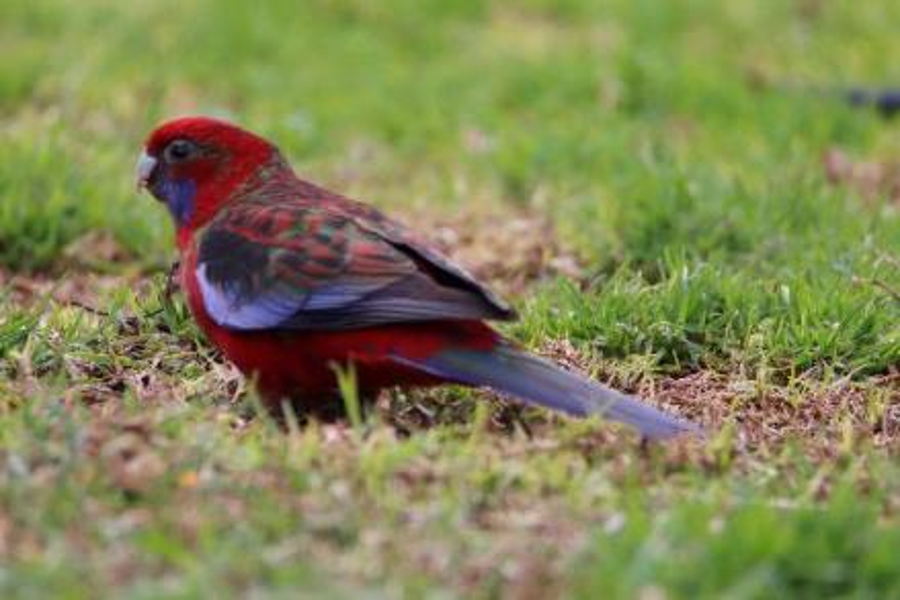
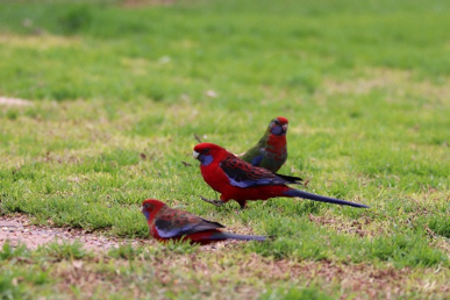
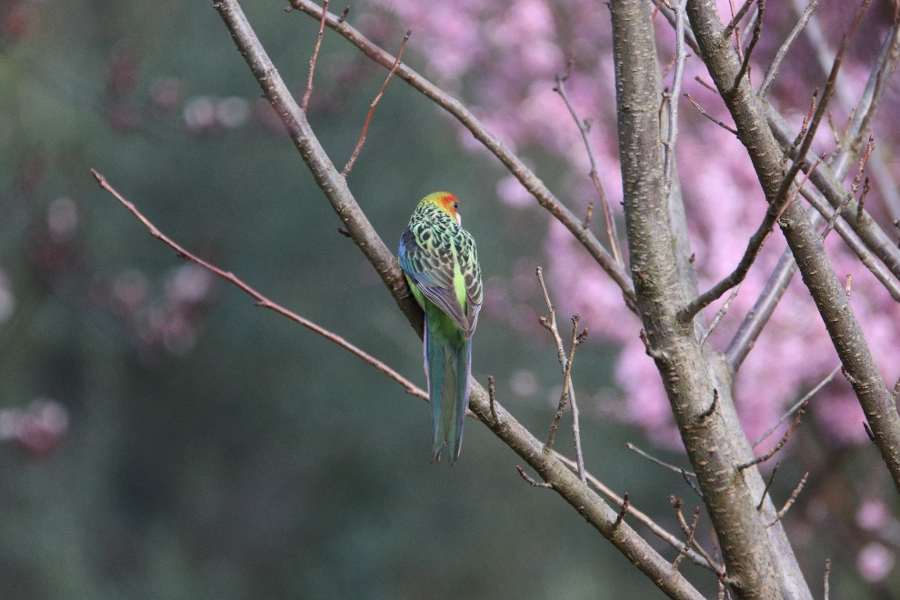
Joy and happiness (possibly a good assumption?)—is what many mindful birdwatchers experience when they come across Crimson Rosellas—is it the beautiful patterns and darker hues? Why they have that impact on many observers must be something primeval!
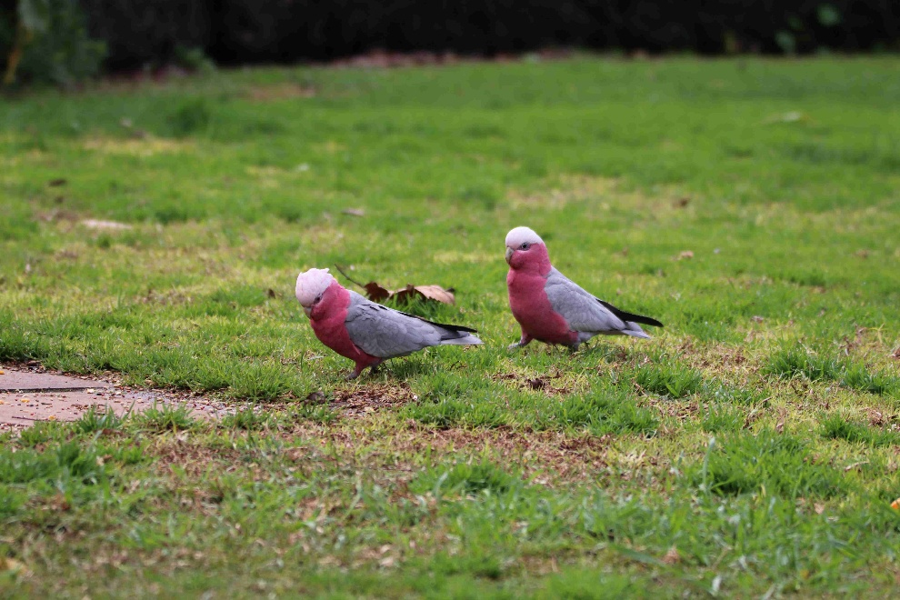
Jim captured images of the rosellas and galahs feeding together on seeds at a farm in Monbulk. There, they showed off their glorious colours and amazing patterns.
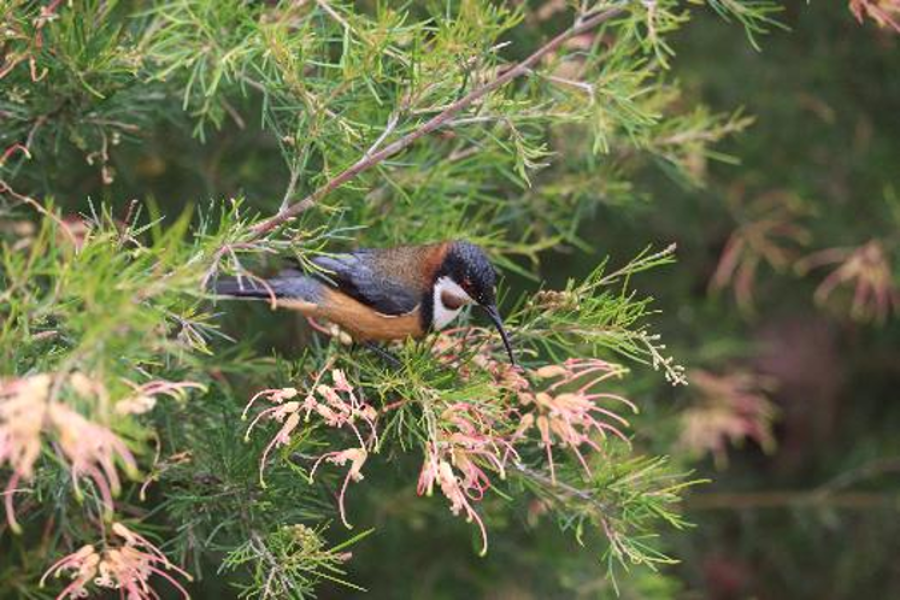
Jim and Dedrie were on a bush walk along the Hummocks Walk in Lakes Entrance with a group of Probus members when Jim spotted a beautifully patterned Eastern Spinebill flitting in and out of the coastal vegetation. She chose to stand still for a few moments so that the entire group could appreciate her.
With birdwatching, a few seconds is all that is needed for a never-to-be-forgotten moment! The spinebill gave them all such a moment. They ‘oohed and aahed’, struck by her beauty.
Green family members often visit friends on a small farm in Monbulk, Victoria, with a lovely garden—home to many birds always ready to come for a meal of seeds on the lawn and show visitors how companionable they are.
Such visits spell pure Photo Ahimsa—delightful connection time. The farm dogs are bird–friendly and vice versa, so all can get really close.
Let the birds tell their stories:
I am a Common Bronzewing. My photograph shows delightful geometrical shapes on my body.
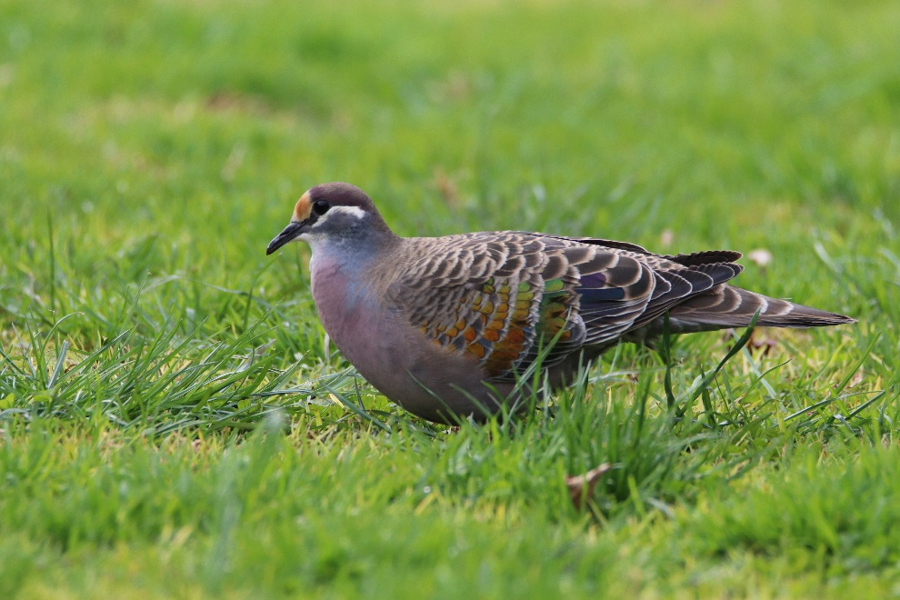
Feast your eyes on the gorgeous details of my feathers! Notice the charming crescent lines, those light-coloured edges that form a display of stacked arcs. And what about the scalloped shapes! They are captivating, wavy, and layered.
As you gaze down, you’ll spot the concentric rows that follow the smooth curve of my body, scaling classily toward the tail. But don’t stop there; let your eyes wander to the iridescent patches of orange and green! These little tiles add ‘something’ to my feather segments—tiny little jewels in the light.
Now, my head! Check out those sharp, clean stripes that contrast brilliantly against my plumage, and the sleek white band just below my eye. And check that warm, golden-brown patch atop my forehead—a subtle triangular wedge. Go on, practice Photo Ahimsa—it’s good for all of us.
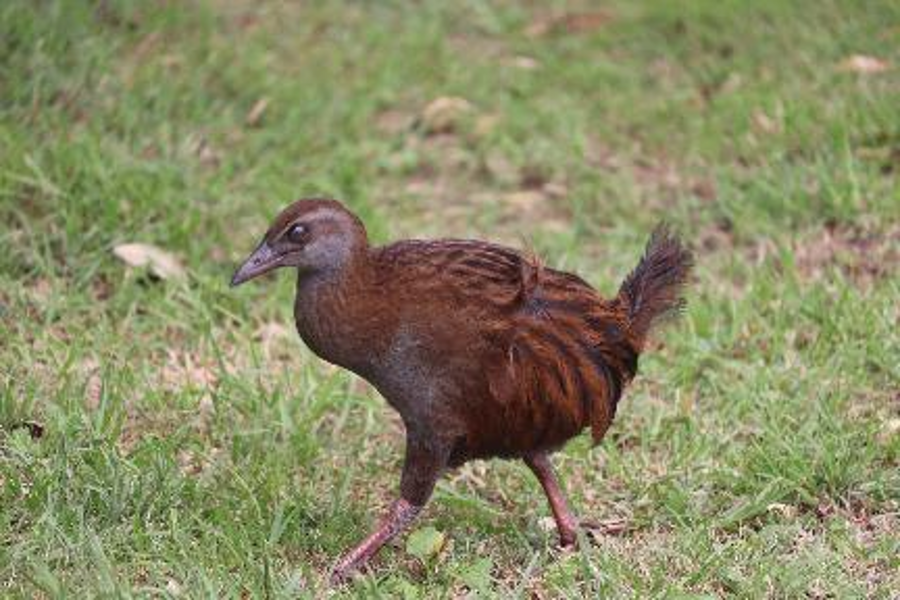
On a trip to Whakatāne in New Zealand, Jim and Dedrie came across a Māori hen. The hen describes the encounter:
I was nestled in the brush along the walking track on the hillside, invisible among the leaves, twigs, rocks and earth that surrounded me. Nobody could easily see me; the browns and blacks in my feathers merge with the earth and leaves—just makes me feel OK.
As I settled into my quiet spot, I saw two people coming. I could see by their body language that they were harmless enough, with curious expressions. I came out into the open, and I decided to let them wander beside me for a while. It was an amusing sight—the way they walked. I could tell they meant no harm; there was gentleness in their movements—maybe they were being ‘mindful’?
So, we strolled together for a bit, until I felt like going back into the brush. There’s more food there than on the grass, and it looks as if someone with a dog is coming. But I will walk ever so slowly so that the birdwatcher can get a decent pic. Then, the dog was too near and not on a leash. Back into the undergrowth with a little swish of my tail, blending back into my world, where I could rest unseen.
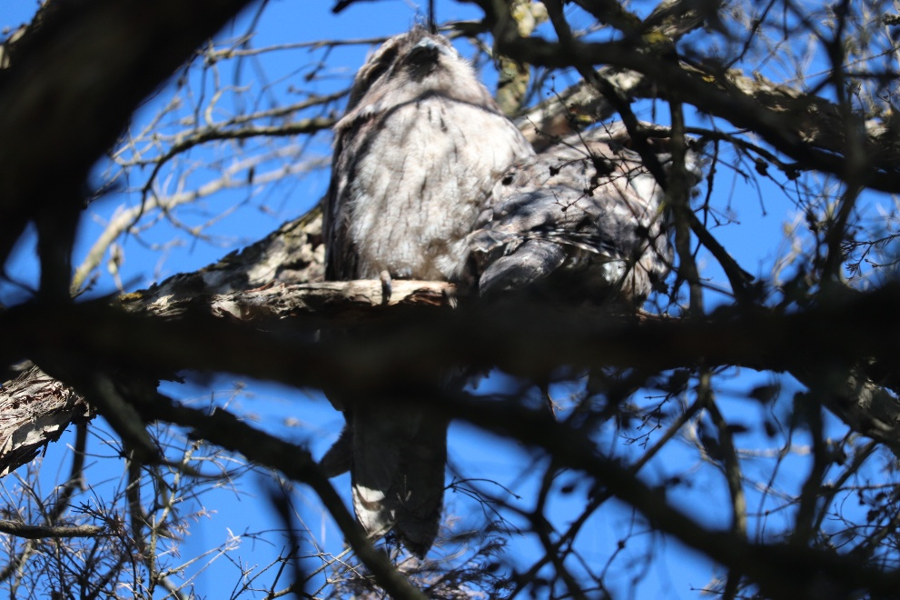
In the winter months, this Tawny Frogmouth pair would sit every day in a tree, just outside Peter, Emily and Ella’s garden back fence—to roost, enjoying the sun when it shines in Melbourne’s cloudy, bleak winters. Mostly, they are only visible to the trained eye. This year they were voted the public’s favourite bird in Australia.
The Greens had to look very carefully to find the pair of birds in the tree. This is what they learned about the roosting birds:
Tawny Frogmouth pairs are famously loyal, mating for life and spending their days huddled close together on a favourite horizontal branch. By staying perfectly still, narrowing their eyes, and pointing their beaks upward, they mimic a broken tree branch to blend in and avoid predators.
When they do nest (typically between August and December), they build a flimsy, messy platform made of a few crisscrossed sticks and twigs. They usually wedge their nests into a horizontal fork where a branch splits or joins the main trunk. This prevents the eggs from rolling off.
On a trip to Adelaide, Jim and Dedrie pulled up for a lunch break at this exquisitely painted silo. They were struck by the beauty of the mural art, which featured Red–capped Robins:
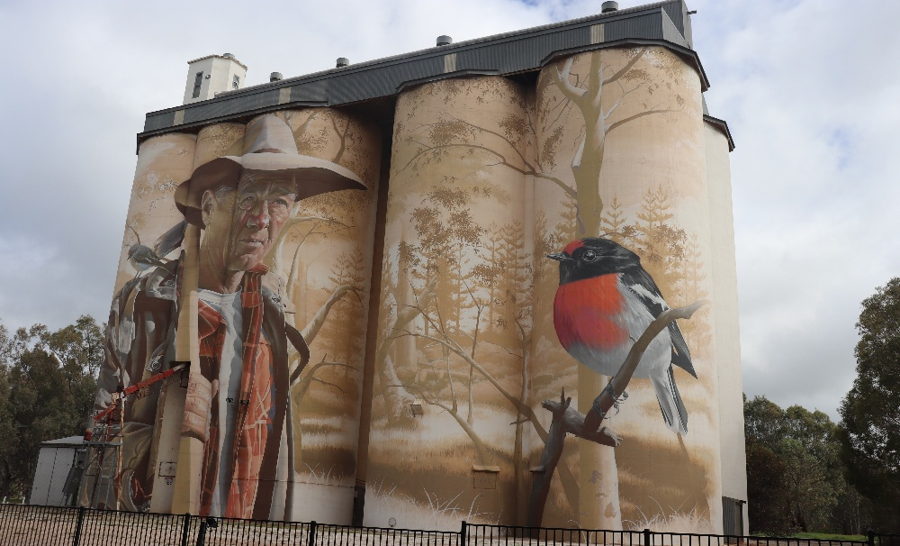
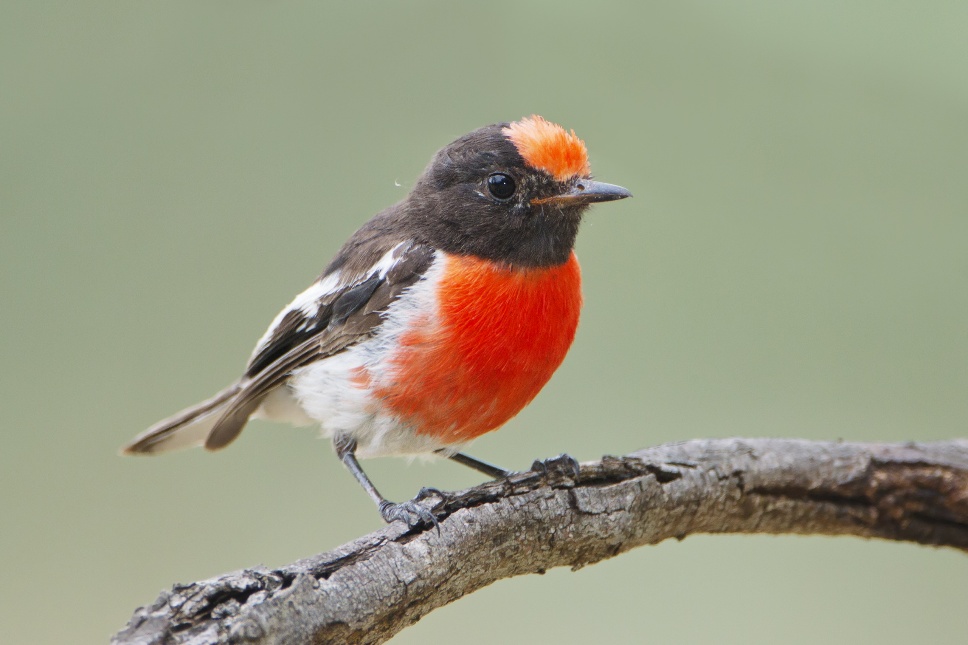
This prominent mural is part of the Wirrabara Silo Art installation in South Australia, created by the Melbourne-based street artist Smug (Sam Bates). This beautiful, vibrant Red–capped Robin [27]*, a native bird of the surrounding area, features prominently in the artwork.
If you look very closely at the left side of the mural, a tiny female Red-capped Robin can also be seen resting on the farmer’s shoulder. This time the players in Photo Ahimsa were the images themselves.
This stop proved highly restorative after a long drive from Victoria.
According to Clara Moskowitz [28]*, ‘For birds…fractals are a turn-on.’ She quotes a study by Lorenzo Pérez-Rodríguez [29]*; fractal patterns on a bird’s chest indicate its fitness, mating potential, and overall health.
The Fractal Foundation [30]* defines fractals as follows:
A fractal is a never-ending pattern. Fractals are infinitely complex patterns that are self-similar across different scales. They are created by repeating a simple process over and over in an ongoing feedback loop.
This is difficult to get your head around! For people with a background in science, engineering, and mathematics, understanding the logic behind fractals can be challenging. But don’t let that put you off; most observers can recognise the beautiful fractal patterns in birds if they know what to look for!
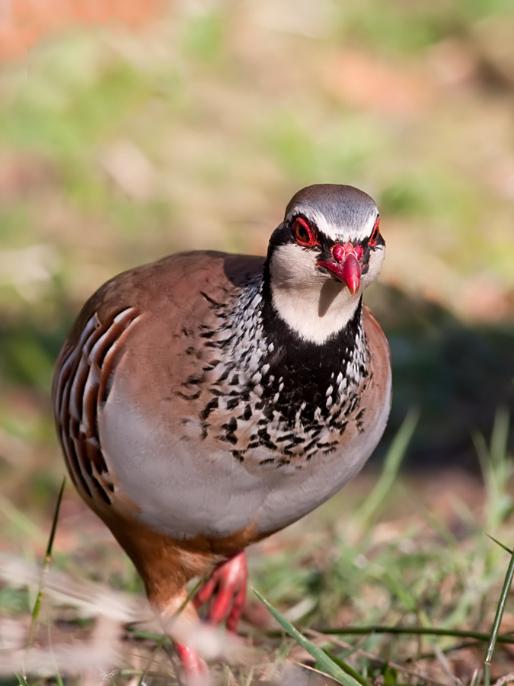
Clara Moskowitz [31]* used fractal geometry on the black bib of Red-legged Partridges (shown below) and found that a higher fractal dimension indicated better bird health. Poorer health lowered this rather intriguing dimension.
Let’s explain:
Most people know that a line drawn with a ruler is one-dimensional. Photographs, like a piece of paper, are two-dimensional, whereas a camera used for birdwatching is three-dimensional. But fractals live in a strange world between one and two dimensions.
The fractal dimension of the partridge’s “bib” area in the image above is 1.7 (please allow AI to explain). This is hard to believe, isn’t it? Some even suggest that we might live in a parallel universe!
The Australian wood duck in Monbulk, Victoria, eyed Dedrie and Jim suspiciously; the photograph was taken during the hunting season.
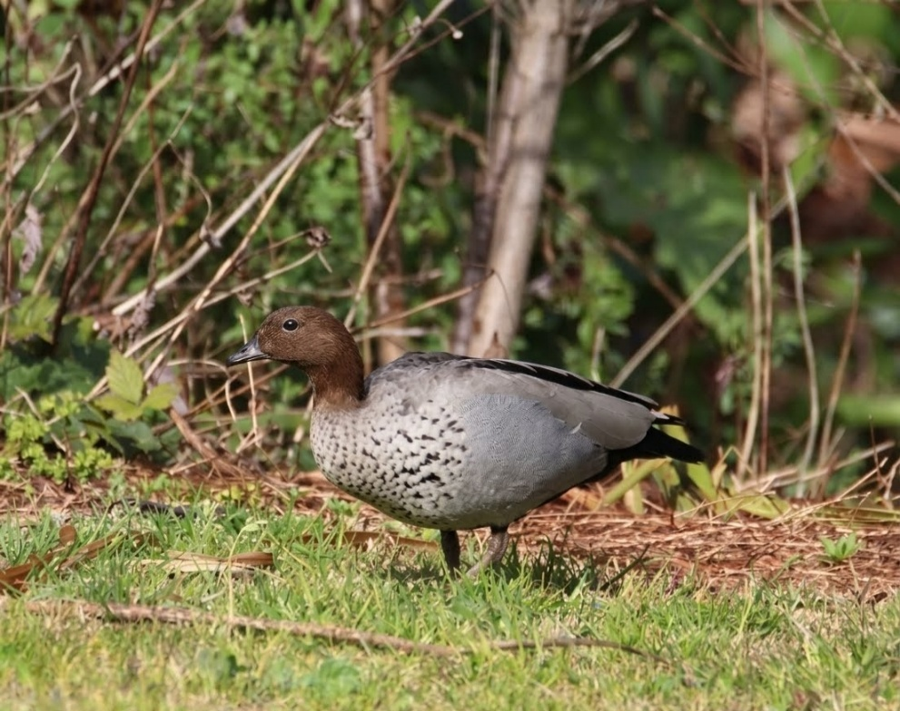
When satisfied that they meant no harm, the duck was willing to connect with them, coyly showing off his beautiful mottled grey body.
Jim thought that each black mottled patch on the grey feathers looked like a fractal, and the various patches looked alike. Jim says, ‘The jury is out about those being fractals—any mathematician willing to try?’
Intrigued by the bird feather geometry, Google advised him that:
You can identify it as a male by its rich chestnut-brown head and neck, mottled grey body, and the dark mane-like feathers along the back of its neck. Females look similar from the neck down but have lighter-brown heads with distinct white stripes across their faces.
Susan Sontag says somberly, and with deep insight, that photography is an elegiac (sad) and twilight art:
Photography is a poignant art, often captured in twilight. Most subjects, simply by being photographed, evoke a sense of pathos. Even an ugly or grotesque subject can become moving when it is dignified by the photographer’s attention. A lovely subject can be the object of rueful feelings, because it has aged or decayed or no longer exists. All photographs are memento mori [remember you must die]*.
Green family photographs not only reflect the art and beauty of birds but also convey a hidden message of their pathos—the destruction of their habitat. The photographs also remind us that although we may have connected in the past, we may never connect again!
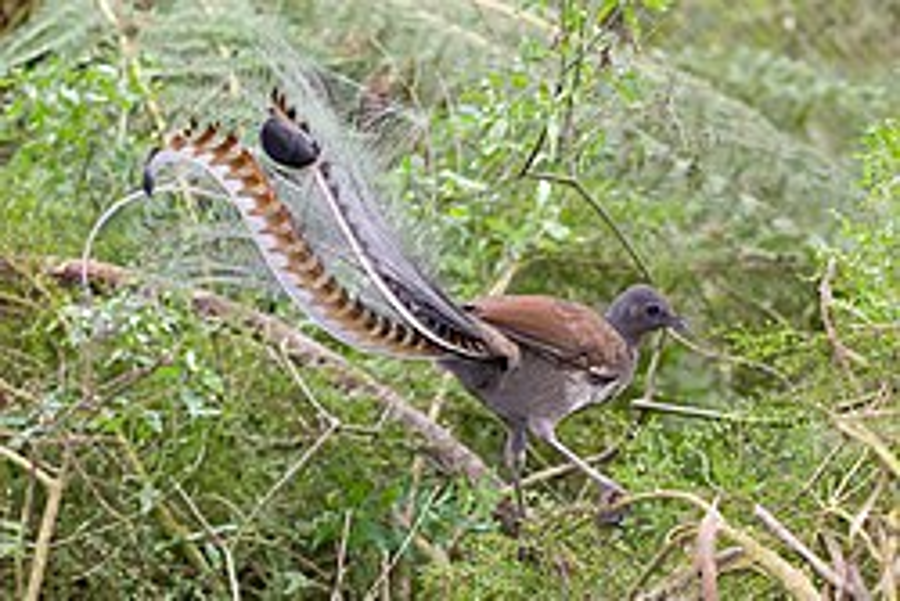
In her sad poem, The Lyrebird, Judith Wright [33]*, an Australian poet, asks the ‘Dying Poet’ to tell us its story.
Over the west side of the mountain,
that’s lyrebird country.
I could go down there, they say, in the early morning,
and I’d see them, I’d hear them.
Ten years, and I have never gone.
I’ll never go.
I’ll never see the lyrebirds –
the few, the shy, the fabulous,
the dying poets.