A Spiritual Practice
My little sisters, the birds, much bounden are ye unto God, your Creator, and always in every place ought ye to praise Him.
—St. Francis of Assisi
There is somewhat more to the practice of Photo Ahimsa—it is a spiritual practice; those birdwatchers who don’t practice a religion or believe in a higher power are acting ‘spiritually’, whether they agree or not!
Be warned: birdwatching can be a deeply spiritual activity [52]*! Although many see it as an eccentric hobby, a means of performing community service, or part of a bioscience degree—the intentional practice of quiet observation, patience, and active listening could transform even the most detached scientist!
When a sense of awe, mindfulness, and a feeling of connection with nature takes hold, Photo Ahimsa will set in, and you’re ‘spiritual’! So, without consciously intending it to be, Photo Ahimsa has become a self-styled spiritual practice for Jim and some members of the Green family.
This practice is not conducted in a church, mosque, or temple, but in avian habitats: trees, reeds, riverbanks, cliffs, beaches, eaves, electrical power lines and poles, sewage farm ponds, rubbish heaps, picnic spots, camping grounds, and wherever our avian friends find themselves.
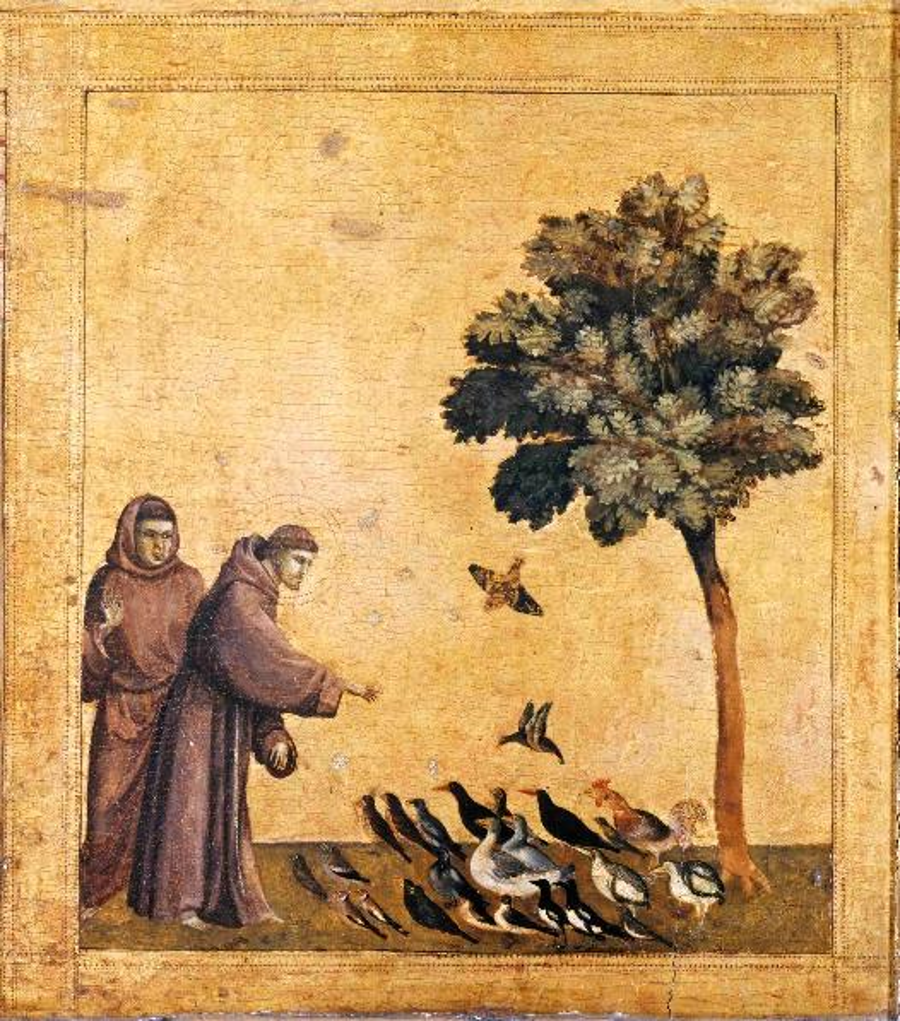
St. Francis of Assisi, famous for his deep love of nature, especially birds, is a clear favourite of Jim’s. Francis apparently ran to a flock of birds, greeted them as reasoning beings, and urged them to praise God, expressing regret for not having preached to them earlier. Wonder if he was considered eccentric, or worse? There is a story about how the birds stretched their necks and brushed against Francis with joy.
In his Sermon to the Birds, contained in ‘The Little Flowers of St. Francis (Fioretti) [53]* from the 14th century, he calls the birds his ‘little sisters’ who should praise God and be grateful:
My little sisters, the birds, much bounden are ye unto God, your Creator, and always in every place ought ye to praise Him, for that He hath given you liberty to fly about everywhere, and hath also given you double and triple raiment; moreover He preserved your seed in the ark of Noah, that your race might not perish out of the world; still more are ye beholden to Him for the element of the air which He hath appointed for you.
Beyond all this, ye sow not, neither do you reap, and God feedeth you, and giveth you the streams and fountains for your drink; the mountains and valleys for your refuge and the high trees whereon to make your nests; and because ye know not how to spin or sow, God clotheth you, you and your children; wherefore your Creator loveth you much, seeing that He hath bestowed on you so many benefits; and therefore, my little sisters, beware of the sin of ingratitude, and study always to give praises unto God.
Aboriginal people practice mindfulness and mindful birdwatching like no other. They capture their images durably in painted silhouettes, charcoal drawings, and rock art. This practice is surely a variant of Photo Ahimsa!
Aboriginal people can be mindful of their culture, which sees nature as a living system. Birds are seen as important creators, family members, and ecological messengers. They view the land as part of their lives and as a living entity shaped by spirits during the Dreamtime.
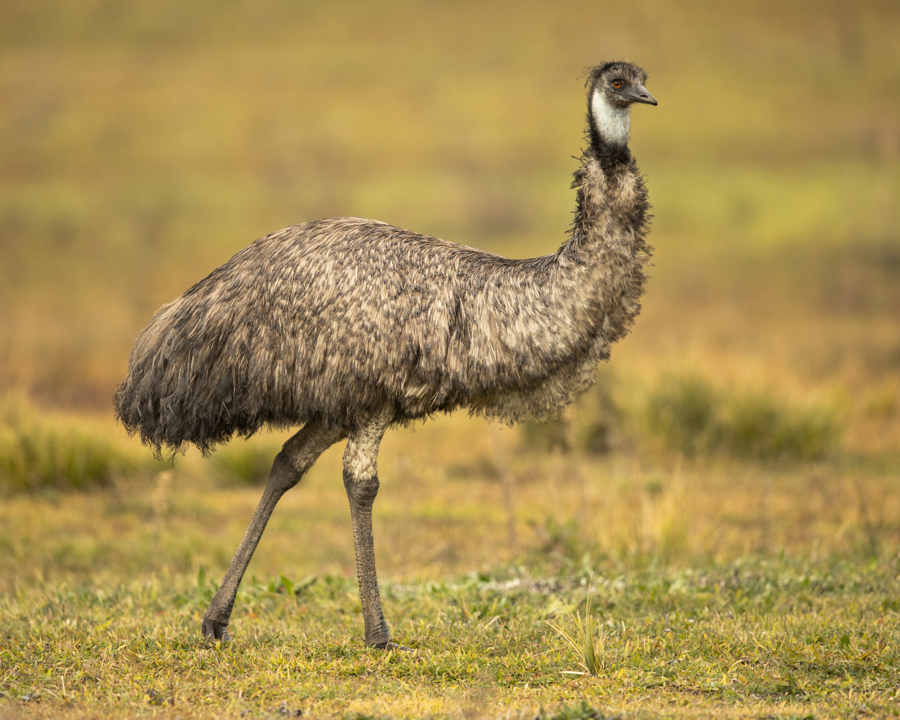
The emu appears prominently in many Australian Aboriginal Dreamtime stories, representing creator spirits, earthly runners, and the famous ‘Emu in the Sky’ constellation formed by the dark dust lanes of the Milky Way.
Rhonda Radley [54]*, a Birpai [Aboriginal]* Elder and ‘Knowledge Keeper’, shares this story with us:
One of my daughters asked me to name her daughter, yet to be born. And for me, it had to sit with that in stillness and let that come through.
And what was coming through was Black Cockatoo, Wayila; every time I sat in that stillness, that bird would come through. So, I decided to name her Wayila. And when Wayila was born, she let out a cry like a Black Cockatoo, and she holds that essence of the Black Cockatoo, and that’s her name totem.
But in our cultural practices, we honour these birds, in my opinion. We dance. It’s our way of honouring and acknowledging that they’re part of our story. We’re not separate from birds; we’re not separate from any creature. We have that really strong connection, and we need to be still, listen, and let them in. Open your heart to let them in.
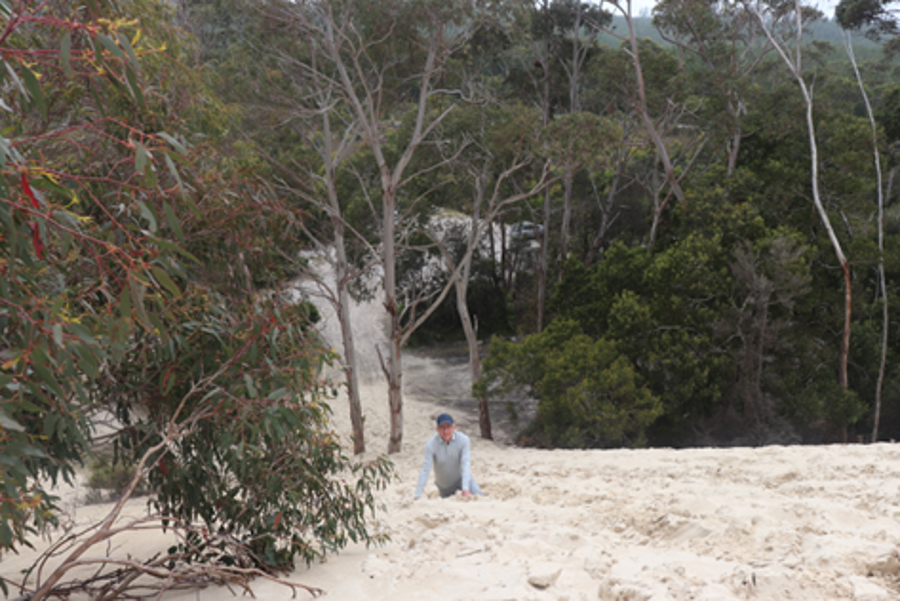
Jim and Dedrie visited the Henty Dunes on Tasmania’s west coast, which are 30m high and stretch several kilometres inland. These massive dunes create a desert-like landscape amid the rainforests of Tasmania’s west coast. One must crawl up these dunes to practise Photo Ahimsa.
Dedrie tells about their meeting with the cockatoos:
We were thrilled to hear a delightful, high-pitched wailing call, ‘kee-ow … kee-ow … kee-ow,’ floating through the air as playful shadows darted among the branches of the rainforest trees. It didn’t take long before we spotted their bright yellow cheeks and tails, flitting from limb to limb. At first, they looked at us curiously—challengingly —but soon they became accommodating as they realised we were interested in them!
Just then, some national park rangers arrived, and it seemed like the birds knew them. They were completely at ease, continuing to flit about in the branches overhead. We asked the rangers about the birds, and they shared some interesting details. They told us that these lovely creatures were disappearing from many parts of Tasmania and Victoria.
When the rangers left, we began our Photo Ahimsa session. The birds preferred to stay high in the trees. They moved from branch to branch, but after some patience, we captured a near-perfect shot of them sitting together and another of one bird curiously observing our every move. What an unforgettable experience!
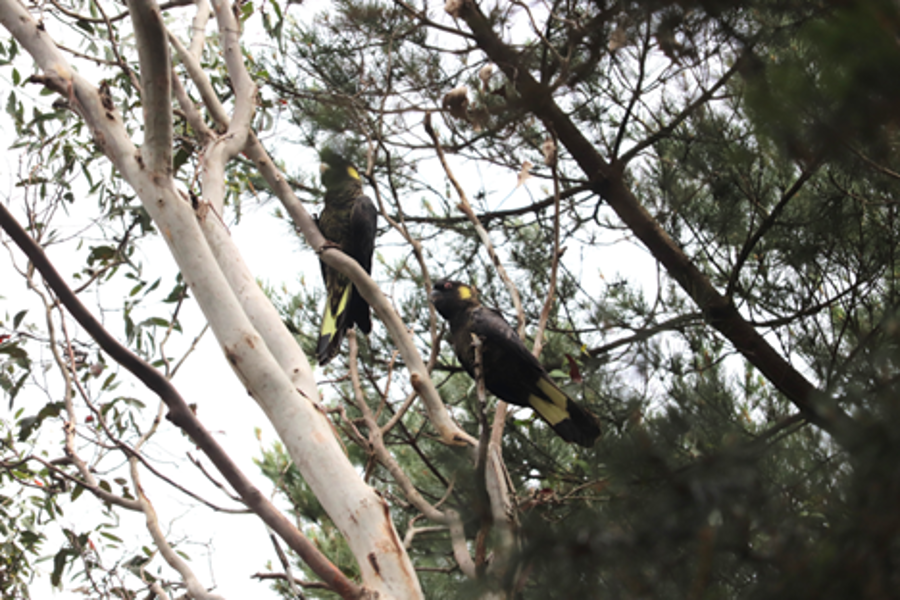
One of the cockatoos kept looking intently at us—what were they trying to tell us?
Wendy Grenfell, [55]* in a ‘PlantingSeeds Project’ article about the Yellow-tailed Black Cockatoo, writes:
To many Indigenous Australians, the yellow-tailed black cockatoo is a spiritual figure and a symbol of change. Within Dreamtime stories, the cockatoo represents wisdom, protection, and guidance, appearing as a warning or as a helper in difficult times.
The bird’s black-and-yellow colouring represents life’s interconnectedness and the harmony between light and dark. These are totem birds that embody resilience and the enduring relationship between people and nature.
So, mindful birdwatching has been around for a very, very long time in Kulin Nation ‘Country’:
Mindful birdwatching, such as Photo Ahimsa, pays respect to the Black cockatoos, known as Yanggai (or Yangkai), which feature in traditional ecological knowledge, oral histories, and the culture of the Wurundjeri people of the Kulin Nation.
Yanggai is the specific Woiwurrung word for the Yellow-tailed Black Cockatoo native to Wurundjeri Country. They are recognised as part of the living biodiversity and ancestral landscape connected to creation figures such as Bunjil, the Eagle, within Kulin lore.
Birds like the black cockatoo often serve as personal totems or spiritual protectors passed down through generations in Wurundjeri and allied Kulin family traditions.